

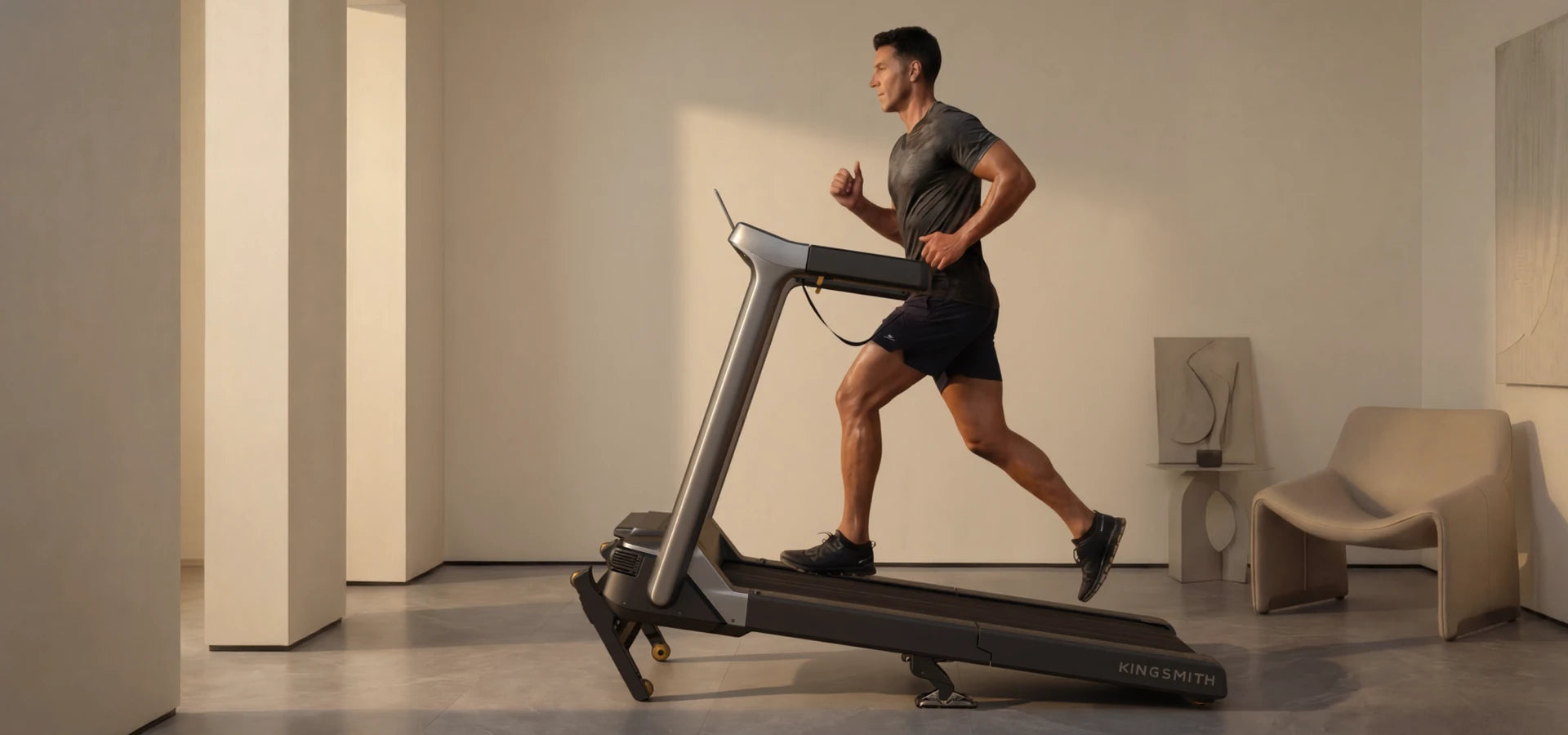
Find Your Way to Move


Free Floor Mat
Choose your option
![[product] WalkingPad Z3 Hybrid+ walking pad with handles shown from the front](http://uk.walkingpad.com/cdn/shop/files/Z3Hybrid_1.webp?v=1781093806&width=1500)

Free Floor Mat
WalkingPad Z3 Hybrid+
Regular price
Sale price
From £609.00
Regular price
£659.00
Big wheels
Side handles
Choose your option


Free Floor Mat
Choose your option


Free Care Box
WalkingPad G5i Foldable Incline Treadmill
Regular price
Sale price
£1,599.00
Regular price
£1,899.00
18% automatic incline
Choose your option
![[product] WalkingPad X218 running treadmill folded flat for storage](http://uk.walkingpad.com/cdn/shop/files/product_walkingpad-x218-folded-white-Main.webp?v=1781084902&width=1500)

Free Care Box
Choose your option
![[product] WalkingPad X25+ smart treadmill shown from the front](http://uk.walkingpad.com/cdn/shop/files/X25_1.webp?v=1781084773&width=1500)

Free Care Box
Choose your option


Free Care Box
Choose your option
![[product] WalkingPad X21 treadmill folding folded flat for storage](http://uk.walkingpad.com/cdn/shop/files/product_walkingpad-x21-folded-hero.webp?v=1781084959&width=1500)

Free Floor Mat
Choose your option


Free Floor Mat
Choose your option


Free Floor Mat
Choose your option

![[product] WalkingPad R3 office treadmill shown from the front](http://uk.walkingpad.com/cdn/shop/files/R3__1.webp?v=1781094345&width=1500)
![[product] WalkingPad R3 treadmill shown from the front](http://uk.walkingpad.com/cdn/shop/files/01-1.jpg?v=1757919942&width=1601)
Free Floor Mat
Choose your option
![[product] WalkingPad Z3 treadmill with screen shown from the front](http://uk.walkingpad.com/cdn/shop/files/Z3__1.webp?v=1781094528&width=1500)

Free Floor Mat
Choose your option
![[product] WalkingPad A1 Pro heavy duty treadmill feature highlights](http://uk.walkingpad.com/cdn/shop/files/A1Pro__14.webp?v=1781093997&width=1500)

Best Seller
Choose your option
![[product] WalkingPad P1 cheap treadmill shown from the front](http://uk.walkingpad.com/cdn/shop/files/P1__1.webp?v=1781094261&width=1500)

Choose your option
![[product] WalkingPad C2 pink treadmill seen from the back](http://uk.walkingpad.com/cdn/shop/files/product_walkingpad-c2-treadmill-folded-white-background.webp?v=1781094196&width=1500)

Choose your option
![[product] WalkingPad Z1 lightweight treadmill shown from the front](http://uk.walkingpad.com/cdn/shop/files/Z1__1.webp?v=1781094407&width=1500)

Best Seller
Choose your option
![[product] WalkingPad C1 walking pad for home used for walking at a desk](http://uk.walkingpad.com/cdn/shop/products/Walkingpad-C1-foldable-treadmill-6.jpg?v=1757920520&width=1000)
![[product] WalkingPad C1 walking pad used for walking at a desk](http://uk.walkingpad.com/cdn/shop/products/Walkingpad-C1-foldable-treadmill-9.jpg?v=1767087393&width=1000)
Choose your option


W1B 3 IN 1 Foldable Exercise Bike, Under Desk Bike
Regular price
Sale price
£429.00
Regular price
£699.00
Desktop
Easy storage
Choose your option
![[product] KingSmith B2 pilates reformer bench in use at home](http://uk.walkingpad.com/cdn/shop/files/product_b2-home-gym-main-view-if.webp?v=1783063860&width=1500)
![[scene] KingSmith B2 weight bench feature highlights](http://uk.walkingpad.com/cdn/shop/files/B2-banner.jpg?v=1773110551&width=2000)
Choose your option

![[scene] KingSmith B1 weight bench feature highlights](http://uk.walkingpad.com/cdn/shop/files/30.jpg?v=1751002983&width=2000)
B1 Tone Up Weight Bench
Regular price
Sale price
From £499.00
Regular price
£799.00
15 Accessories
3 Workout Modes
Choose your option


BX2 Workout Bench
Regular price
Sale price
From £699.00
Regular price
£899.00
80 kg resistance
180 kg capacity
Choose your option

![[scene] KingSmith WR20 rowing machine feature highlights](http://uk.walkingpad.com/cdn/shop/files/WM20_6c66ddf9-bb5c-40a8-8a68-9fcf2e8c960e.png?v=1750301950&width=2000)
Free Rowing Mat
WR20 Foldable Water Rowing Machine
Regular price
Sale price
£699.00
Regular price
£899.00
High resistance
Water
Choose your option

![[scene] KingSmith WR3L rowing machine shown from the front](http://uk.walkingpad.com/cdn/shop/files/wr3l-main-hero.webp?v=1781095746&width=1500)
WR3L Tri-fold Water Rowing Machine
Regular price
Sale price
From £399.00
Regular price
£599.00
Side table
400 lb
Choose your option
![[scene] Man doing shoulder press with WalkingPad adjustable dumbbells](http://uk.walkingpad.com/cdn/shop/files/scene_3-in-1-Adjustable1.webp?v=1787104699&width=1500)

24 KG Adjustable Dumbbell, Barbell, and Kettlebell Set
Regular price
Sale price
From £169.00
Regular price
£329.00
Choose your option


Explore


#1 WALKINGPAD BRAND
In a world of cheap knock offs we are proud to be the first and best


FITNESS THAT FITS YOUR LIFE.

VERTICAL FOLD SERIES
Running at home made easier than ever before
Starting at
£549.00
£599.00

FOLDABLE CLASSIC
Daily exercise made convenient.
Starting at
£549

HYBRID SERIES
Get your steps in while working, then fold out of the way.
Starting at
£399

JUST WALK SERIES
10k steps every-day without sacrificing space
Starting at
£299
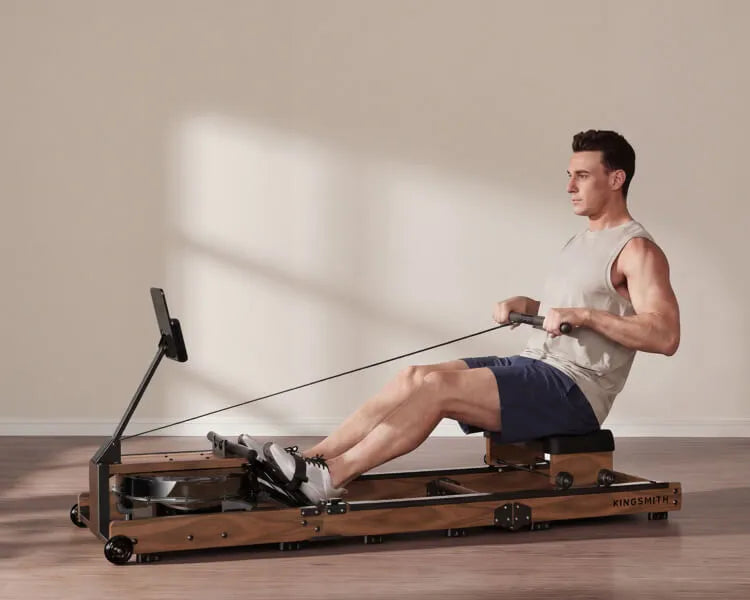
ROWER SERIES
Tri-fold rowing machines for total-body training at home
Starting at
£399
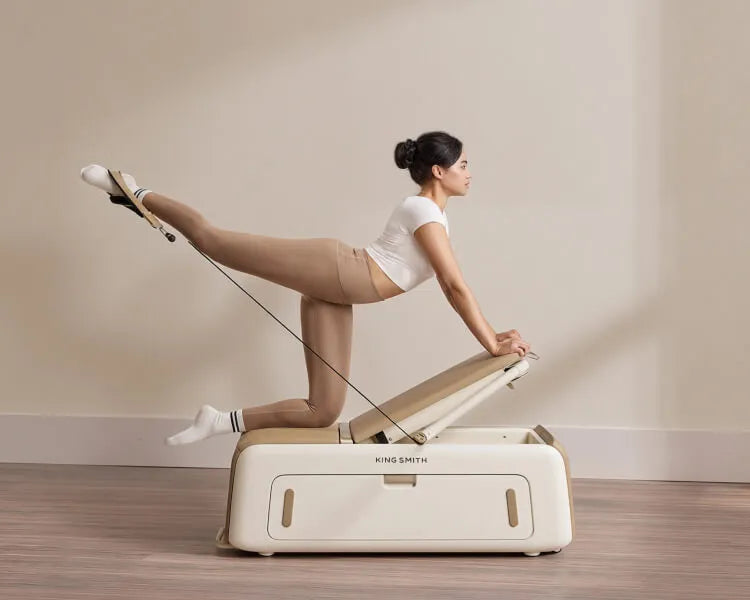
BENCH SERIES
Adjustable weight benches to build and tone muscle
Starting at
£499
Your private shopping assistant
Find the one that fits.
Five quick choices. A specific model recommendation, based on how you move, your space and your budget.
Question 1 of 5
Personal fit finder
Tell us how it needs to fit your life.
No model knowledge needed. Choose what feels closest.
Close alternatives
Two other good fits

AWARD-WINNING DESIGN
Our foldable treadmills and benches have earned global design awards for their innovative space-saving folding design, refined aesthetics, advanced manufacturing, and user-friendly functionality.

Red Dot Design Award for 2019, 2022, 2026

IF Design Award for 2019, 2022, 2026

Good Design Award for 2020
JOIN THE WALKINGPAD MOVEMENT
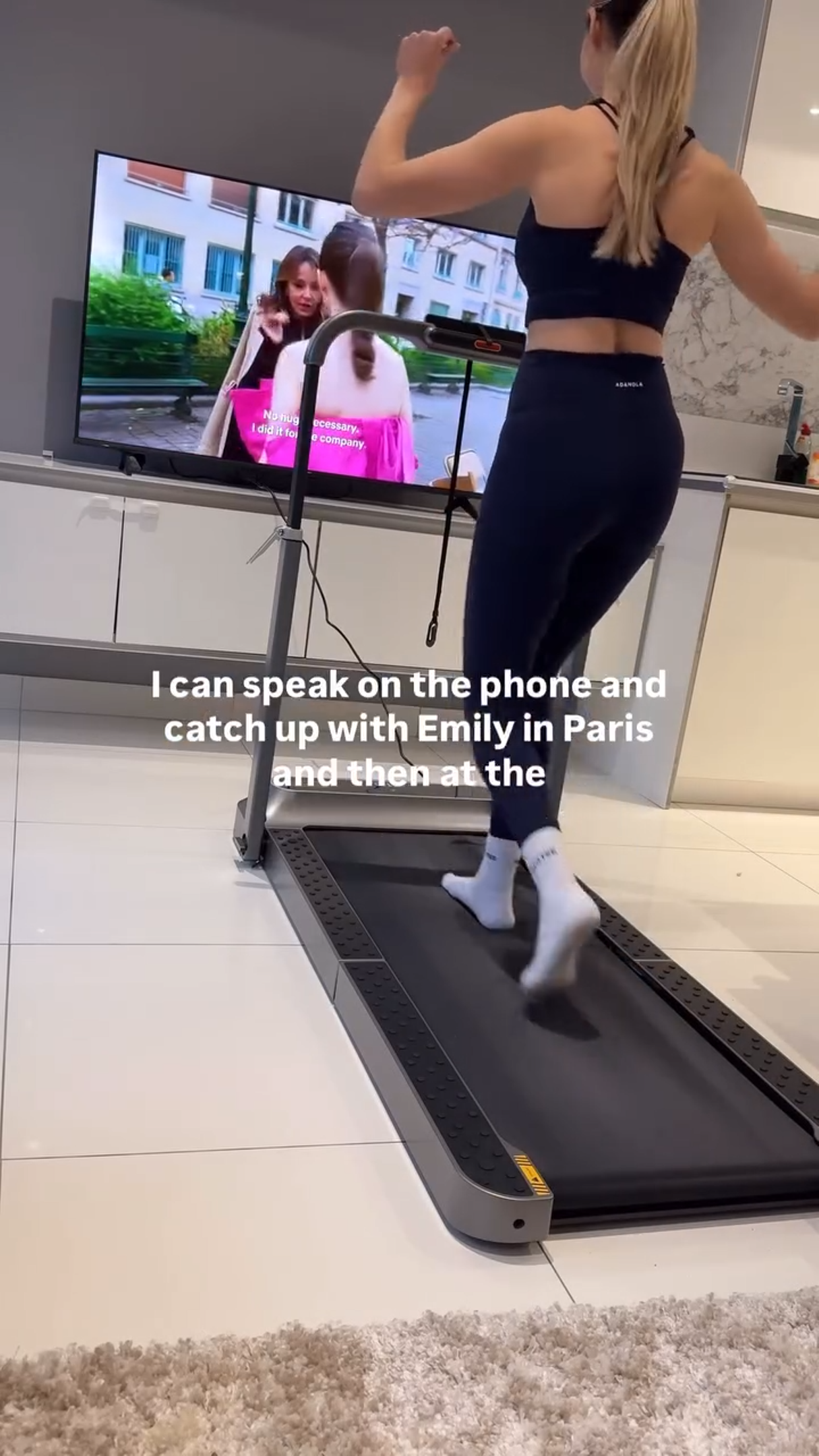
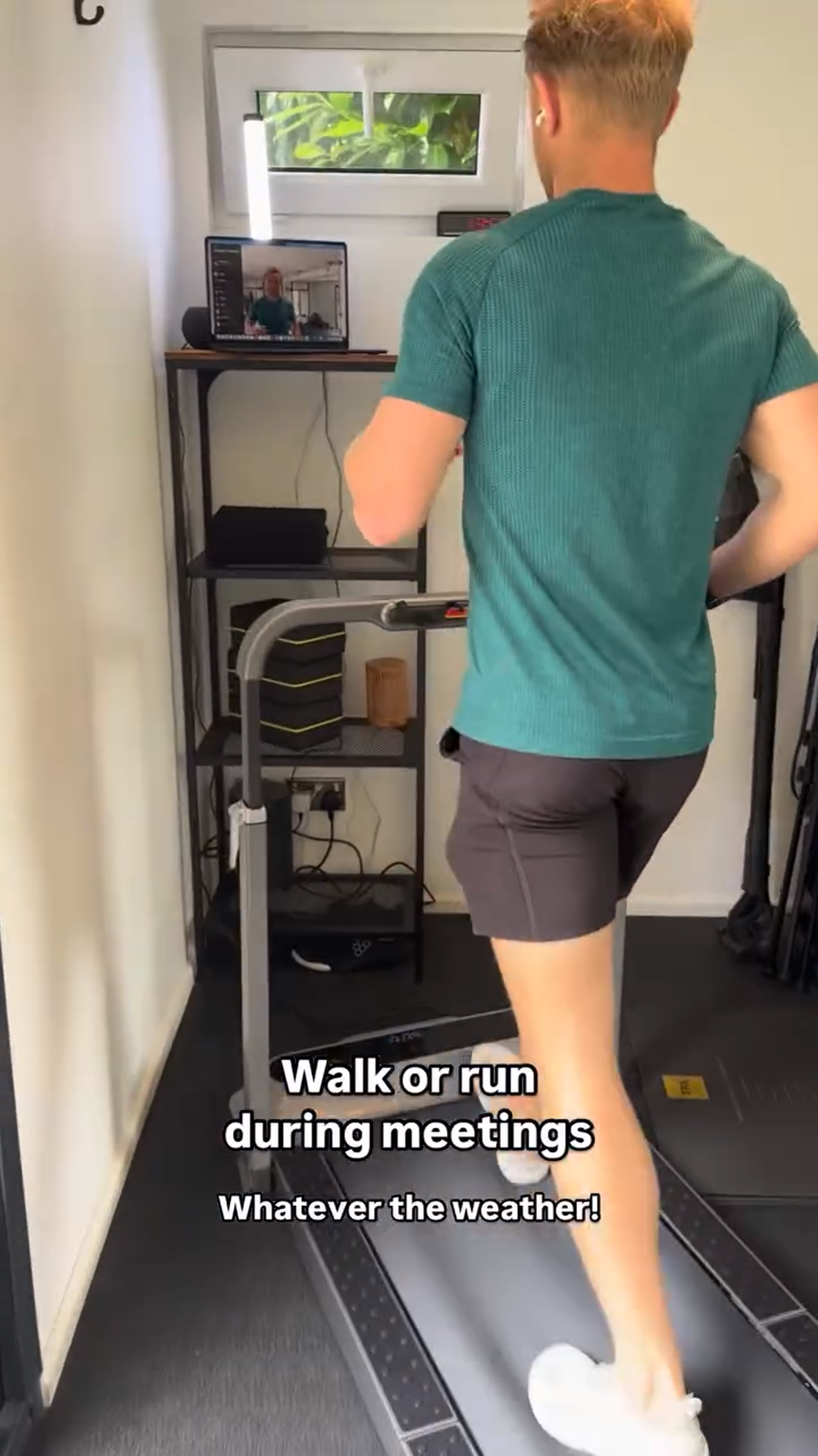
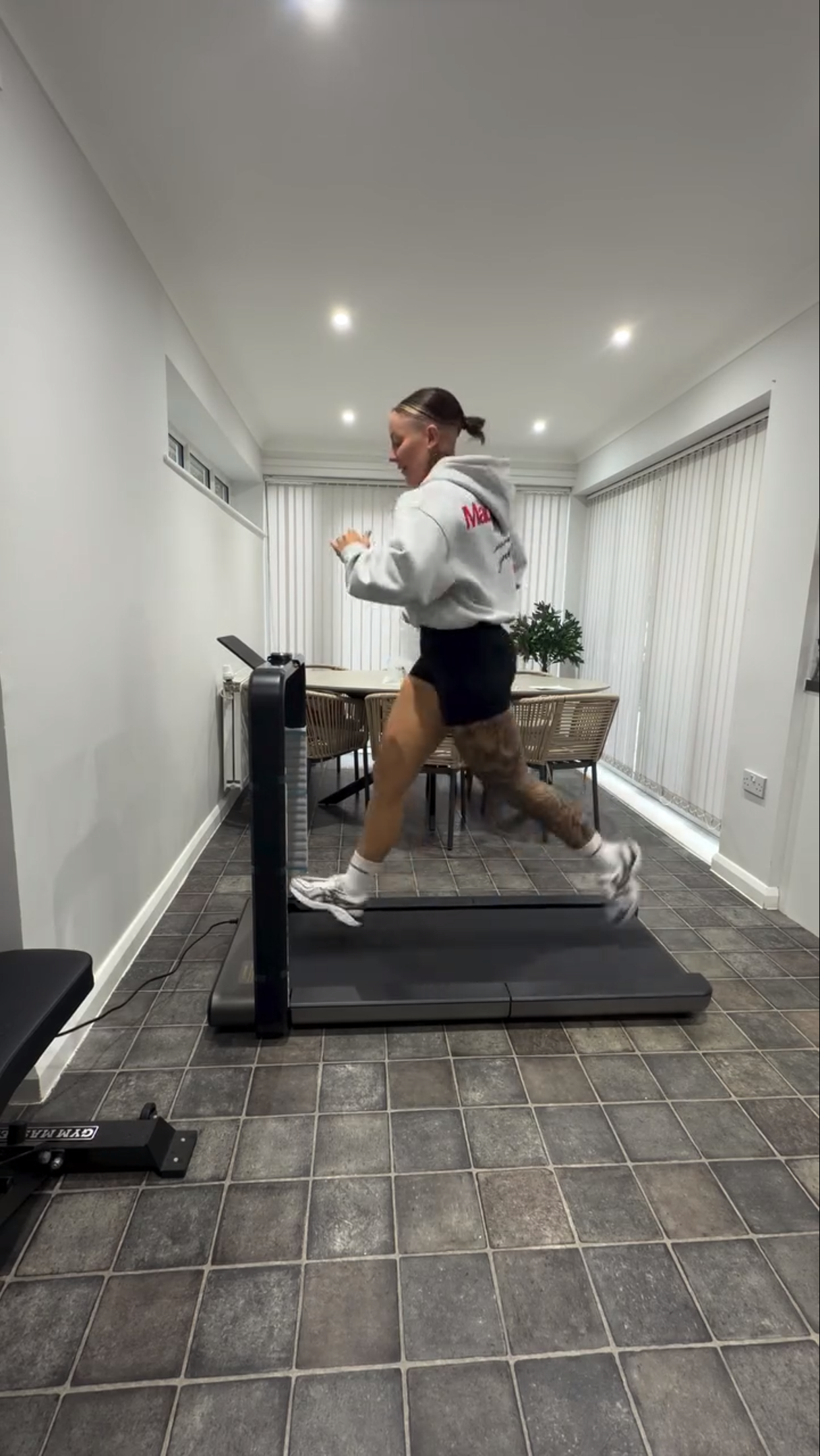
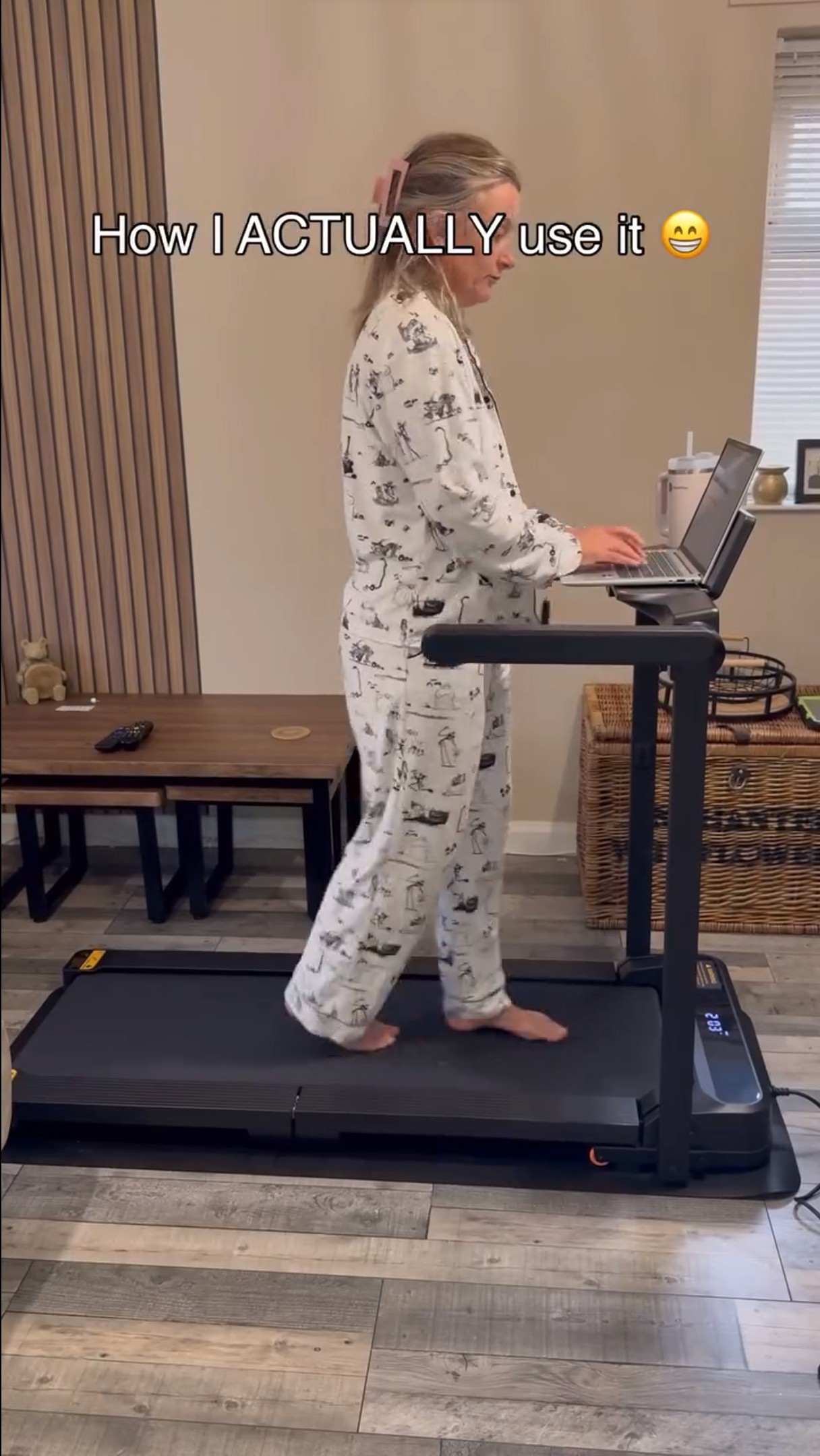
From home workouts to under-desk steps, the world is moving now more than ever before.









Latest post

Are Walking Pads Worth It in 2026? A Cost-Per-Use Breakdown
Finding time to stay active isn't always easy, especially when you're balancing work, household responsibilities and a busy daily routine. Whether you work from home, have limited space or simply find regular gym visits inconvenient, a walking pad can seem like a practical solution. But is it really worth the money? To help you decide, we'll compare the cost of a walking pad with UK gym membership fees, break down the cost per use, and explore when buying one makes financial and practical sense. Key Takeaways A walking pad is usually worth it if you'll use it most days at home, because a one-off price replaces a monthly fee that never stops. UK gym memberships average around £48.45 a month, roughly £581 a year, while a foldable walking pad is a single purchase. At three sessions a week, a £369 walking pad works out near £0.79 per use over three years, against roughly £3.73 per gym visit. Walking pads suit small homes and busy, screen-heavy days; a full gym still wins for heavy lifting, classes and sprint-speed running. So, are walking pads worth it? For most home-based walkers, yes. A walking pad is worth it when you'll actually use it, because its value comes from turning a recurring gym fee into a one-off purchase you keep using for years. The NHS recommends adults aged 19 to 64 get at least 150 minutes of moderate activity a week, and brisk walking counts [1]. If a walking pad helps you reach that without heading out on a cold, rainy evening, it pays back in both money and consistency. The catch is simple. Worth comes from use. A machine you walk on most days is excellent value. One that gathers dust is an expensive clothes rail, same as any unused gym card. What does a walking pad actually cost? Walking pad price is the first thing most buyers check, and the range is wider than you'd expect. Entry-level foldable models start in the low-to-mid hundreds, while treadmills that add running speeds and inclines cost more. If you're after a cheap walking pad, you're really looking for the lowest price that still feels stable, quiet and built for daily use. It helps to compare a few models side by side across the current walking pad range rather than judging on headline price alone. A few things drive the price up or down: Belt size: a wider, longer belt feels more natural but costs more to build. Speed: walking-only pads are cheaper than models that also jog or run. Build and cushioning: a sturdier frame and shock-absorbing deck add cost and comfort. Folding and storage: a design that folds flat to slide under a sofa is worth it in a small flat. Gym membership vs walking pad: the yearly cost Here's where the maths gets interesting. A gym charges every month, more or less forever. A walking pad charges once. UK gym memberships average about £48.45 a month, roughly £581 a year, with budget chains nearer £24.51 and London clubs closer to £75 [2]. Set that recurring fee against a single walking pad purchase and the shape of the spending changes completely. Option Upfront Monthly Year 1 total 3-year total Budget gym £0 £24.51 £294 £882 Average UK gym £0 £48.45 £581 £1,744 London gym £0 £74.97 £900 £2,699 Walking pad (one-off) £369 £0 £369 £369 Monthly figures based on 2026 UK gym pricing [2]. The gym column keeps climbing year after year. The walking pad column flattens almost to a line. By year three, an average membership has cost nearly five times the price of the pad. Cost per use: where a walking pad pulls ahead Yearly totals tell part of the story. Cost per use tells the rest. Divide what you spend by how often you actually move, and the gap widens fast. It matters because gym memberships are famously underused. UK members wasted an estimated £503 million on memberships they barely touched in 2025 [3]. A walking pad sitting in your living room is simply harder to ignore than a gym across town. At 3 sessions a week Year 1 cost per use Over 3 years Average UK gym (£48.45/mo) £3.73 £3.73 Walking pad (£369 one-off) £2.37 £0.79 Based on 156 sessions a year. Gym cost per use stays flat because the fee recurs; the walking pad keeps dropping as the one-off price spreads across more walks. Even lighter use holds up well. Walk just once a week, around 52 sessions a year, and a £369 pad still lands near £7.10 per use in year one and roughly £2.37 over three years. The same single weekly visit at an average gym costs about £11.18 every time, and keeps costing it. The less often you go, the worse a recurring fee looks and the better a one-off purchase gets. Take an affordable foldable model like the WalkingPad P1, currently priced at £369, down from £499. It folds flat to slide under a sofa or bed, offers a 1,200 × 415 mm walking belt and speeds up to 6 km/h (3.7 mph), making it suitable for everyday indoor walking in small living spaces or home offices. It supports users up to 100 kg and uses SoftStep cushioning to soften each stride. Used most days, its cost per walk keeps falling while a gym fee resets on the first of every month. Who a walking pad is, and isn't, worth it for Value is personal, so match the machine to your routine before you spend. Worth it if: you work from home, live in a flat or terraced house with limited space, want to move during calls or your evening TV, or struggle to reach a gym on dark, rainy evenings. Worth considering if: you want light jogging as well as walking. Some foldable treadmills reach higher speeds than a slim walking pad, so check the top speed against your goal. A gym is a better fit if: you want heavy weights, group classes, a pool, or sprint-speed running that a compact walking pad isn't designed for. How to get your money's worth A walking pad only pays back if the habit sticks. A few simple moves help: Pair it with something you already do: walk during morning calls, podcasts or your evening programme. Keep it in reach: a foldable design that tucks away is handy for storage, but leaving it out for the first few weeks builds the routine faster. Start short and often: several easy walks across the week beat one long, occasional session for staying active and hitting that 150-minute target. Treat the first month as the real test. If the machine fits naturally into your day, the cost-per-use maths quietly takes care of itself. The bottom line So, are walking pads worth it in 2026? If you'll use one regularly at home, the numbers lean clearly in your favour. A single purchase replaces a fee that never stops, and the cost per walk keeps dropping the longer you own it. For small homes and busy, screen-heavy days, a foldable walking pad turns "I'll exercise later" into a few easy minutes now. Compare a handful of models, match the belt size and speed to your space, and you'll know the value is real before you spend a penny more than you need to. Frequently Asked Questions Are cheap walking pads any good? They can be, as long as the basics hold up. Look past the headline price to belt stability, motor noise and build quality, since a wobbly or loud pad is the one you stop using. A lower-priced foldable model used daily often beats a pricier machine that intimidates you. How much does it cost to run a walking pad in electricity? Electricity costs depend on the walking pad's power consumption, walking speed and how often you use it. At 2026 UK electricity rates, a daily 30-minute walk could cost around £10–£25 a year, depending on average power consumption. That's still a relatively small running cost compared with a monthly gym membership. Can you lose weight with a walking pad? A walking pad can support weight management by helping you move more consistently, especially on days you'd otherwise sit. Results depend on your overall activity, diet and routine rather than the machine alone, so treat it as one easy habit among several. How long do walking pads last, and does that affect value? A well-built walking pad is designed for years of regular use, which is what makes the cost-per-use maths work. Spreading a one-off price across three, four or five years of walks drives the real cost down each year. Choosing a sturdy frame, a dependable motor and a sensible weight capacity protects that long-term value. Do walking pad sessions count towards the NHS activity target? Yes. The NHS counts brisk walking as moderate activity towards the recommended 150 minutes a week [1]. Walking at a pace that raises your heart rate and leaves you a little warmer, whether indoors or out, contributes to the weekly total. References NHS — Physical activity guidelines for adults aged 19 to 64: https://www.nhs.uk/live-well/exercise/physical-activity-guidelines-for-adults-aged-19-to-64/ The Fitness Grp — How Much Does A Gym Membership Cost In The UK (2026), reporting 2025 State of the UK Fitness Industry figures: https://www.thefitnessgrp.co.uk/how-much-does-a-gym-membership-cost/ PA Life — Brits waste £503 million on unused gym memberships in 2025: https://palife.co.uk/news/workplace-wellbeing/brits-waste-503-million-on-unused-gym-memberships-in-2025/ Disclaimer: This article is provided for general informational purposes and is not a substitute for professional medical advice, diagnosis, or treatment. Individual health needs and responses to exercise can vary. If you have a medical condition, concerns about your health, or are considering changes to your exercise, diet, sleep, or daily activity, consult a qualified healthcare professional first.
Read more
How Many Calories Does a Walking Pad Burn? Chart by Weight & Speed
A 30-minute session on a walking pad usually burns somewhere between 50 and 250 calories, depending on your body weight and your walking speed. Most adults land between 90 and 180 calories for that half hour, at the steady, conversational pace most pads are used for. Key Takeaways A 30-minute walking pad session usually burns around 50 to 250 total calories, depending on weight and speed. The incremental burn beyond sitting is about 25 to 30 percent lower than the total figure, and is usually the more useful number. A typical 70 kg adult walking near 5 km/h burns roughly 120 to 150 total calories, or about 85 to 90 beyond sitting, in 30 minutes. At matched speeds, a walking pad and outdoor walking share nearly the same intensity, so the format matters less than the pace. The walking estimate scales with body weight; your resting metabolism, not the walking number, is what shifts with sex and age. Total Calories Burned on a Walking Pad: Estimate Chart The table below gives rounded total (gross) estimates for 30 minutes of walking on a level pad, with no incline. Body weight 3.0 km/h (1.9 mph) 4.0 km/h (2.5 mph) 4.8 km/h (3.0 mph) 5.6 km/h (3.5 mph) 6.4 km/h (4.0 mph) 50 kg (110 lb) 45–55 calories 65–75 calories 80–90 calories 100–110 calories 115–130 calories 60 kg (132 lb) 55–65 calories 80–95 calories 95–110 calories 120–135 calories 140–155 calories 70 kg (154 lb) 65–75 calories 90–105 calories 110–125 calories 135–150 calories 165–180 calories 80 kg (176 lb) 75–85 calories 105–120 calories 125–145 calories 155–175 calories 185–205 calories 90 kg (198 lb) 80–95 calories 115–135 calories 140–160 calories 175–195 calories 210–230 calories 100 kg (220 lb) 90–105 calories 130–150 calories 155–175 calories 195–215 calories 225–250 calories Read these as ranges, not exact answers. Stride length, posture, arm swing, belt firmness, and room temperature all nudge the real number. If your watch shows 138 and the treadmill shows 146 for the same half hour, the two devices are simply using different formulae, not disagreeing about what happened. Incremental Calories: What You Burn Beyond Sitting The different number is the one that changes when you swap a chair for a belt. Sitting quietly is about 1.0 MET, your resting baseline. A walking pad at a moderate 4.8 km/h is about 3.5 METs. The incremental portion is the difference, 2.5 METs — so for a 70 kg person walking 30 minutes, roughly 88 calories sit above sitting, against about 122 total. The Compendium of Physical Activities, a reference list of intensity values maintained by exercise scientists, supplies the MET figures most treadmills and apps borrow from [1]. The table below shows the incremental burn at the three paces most walking pad users actually keep, for 30 minutes. Body weight 4.0 km/h (2.5 mph) 4.8 km/h (3.0 mph) 5.6 km/h (3.5 mph) 50 kg (110 lb) 45–50 calories 60–65 calories 80–85 calories 60 kg (132 lb) 55–60 calories 75–80 calories 95–100 calories 70 kg (154 lb) 65–70 calories 85–90 calories 115–120 calories 80 kg (176 lb) 75–80 calories 100–105 calories 130–135 calories 90 kg (198 lb) 85–90 calories 110–115 calories 145–150 calories 100 kg (220 lb) 95–100 calories 125–130 calories 165–170 calories This is the number that earns its place against sitting at a desk. A 70 kg office worker who swaps a seated 30-minute meeting for a slow walk at 4.8 km/h adds about 85 to 90 incremental calories, not 122. Over a five-day week of two such sessions a day, that is close to 900 extra calories beyond what sitting would have used. How to Calculate Your Own Number You do not need a calculator app to personalise the chart. Total (gross) calories ≈ MET × body weight (kg) × time (hours) Incremental (net) calories ≈ (MET − 1) × body weight (kg) × time (hours) Pick the MET that matches your pace: about 2.9 for 4.0 km/h, 3.5 for 4.8 km/h, 4.3 for 5.6 km/h, and 5.0 for 6.4 km/h on a level belt [1]. Worked example: a 78 kg adult walking at 5.6 km/h for 45 minutes (0.75 hours) burns about 4.3 × 78 × 0.75, or 251 total calories, of which about 193 are above sitting. Pick one device — your pad or your watch — as your reference, enter your weight so it isn't using a default profile, and compare similar sessions to similar sessions. The trend over a fortnight tells you far more than any single number. Walking Pad vs Other Activities: a MET Comparison Intensity, not the machine, drives the burn. The table below places a walking pad alongside the activities it usually replaces, on the same Compendium scale [1]. Activity Intensity (MET) Sitting quietly 1.0 Standing at a desk (quiet) 1.3 Standing, light fidgeting 1.8 Walking pad or treadmill, 4.0 km/h (2.5 mph) 2.9 Walking pad or treadmill, 4.8 km/h (3.0 mph) 3.5 Walking pad or treadmill, 5.6 km/h (3.5 mph) 4.3 Outdoor walking, 4.8 km/h, level 3.5 Walking pad or treadmill, 6.4 km/h (4.0 mph) 5.0 Treadmill running, 8 km/h (5 mph) 8.3 Treadmill running, 9.7 km/h (6 mph) 9.8 Two honest points follow. First, at a matched speed, a walking pad and outdoor walking share the same MET; wind, uneven ground, and stops and starts can lift outdoor effort slightly, but the difference is small. Second, a walking pad wins clearly over sitting and standing, which is the real comparison for a work-from-home day. A standing desk barely lifts you above sitting, at about 1.3 times resting energy; a moderate walking pace delivers about three and a half times resting energy, and moves your joints, posture, and circulation in ways standing still does not. How Sex and Age Fit In (and Why the Walking Number Does Not) A common assumption is that men and women burn different walking calories. The walking estimate itself does not split by sex or age, because the formula is weight-driven. What does split is your resting metabolism, the baseline the incremental number sits on top of. The Mifflin-St Jeor equation, a widely used predictive equation for resting energy expenditure, estimates that baseline from weight, height, age, and sex [2]. At a reference 70 kg body and typical adult heights, resting metabolism drifts downward with age and runs lower for women than for men at the same weight. Age band Men, ~175 cm, 70 kg Women, ~162 cm, 70 kg 25 ~1,670 kcal/day ~1,430 kcal/day 35 ~1,620 kcal/day ~1,380 kcal/day 45 ~1,570 kcal/day ~1,330 kcal/day 55 ~1,520 kcal/day ~1,280 kcal/day The same 30-minute walk burns about the same total calories for a 70 kg man and a 70 kg woman of any age, because the moving body weighs the same. What changes is how large a share of the day's baseline metabolism that walk represents. A 25-year-old man's 88 incremental calories are about 5 percent of his resting day; a 55-year-old woman's identical 88 are about 7 percent of hers. BMI and the Calorie Number Because the walking estimate scales directly with body weight, it already tracks closely with BMI. A higher BMI usually means a higher body weight, and therefore a higher calorie figure at the same speed and duration. The charts above are, in effect, already BMI-stratified — just expressed through the input the formula actually uses. If you are thinking about your weight in health terms, that is a conversation for a qualified professional, not a calorie table. How Walking Contributes to a Calorie Deficit If you are walking with weight management in mind, the useful question is not how much one session burns, but how the incremental calories add up against your diet across a week. Real weight change is non-linear, slows as your body adapts, and depends on sleep, stress, muscle mass, and what you eat, not just arithmetic. The NHS advises a safe, sustainable rate of about 0.5 to 1 kg (1 to 2 lb) a week [3]. The scenarios below pair the incremental walking calories (the sitting baseline is what you would have spent anyway) with a daily diet deficit, using a commonly cited rough figure of around 7,700 kcal per kilogram of body fat. Daily walk Incremental walk calories Diet deficit Total daily deficit Approx. weekly change 30 minutes ~88 kcal ~510 kcal ~600 kcal ~0.5 kg 60 minutes ~175 kcal ~425 kcal ~600 kcal ~0.5 kg 90 minutes ~260 kcal ~340 kcal ~600 kcal ~0.5 kg Read the table as a menu of combinations. A longer walk lets the diet deficit shrink while keeping the weekly outcome similar; a larger deficit moves the outcome up, but very low intakes are best discussed with a health professional rather than attempted alone. Stay within the safe weekly rate, and treat anything beyond it as a sign to slow down. If you are changing your routine for weight reasons, talk to a qualified health professional first. If you are walking through a rainy autumn week or a stretch of short, dark evenings, an indoor pad helps keep the deficit consistent when the pavements are wet and the nights close in early. Our guide on how long to walk on a treadmill for weight loss sets out that wider context, and our piece on whether a walking pad can help you lose weight looks at how indoor walking fits a realistic routine. Calories in Food Terms Numbers feel abstract; food is familiar. The chart below translates a 70 kg adult's walking pad session at about 5 km/h into everyday foods and drinks, using typical calorie figures from the USDA FoodData Central food composition database [4]. Source: Food calories from USDA FoodData Central; walking burn estimated from Compendium of Physical Activities MET values. Using the estimate of roughly 4 kcal per minute shown above, a medium banana (~95 kcal) corresponds to about 24 minutes of walking, while two chocolate biscuits (~120 kcal) correspond to about 30 minutes. Across these examples, the estimated walking time ranges from around 22 to 45 minutes. The point is not to guilt anyone out of a biscuit. It is that a single snack can quietly match or exceed a half-hour walk, which is why the examples above consider both walking and diet rather than treating movement alone as the answer. Does Walking Faster Burn More Calories? Walking faster raises the calories you burn per minute, because the MET value climbs with speed — the jump from 4.0 km/h to 5.6 km/h moves the intensity from about 2.9 to 4.3 METs [1]. Over a fixed duration, faster means more calories; over a fixed distance, faster often means roughly similar calories, because you simply finish sooner. Most walking pad sessions are time-based, so a slightly brisker pace usually does add to the total, but the gain is gentler than the effort suggests. A calm, sustainable pace you can keep up across a work-from-home day tends to matter more than chasing the highest possible speed. If you are still finding a rhythm, our guide to finding your pace on a walking pad walks through the trade-off. Does Incline Change the Estimate? Yes, and often more quickly than speed. Adding even a small incline lifts the MET value, because your body lifts its own weight upwards with each step rather than just moving forward. Incline is also harder on your calves and Achilles tendons, so build up gradually. Not every walking pad offers incline; if you want that option, check the model first, since some slim pads are flat-only by design. Choosing a Walking Pad That Matches Your Pace A machine whose top speed barely covers your natural stride will cap your sessions; one built for running may feel like overkill if you only ever walk. Match the machine's speed range to the pace you actually use. If your stride settles around 4 to 6 km/h, a dedicated walking pad in the Just Walk series is built around that kind of steady, everyday movement, so it suits a flat, a terraced house, or a shared living room where the pad needs to earn its place. For headroom above a walking pace, narrow the choice by top speed: models around 6 km/h suit pure walking, 10 km/h or 12 km/h leave room for a brisk walk and light jogging, and anything toward 18 km/h is designed with running in mind. The aim is not the fastest machine, but a range that comfortably covers the pace you will actually keep. Conclusion A walking pad burns roughly 50 to 250 total calories in 30 minutes, with most adults between 90 and 180. The more honest number against a desk chair is the incremental burn, about 25 to 30 percent lower, because roughly a third of the gross figure is baseline metabolism you would spend anyway. The estimate scales with body weight, rises gently with speed, and climbs more sharply with incline. It does not split by sex or age; your resting metabolism does. Pair the numbers with diet for any weight goal, stay within the NHS safe rate of 0.5 to 1 kg a week [3], and aim for the 150 minutes of moderate weekly activity the NHS recommends [5]. For step-counters, our 20,000 steps on a treadmill guide shows how longer sessions add up. When you are ready, choose a model whose speed range comfortably covers the pace you actually walk. Frequently Asked Questions How many calories does a walking pad burn in 30 minutes? Most adults burn between 50 and 250 total calories in 30 minutes, depending on weight and speed. A 70 kg adult walking near 5 km/h typically burns around 120 to 150 total, or about 85 to 90 beyond sitting. What is the difference between total and incremental calories? Total, or gross, calories include the energy your body would use anyway while sitting. Incremental, or net, calories subtract that baseline, showing only the extra energy the walk adds — usually the more useful comparison against sitting. Does a walking pad burn more than a standing desk? Yes. Standing quietly is about 1.3 METs, while a moderate walking pace is about 3.5 METs, so the walk uses close to three times the energy of standing over the same period, and moves your joints and circulation in ways standing still does not. Is a walking pad enough for weight loss? It can be part of a weight-management routine, but movement alone rarely tells the whole story. Outcomes depend on overall activity, sleep, and diet. If you are changing your routine for weight reasons, talk to a qualified health professional first. References Ainsworth BE, Haskell WL, Herrmann SD, et al. "2011 Compendium of Physical Activities: A Second Update of Codes and MET Values." Medicine & Science in Sports & Exercise, 2011;43(8):1575–1581. https://pubmed.ncbi.nlm.nih.gov/21681153/ Mifflin MD, St Jeor ST, Hill LA, et al. "A new predictive equation for resting energy expenditure in healthy individuals." American Journal of Clinical Nutrition, 1990;51(2):241–247. https://pubmed.ncbi.nlm.nih.gov/2103841/ NHS. "Tips to help you lose weight." https://www.nhs.uk/live-well/healthy-weight/managing-your-weight/tips-to-help-you-lose-weight/ U.S. Department of Agriculture. "FoodData Central." https://fdc.nal.usda.gov/ NHS. "Physical activity guidelines for adults aged 19 to 64." https://www.nhs.uk/live-well/exercise/physical-activity-guidelines-for-adults-aged-19-to-64/ Disclaimer: This article is provided for general informational purposes and is not a substitute for professional medical advice, diagnosis, or treatment. Individual health needs and responses to exercise can vary. If you have a medical condition, concerns about your health, or are considering changes to your exercise, diet, sleep, or daily activity, consult a qualified healthcare professional first.
Read more
How Long Does It Take to Walk 2 Miles?
Most people take about 30 to 60 minutes to walk 2 miles. A brisk, purposeful walk at 3 mph takes around 40 minutes, while a gentler pace can take closer to an hour. That makes 2 miles a useful everyday distance. It is long enough to feel like a proper walk, but short enough to fit into a lunch break, school-run gap, tea break, commute add-on, or indoor walking session when the weather is awkward. Key Takeaways Walking 2 miles usually takes 30 to 60 minutes, depending on pace. At a brisk 3 mph pace, 2 miles takes about 40 minutes. 2 miles is about 3.2 km, which helps if your treadmill display uses metric units. You do not need to do the whole distance in one outing; two 1-mile walks or four shorter blocks can work well. Walking is useful daily movement, but it should not be treated as a guaranteed health or weight-loss result. Quick Answer: How Long Is a 2-Mile Walk? A 2-mile walk takes about 40 minutes at a brisk pace and about 48 to 60 minutes at an easier pace. Walking pace Speed Time to walk 2 miles (3.2 km) Very easy 2 mph (3.2 km/h) 60 minutes Easy 2.5 mph (4.0 km/h) 48 minutes Brisk 3 mph (4.8 km/h) 40 minutes Fast walk 3.5 mph (5.6 km/h) 34 minutes Very fast walk 4 mph (6.4 km/h) 30 minutes The NHS describes a brisk walk as about 3 mph, where you can talk but cannot sing [1]. That benchmark is handy because it turns a vague idea like “walk faster” into something you can feel in real time. What Affects Your 2-Mile Walking Time? Your time depends on more than fitness. The route, surface, weather, shoes, daylight, traffic crossings, hills, and how often you stop all change the final number. If you walk through a town centre, wait at crossings, or slow down on muddy pavements, the same 2 miles may take longer than a clear park path. If you walk indoors on a steady surface, your pace may be more consistent, but your steps can be slightly shorter. These factors matter most: Pace: Faster walking shortens the total time more than anything else. Route: Hills, kerbs, crowds, and crossings add small delays. Surface: Pavements, grass, carpet, and treadmill belts feel different underfoot. Weather: Rain, cold snaps, dark evenings, and slippery paths can make a normal walk less appealing. Purpose: A relaxed stroll with a friend is different from a focused walking session. Is Walking 2 Miles a Good Daily Goal? A 2-mile walk can be a practical daily movement goal if it fits your current routine. It is specific, measurable, and easier to picture than a vague plan to “walk more”. The NHS recommends adults aim for at least 150 minutes of moderate-intensity activity each week, or 75 minutes of vigorous-intensity activity, plus strengthening activities on at least two days [2]. A brisk 2-mile walk can contribute to that weekly activity, but the exact contribution depends on intensity. A gentle 2-mile walk is still worthwhile as a break from sitting, especially on desk-heavy days. A brisk 2-mile walk is more likely to count towards moderate-intensity activity. The difference is how your body responds: warmer, breathing faster, but still able to talk. Do not turn the number into pressure. If you are returning to activity, recovering, managing pain, or simply tired, a shorter walk can be the better choice. How Many Steps Is 2 Miles? Most adults take about 4,000 to 5,000 walking steps to cover 2 miles. The exact number depends on step length. Step estimate Approximate distance 2,000 to 2,500 steps 1 mile (1.6 km) 4,000 to 5,000 steps 2 miles (3.2 km) 6,000 to 7,500 steps 3 miles (4.8 km) Shorter steps mean more steps per mile. Longer steps mean fewer. That is why two people can walk side by side for the same 2-mile route and finish with different step counts. If you use a walking pad or treadmill, the distance display may be more useful than step count. If your device shows kilometres, look for about 3.2 km. How to Fit a 2-Mile Walk Into a Busy Day You do not have to walk 2 miles in one block. For many people, splitting the distance is easier and more repeatable. Option What it looks like Approximate total One focused walk Lunch break or after work 2 miles (3.2 km) Two shorter walks Morning and evening 1 mile + 1 mile (1.6 km + 1.6 km) Four mini walks Tea break, lunch, afternoon, evening 0.5 mile × 4 (0.8 km × 4) Indoor blocks Work calls, TV, or admin tasks Build to 2 miles (3.2 km) If the 2-mile walk is becoming a focused indoor session rather than background movement, the WalkingPad G5i Foldable Incline Treadmill is the more relevant product example because the decision is about a longer walking window, belt confidence, and a more active feel. Outdoor vs Indoor 2-Mile Walks Outdoor walking gives you fresh air, route variety, and a natural change of scene. Indoor walking gives you control: no rain, no dark pavements, no traffic crossings, and no need to plan around the weather. Neither is automatically better. Choose the option that helps you repeat the habit safely. A 2-mile outdoor walk may feel faster if the route is interesting. A 2-mile indoor walk may feel easier to schedule because you can start whenever you have 10 or 20 minutes. In a flat, terraced house, box room, or narrow hallway, a foldable treadmill can also avoid the awkwardness of pacing around furniture. If you walk indoors while working, keep the pace low. Reading, listening, calls, and light admin usually suit slow walking better than typing, detailed spreadsheets, or tasks that need full concentration. How to Start If 2 Miles Feels Too Much Start with time, not distance. Ten minutes is enough for a first repeatable block. A simple progression could look like this: Walk for 10 minutes at an easy pace. Add 5 minutes when that feels comfortable. Build towards 20 minutes. Try two 20-minute walks to approach a 2-mile total at a brisk pace. Keep one or two easier days if your legs feel tired. If you have not been active for a while, the NHS advises increasing walking distance gradually [1]. That advice matters more than hitting a neat number quickly. Comfort is useful feedback. Sharp pain, dizziness, chest pain, or unusual shortness of breath are signs to stop and seek appropriate medical advice. Frequently Asked Questions Can I walk 2 miles in 30 minutes? Yes, but it requires a fast walking pace of about 4 mph. Many people will find 35 to 50 minutes more comfortable. How long does it take to walk 2 miles at 3 mph? At 3 mph, a 2-mile walk takes 40 minutes. This is close to the NHS brisk-walking benchmark [1]. Is 2 miles a day enough walking? It can be a useful part of an active routine, especially if some of it is brisk. It should sit alongside general weekly activity guidance, strength work, less long sitting, and your own comfort level [2]. How far is 2 miles in kilometres? 2 miles is about 3.2 km. If your treadmill or app uses metric units, 3.2 km is the number to watch. References NHS. “Walking for health.” https://www.nhs.uk/live-well/exercise/walking-for-health/ NHS. “Physical activity guidelines for adults aged 19 to 64.” https://www.nhs.uk/live-well/exercise/physical-activity-guidelines-for-adults-aged-19-to-64/ Disclaimer: This article is provided for general informational purposes and is not a substitute for professional medical advice, diagnosis, or treatment. Individual health needs and responses to exercise can vary. If you have a medical condition, concerns about your health, or are considering changes to your exercise, diet, sleep, or daily activity, consult a qualified healthcare professional first.
Read more
How Long Does It Take to Walk a Mile?
Most adults take about 15 to 30 minutes to walk a mile. A relaxed mile may take closer to 25 or 30 minutes, while a brisk mile is often around 15 to 20 minutes. One mile is 1.6 kilometres when rounded for everyday planning. Your time depends on pace, route, fitness level, footwear, weather, and whether you are walking outside, around the house, or on a treadmill. Key Takeaways A mile usually takes 15 to 30 minutes to walk. At an easy pace of 2 mph, one mile takes about 30 minutes. At a brisk 3 mph pace, one mile takes about 20 minutes. One mile is about 1.6 kilometres, so it is a useful short target for indoor or outdoor walking. A one-mile walk can support a more active routine, but it should not be treated as a guaranteed health or weight-loss result. Walking Time for One Mile by Pace The fastest way to estimate your walking time is to match your pace to the table below. Walking pace Time to walk 1 mile (1.6 km) Simple description 2 mph (3.2 km/h) 30 minutes Easy, gentle walk 2.5 mph (4.0 km/h) 24 minutes Comfortable everyday pace 3 mph (4.8 km/h) 20 minutes Brisk walk for many adults 3.5 mph (5.6 km/h) About 17 minutes Purposeful, quicker walk 4 mph (6.4 km/h) 15 minutes Fast walk for most people The NHS describes a brisk walk as about 3 mph, where you can talk but cannot sing [1]. That makes 20 minutes a practical benchmark for a purposeful one-mile walk. If you are walking indoors, the same distance can feel different. A treadmill keeps the pace steady, while walking around a flat, hallway, or living room includes turns and stops. Those little interruptions can make the mile take longer even if the effort feels similar. Why Your One-Mile Time Changes A mile is fixed, but your walking time is not. Two people can walk the same 1.6 km distance and finish several minutes apart. The biggest factors are: Pace: Faster walking cuts the time quickly. Moving from 2 mph to 3 mph changes a mile from 30 minutes to 20 minutes. Route: Hills, crossings, muddy pavements, crowded paths, and narrow footways can slow you down. Surface: A clear pavement, treadmill belt, carpeted room, and uneven park path all change your rhythm. Turns and pauses: Indoor walking in a compact room may involve frequent turns. Outdoor walking may include traffic lights, school-run crowds, or stopping for a dog lead. Your current level: If you are returning to activity, a comfortable 30-minute mile may be a better starting point than chasing a brisk pace. Shorter daylight, cold snaps, and rainy evenings can also change the decision. A one-mile outdoor walk may be easy on a dry Saturday afternoon and less appealing after work in November. That is where an indoor option can help you keep the habit simple. Is a 20-Minute Mile a Good Walking Pace? A 20-minute mile is a solid brisk-walking pace for many adults. It is fast enough to feel purposeful, but still manageable for plenty of everyday walkers. At 3 mph, you cover: Time spent walking Distance at 3 mph (4.8 km/h) 10 minutes 0.5 miles (0.8 km) 20 minutes 1 mile (1.6 km) 30 minutes 1.5 miles (2.4 km) 40 minutes 2 miles (3.2 km) Use the talk test rather than a fixed number. If you can talk but not sing, the NHS would usually class that as moderate-intensity activity [1]. If you can easily sing, you may be walking gently. If you cannot speak in short sentences, you may be pushing harder than you need for a daily walking habit. The NHS also recommends adults aim for at least 150 minutes of moderate-intensity activity per week, or 75 minutes of vigorous-intensity activity, plus strengthening activity on at least two days [2]. A one-mile walk can contribute to that weekly pattern when the pace and effort are appropriate, but it does not need to be your only form of movement. How Long Does a Mile Take on a Walking Pad or Treadmill? On a walking pad or treadmill, a mile takes the same time at the same speed. The difference is control: the belt helps you hold a steady pace instead of speeding up and slowing down around corners, crossings, rain, or crowds. Treadmill speed Time for 1 mile (1.6 km) Good use case 2 mph (3.2 km/h) 30 minutes Reading, calls, gentle movement 2.5 mph (4.0 km/h) 24 minutes Light work tasks or TV walking 3 mph (4.8 km/h) 20 minutes Brisk walk away from detailed typing 3.5 mph (5.6 km/h) About 17 minutes Focused walking session If you work from home, start slower than you think. Reading and calls may feel fine at an easy pace, while typing, spreadsheets, or detailed design work often need a slower setting. For UK homes where space is tight, the practical question is not only speed. It is where the machine lives when you are not walking. A foldable treadmill collection can help you compare indoor options for flats, terraced houses, shared living rooms, or a box-room office without committing a room to fitness equipment. How to Use a One-Mile Walk in a Real Day A one-mile walk is useful because it is short enough to repeat. You do not need to dress it up as a workout every time. Try using it in one of these ways: Walk one mile before the workday starts. Add a one-mile loop after lunch. Use a 20-minute brisk walk between meetings. Walk indoors during an evening TV episode. Save an easy 30-minute mile for days when you want movement without pressure. This works well when the barrier is not motivation but logistics. Rain, dark evenings, packed trains, a school-run gap, or a small home office can make a simple target easier than an open-ended plan. If one mile feels too much, split it. Two half-mile walks still count as movement. If one mile feels too easy, add time gradually or include a second walk later in the day. Common One-Mile Walking Goals Your target time should match your purpose. Goal Sensible one-mile target Getting started 25 to 30 minutes Gentle daily movement 22 to 30 minutes Brisk walk 18 to 22 minutes Faster fitness walk 15 to 18 minutes Walking while working Often 24 to 35 minutes Do not worry if your first mile is slower than the table. Consistency matters more than a neat number. A comfortable mile that you repeat several times a week is often more useful than one hard walk that leaves you avoiding the next one. Frequently Asked Questions How long does it take to walk a mile slowly? A slow or relaxed mile often takes about 25 to 30 minutes. If you are walking with pauses, hills, a dog, or frequent turns indoors, it may take longer. How long does it take to walk a mile briskly? A brisk mile usually takes about 15 to 20 minutes. The NHS uses about 3 mph as a brisk-walking reference, which equals a 20-minute mile [1]. Is walking one mile a day enough? It can be a helpful habit, especially if it reduces long sitting periods. For wider activity guidance, the NHS recommends weekly moderate activity and strengthening work, so one mile a day should be seen as one part of your routine rather than the whole plan [2]. How many steps are in a mile? Many adults take roughly 2,000 to 2,500 walking steps per mile, depending on step length. Shorter steps usually mean more steps per mile, while longer steps mean fewer. References NHS. "Walking for health." https://www.nhs.uk/live-well/exercise/walking-for-health/ NHS. "Physical activity guidelines for adults aged 19 to 64." https://www.nhs.uk/live-well/exercise/physical-activity-guidelines-for-adults-aged-19-to-64/ Disclaimer: This article is provided for general informational purposes and is not a substitute for professional medical advice, diagnosis, or treatment. Individual health needs and responses to exercise can vary. If you have a medical condition, concerns about your health, or are considering changes to your exercise, diet, sleep, or daily activity, consult a qualified healthcare professional first.
Read more
Walking Pad Buying Guide: 11 Specs That Actually Matter
Walking pads may look similar, but differences in walking area, speed, size and controls can change how practical they feel at home. Instead of comparing every number on a product page, focus on the specifications that affect how comfortably you can walk, where the machine will fit and how easily you can store and use it. 11 Walking Pad Specs That Actually Matter 1. Walking Area The walking area tells you how much usable space you have for each step. Check both the length and width, as a longer belt gives your stride more room while additional width can make walking feel less restricted. Do not confuse walking area with the overall dimensions of the machine. When comparing models, check the actual usable belt size rather than the machine’s total footprint. 2. Speed Range Check both the minimum and maximum speed. A lower starting speed can be useful for walking while typing or reading, while a higher maximum speed gives you more flexibility for dedicated exercise. If you want to progress from walking to jogging or running, look for a model specifically designed for those higher speeds rather than choosing a walking pad based on top speed alone. 3. Overall Dimensions Measure the space where you plan to use your walking pad and compare it with the machine's dimensions when fully open. This is especially important beneath a standing desk or in a small room where furniture limits the available space. Remember to consider the complete machine rather than only the dimensions of the walking belt. 4. Folded Size and Storage If you are buying a walking pad to save space, check the folded dimensions, not simply whether the product is described as foldable. WalkingPad models feature a foldable walking deck that reduces the machine’s footprint for easier storage, while some other space-saving designs use a fold-down handrail but keep the walking deck at its full length. 5. Weight Capacity Always check the manufacturer's maximum user weight. If several people will share the walking pad, choose based on the heaviest intended user. A higher weight capacity does not automatically make one model better than another, so consider it alongside the walking area, speed and overall construction. 6. Machine Weight A compact walking pad is not necessarily lightweight. Machine weight matters if you plan to move it regularly between a desk, living area and storage space. Transport wheels can make repositioning easier, but you may still need to lift or tilt part of the machine. Consider how often you will move it and whether the weight is practical for your home. 7. Motor and Noise Motor power is useful to know, but it should not be your only measure of performance. For home and office use, smooth operation and noise can be just as important. The sound you hear also depends on walking speed, footfall and flooring, not just the motor. If quiet operation is a priority, consider the overall design rather than simply choosing the highest horsepower figure. 8. Controls and Speed Adjustment Consider how you will change speed while walking. Depending on the model, you may have a remote control, app, physical controls or automatic speed adjustment. For example, selected WalkingPad models feature FootSense™, which adjusts speed according to your position on the walking area. The most useful control system is the one that suits how you plan to use the machine. 9. Deck Height Deck height is particularly important if you plan to use your walking pad with a standing desk. Standing on the machine raises your working position, so your desk needs enough adjustment range to remain comfortable. A lower-profile deck can also make it easier to integrate a walking pad into an existing workspace without significantly changing your desk setup. 10. Cushioning and Belt Design The belt and deck affect how the walking surface feels underfoot. Look at the overall cushioning system, belt construction and grip rather than comparing products simply by the number of belt layers. Different manufacturers describe cushioning differently, so a larger number of layers does not necessarily mean a more comfortable walking experience. 11. Handrails and Safety Features A traditional under-desk walking pad may have no fixed handrail, while WalkingPad hybrid models can include folding handrails for faster workouts. Depending on the model, safety features may also include a safety key, side handrails or different speed limits for walking and running modes. Choose a design that matches the type of exercise you actually plan to do. How to Compare Walking Pad Specs Side by Side Not every specification deserves the same priority. Start with how you plan to use your walking pad. For working at a standing desk: Focus on minimum speed, deck height, controls, noise and overall dimensions. For daily home walking: Compare walking area, speed range, cushioning and weight capacity. For small spaces: Look closely at folded dimensions, storage orientation, machine weight and transport wheels. For walking and faster workouts: Prioritise maximum speed, walking or running area, handrails and safety features. Matching the specifications to your routine is more useful than simply choosing the model with the biggest numbers. What Else Should You Check Before Buying a Walking Pad? Specifications are only part of the decision. Before placing your order, check the warranty, return conditions and maintenance requirements so you know what to expect after your walking pad arrives. • Warranty: Check what the warranty covers and how to request support if something goes wrong.• Return conditions: Review the return window, any return shipping costs and whether the original packaging needs to be kept.• Maintenance requirements: Check how often the walking belt needs lubrication and whether any routine belt adjustment or cleaning is recommended. These details can make a difference to the long-term cost and convenience of owning a walking pad. Conclusion The best walking pad for your home is not necessarily the one with the longest feature list. Focus on the specifications that affect your space, stride and daily routine, then compare models based on how you will actually use and store them. A few practical measurements before you buy can make choosing the right walking pad much easier. Frequently Asked Questions Is a Walking Pad Actually Beneficial? Yes. A walking pad can make it easier to add more movement to your day, particularly if you spend long periods sitting or working from home. It can be used for dedicated walking sessions or paired with a standing desk for light activity while working. The main benefit is convenience: having an indoor option can make regular walking easier regardless of the weather or time of day. What Are the Disadvantages of a Walking Pad? Walking pads are compact, but that usually means a smaller walking area and lower maximum speed than a full-size treadmill. Many models are designed primarily for walking and may not be suitable for running. Can a Walking Pad Reduce Belly Fat? Walking on a walking pad can contribute to overall calorie expenditure and support weight management when combined with an appropriate diet and consistent activity. However, walking cannot specifically target fat around the stomach. Where your body loses fat depends on several factors, so it is better to focus on regular exercise and overall progress rather than trying to reduce fat in one particular area. How Long Should You Walk on Your Walking Pad? There is no single amount of time that suits everyone. Your walking duration should depend on your fitness level, pace and daily routine. If you are new to regular walking, shorter sessions can be an easier way to start before gradually increasing your activity. You can also divide your walking into several shorter sessions throughout the day rather than completing it all at once. What Happens If You Walk 30 Minutes a Day for a Month? Walking for 30 minutes each day can increase your overall physical activity and may help improve cardiovascular fitness, stamina and energy expenditure over time. The results after a month will vary depending on your walking pace, current activity level, diet and other lifestyle factors.
Read more
Do Walking Pads Actually Work? What the Evidence Says
A WalkingPad can be a practical way to increase daily movement, reduce sedentary time and use more energy than sitting or standing alone. However, the results depend on how often you use your walking pad, your walking speed and duration, and your wider lifestyle. Before looking at the evidence, it is important to define what “working” actually means. What Does “Work” Mean for a Walking Pad? Whether a walking pad “works” depends on what you expect it to achieve. Weight loss is only one possible outcome, and it should not be the only measure of effectiveness. A walking pad may also be useful if it helps you: • Reduce the amount of time you spend sitting • Increase your daily steps and overall activity • Use more energy during otherwise sedentary periods • Support your wider weight-management efforts • Contribute to improvements in certain health indicators • Remain productive while adding light movement to suitable work tasks Do Walking Pads Help Reduce Sedentary Time? One of the clearest benefits of a walking pad is that it can replace some seated time with light movement. When used beneath a suitable standing desk, it allows you to walk slowly while completing tasks such as reading, joining calls or handling routine emails. Research on treadmill desks suggests that they can help interrupt prolonged sitting and reduce sedentary time during desk-based work.¹ This is consistent with NHS guidance, which recommends reducing the time spent sitting or lying down and breaking up long periods without movement with some activity.² However, slow walking while working is generally a form of light activity. Depending on the speed and your individual effort, it may not count towards the recommended amount of moderate-intensity exercise. A walking pad can help you sit less, but it should be used alongside other aerobic and muscle-strengthening activities rather than as a complete replacement for them. Do Walking Pads Increase Daily Steps and Physical Activity? A walking pad provides another opportunity to be active when outdoor walking is inconvenient or does not fit easily into your routine. It can be used while working from home, watching television or taking a short movement break, including on days when poor weather makes walking outside less appealing. The NHS describes walking as one of the easiest ways to become more active and notes that even a brisk 10-minute daily walk can contribute towards the recommended weekly amount of physical activity.3 A walking pad can make it easier to include this movement in your routine, but the increase in your daily steps will depend on how regularly and how long you use it. Tracking your time or steps can help you understand how much activity it adds to your day. Do Walking Pads Burn More Calories Than Sitting or Standing? Walking requires more muscular activity than sitting or remaining still while standing, so it generally uses more energy. A walking pad allows you to replace some otherwise inactive time with continuous low-intensity movement, even when the pace is slow enough for suitable desk-based tasks. The NHS identifies walking as one of the easiest ways to become more active and notes that brisk walking can help burn excess calories and improve your health.3 However, the number of calories used varies according to your body weight, walking speed, session length, fitness level and individual metabolism. Can a Walking Pad Help With Weight Loss? A walking pad can support weight management by adding more movement to your day and increasing the amount of energy you use. When used regularly, this additional activity may help contribute to a calorie deficit, which is needed for weight loss. However, changes in body weight depend on more than one form of exercise. Your eating habits, total physical activity, walking speed, session length and consistency all influence the outcome. The NHS recommends combining increased activity with changes to eating and drinking habits as part of a broader approach to losing weight.4 A walking pad may make regular activity easier to maintain, particularly if you can use it at home or during suitable work tasks. However, using one does not guarantee weight loss, and it is best viewed as one part of a sustainable weight-management routine rather than a complete solution. Can Walking Pad Use Support Cardiovascular Health? Regular walking can support cardiovascular health, particularly when the pace is high enough to raise your heart rate and make you breathe faster. The NHS states that physical activity can reduce the risk of coronary heart disease and stroke, while UK guidelines recommend at least 150 minutes of moderate-intensity activity each week.2 Brisk walking can count towards this target, but slower walking may be classed as light activity. A walking pad provides a convenient way to walk indoors and may help you make regular movement part of your routine. It is best viewed as one part of an active lifestyle rather than a treatment or a guaranteed way to improve heart health. Does Walking While Working Affect Productivity? Walking while working may be suitable for tasks that require less precise physical input, such as reading, listening to a meeting or reviewing routine emails. However, tasks involving continuous typing, accurate mouse control or detailed visual work may be more difficult while the belt is moving. A systematic review led by researchers at the University of Bedfordshire found that active workstations did not appear to reduce overall workplace performance, but some studies reported possible decreases in particular tasks when treadmill or cycling workstations were used. The researchers also noted that the available evidence was limited and that walking speed and familiarity with the equipment could influence performance.5 Starting at a low speed and matching walking sessions to suitable tasks can help you find a balance between movement and concentration. Are There Any Limitations or Downsides? Although a walking pad can make daily movement more accessible, it also has several limitations to consider: • If you use a walking pad while working, it may not suit every task, particularly those requiring precise mouse control, continuous typing or close concentration. • Models without handrails may not be suitable if you need additional balance support. • Low-speed walking cannot fully replace muscle-strengthening activities or higher-intensity aerobic exercise. • Long-term results depend on how regularly the walking pad is used and how it fits into your wider activity routine. How Much Walking Pad Use Is Enough to Make a Difference? There is no single amount of walking pad use that suits everyone. If you are new to it, begin with short sessions at a low, comfortable speed and use them to break up long periods of sitting. Gradually increase the duration as your confidence and comfort improve. The right amount depends on your current activity level, goals and daily routine. A consistent schedule that you can maintain is likely to be more useful than occasional long sessions. Tracking your walking time or steps can help you see how much additional movement the walking pad adds to your day. How to Get Better Results From a Walking Pad Getting results from a walking pad depends largely on using it consistently and in a way that fits your routine. The following tips can help: • Set a realistic weekly routine that you can maintain. • Use it during suitable tasks, such as reading, listening to calls or watching television. • Increase your walking time gradually rather than starting with long sessions. • Choose a speed that feels comfortable and allows you to walk with control. • Maintain an upright posture and avoid leaning heavily on your desk. • Combine walking with strength training and other forms of aerobic exercise. • Track your walking time or steps to monitor your consistency and progress. What the Evidence Can—and Cannot—Tell Us The available evidence provides a clearer picture of what walking pads can realistically help you achieve, as well as where their limitations lie. What the evidence supports: • Treadmill desks can replace some seated working time with light movement. • Walking generally uses more energy than sitting or remaining still while standing. • A walking pad can make it easier to include more indoor activity in your daily routine. What the evidence cannot guarantee: • That every user will lose weight. • That walking pad use can replace every other form of exercise. • That findings from short-term studies will necessarily lead to long-term health improvements. A walking pad is best understood as a practical tool for increasing daily movement. The results depend on how you use it, how consistently it becomes part of your routine and the other physical activity and lifestyle habits that accompany it. So, Do Walking Pads Actually Work? Yes, walking pads can work if your goal is to reduce sedentary time, increase your daily steps and make regular movement easier to maintain at home. Their effectiveness depends on how consistently you use them and whether they fit your routine. If your goals include significant weight loss, improving running performance or completing high-intensity training, a walking pad should be combined with appropriate nutrition and other forms of exercise rather than used as your only solution. Frequently Asked Questions Can You Lose Weight Using a Walking Pad? A walking pad can support weight management by increasing your daily movement and energy expenditure. However, weight loss also depends on your eating habits, total activity level and how consistently you use it. A walking pad can contribute to a sustainable routine, but it cannot guarantee weight loss on its own. Are Walking Pads Worth It? A walking pad may be worth it if you want to walk more at home, break up long periods of sitting or stay active when outdoor walking is inconvenient. Its value depends on whether it suits your space, routine and exercise goals—and whether you expect to use it regularly. Can You Get 10,000 Steps on a Walking Pad? Yes, you can accumulate 10,000 steps on a walking pad, either in one session or across several shorter sessions. The time required will vary according to your walking speed and stride length. However, 10,000 steps is not a requirement for everyone, so a realistic increase from your current activity level may be a more useful goal. Is Walking on a Walking Pad as Effective as Walking Outside? Both can increase your steps and contribute to your overall physical activity. A walking pad provides a consistent, level surface and can be used regardless of the weather, while outdoor walking may include varied terrain, gradients and changes in pace. The more effective option is usually the one that best suits your routine and that you can use consistently. Is a Walking Pad Better Than a Treadmill? Neither is automatically better. A walking pad is generally more suitable for low-speed walking, under-desk use and compact storage, while a treadmill is usually better for running, higher speeds and more demanding workouts. The right choice depends on how you plan to exercise and how much space you have available. References University of Bedfordshire. Effects of Interrupting Sitting with Use of a Treadmill Desk Versus Prolonged Sitting on Postural Stability NHS. Physical Activity Guidelines for Adults Aged 19 to 64 NHS. Walking for Health NHS. Tips to Help You Lose Weight University of Bedfordshire. The Impact of Active Workstations on Workplace Productivity and Performance: A Systematic Review
Read more
Best Walking Pads in the UK (2026): Top Picks for Home Offices
Long days at a desk add up to a lot of sitting, and if your home office doesn't leave room for a full treadmill, a walking pad is one of the easiest ways to add steady, low-impact movement to a workday. This guide compares walking pads on their specs, features and suitability for home-office use, so you can choose based on desk space, walking needs and budget. Best Walking Pads in the UK: Quick Picks Category Model Speed Range Walking Area Storage Size Best Overall WalkingPad C2 up to 6 km/h 1200 x 400 mm 825 x 518 x 136 mm (folded) Best 2-in-1 WalkingPad R3 Hybrid+ up to 12 km/h 1200 x 440 mm 1023 X 760 X 196 mm (folded) Best Premium LifeSpan TR1200 Pro GlowUp (DT3-BT) up to 6.4 km/h 1219 x 508 mm 1524 x 711 x 147 mm Best with Built-in Speakers MERACH UltraWalk W60 Plus 1–6.4 km/h 1050 x 420 mm 1270 × 559 × 152 mm Best for Incline Walking DeerRun Z10 Auto Incline 1–6 km/h, 12% auto incline 900 x 405 mm 1120 × 540 × 147 mm Prices and promotions on walking pads shift often, so treat the figures above as a guide and check current listings before buying. Our Top Walking Pad Picks for Home Offices 1. WalkingPad C2: Best Overall The WalkingPad C2 under desk treadmill gives you a practical balance of straightforward controls and compact storage. You can adjust your speed using the remote or free KS Fit app, or use automatic mode, with FootSense™ adjusting your pace based on your position on the belt. Desk Fit and Storage: With no upright handrail, the C2 leaves your desk area unobstructed. Its deck folds in half, reducing its length for storage. Built-in wheels help with repositioning; check furniture clearance against its 136 mm folded height. What to Consider: You are limited to flat walking, with a 100 kg maximum user weight. Choose another model if you also want running or incline sessions. Best for: You want everyday desk walking and a machine you can fold away afterwards. 2. WalkingPad R3 Hybrid+: Best 2-in-1 The WalkingPad R3 Hybrid+ Foldable Walking Pad lets you combine office walking with separate jogging or running sessions. Walking mode supports 1–6 km/h, while raising the handrail enables running speeds up to 12 km/h. Remote, app and FootSense™ controls offer different ways to manage your pace. Desk Fit and Storage: Lower the handrail for desk use, then raise it and unfold the side handles for independent exercise. The folding deck reduces storage length, and wheels help you reposition it. What to Consider: At 40.9 kg, it requires more effort to handle than a basic walking pad. Check your storage route and desk clearance carefully. Best for: You want one machine for working at your desk and exercising afterwards. 3. LifeSpan TR1200 Pro GlowUp with DT3-BT Console: Best Premium The LifeSpan TR1200 Pro GlowUp Under-Desk Treadmill with DT3-BT Console puts large control buttons and walking data within easy reach. A wider belt, six cushioning components and integrated step counting make it a strong option for your dedicated walking workstation. Desk Fit and Storage: You can position the separate DT3-BT console beside your keyboard. Front-mounted wheels help with positioning, but the deck does not fold to shorten its footprint. What to Consider: The higher price makes most sense if desk walking is a regular habit and you have space to keep the machine set up. Allow desktop space for the console too. Best for: You want a dedicated office setup with accessible desktop controls. 4. MERACH UltraWalk W60 Plus: Best with Built-in Speakers The MERACH UltraWalk W60 Plus Walking Pad adds entertainment to your walks with a built-in 5 W speaker and RGB lighting. Remote and app controls let you adjust settings, while the magnetic remote dock helps you keep the controller close. Desk Fit and Storage: The open layout suits a compatible standing desk. Transport wheels assist with repositioning, and it supports flat or upright storage. What to Consider: With a top speed of around 6.4 km/h, it suits desk walking and separate walking workouts. If you also want to run after work, you’ll need a model with a higher speed range and suitable handrail support. Best for: You enjoy music during walks and want entertainment features for use beyond office hours. 5. DeerRun Z10 Auto Incline Walking Pad: Best for Incline Walking The DeerRun Z10 Auto Incline Walking Pad lets you adjust the motorised incline up to 12% using the remote, adding variety to your separate walking sessions without needing running speeds. Desk Fit and Storage: Its handrail-free layout works with a compatible standing desk. The non-folding body is relatively short, but you still need a storage position that accommodates its full length. What to Consider: The 900 mm belt is shorter than the other walking areas here. Check whether it accommodates your stride comfortably, and save steeper settings for sessions when you can focus on walking. Best for: You want gentle office walking plus incline sessions during breaks. How to Choose a Walking Pad for Your Home Office Check Your Desk Height and Clearance Measure between the desk legs and check for crossbars underneath. Your desk must rise high enough to accommodate the extra height of the walking platform while keeping your keyboard comfortable to reach. Choose a Speed Range That Suits Your Work Prioritise a comfortable low starting speed. Your preferred pace for reading may be too fast for accurate typing. Choose a pace that lets you work comfortably, and slow down or pause whenever you need more focus. Compare Walking Area and Weight Capacity Compare the belt’s length and width to make sure you have enough room to walk comfortably with your natural stride. A longer belt provides more room from front to back, while extra width gives you more lateral space. Check the exact model’s maximum user weight. Plan Where You Will Store It Measure the storage space and route to it, including doorways and furniture clearance. Consider whether you can comfortably move the machine’s weight. Wheels help on suitable floors but do not remove the need to lift or tilt it. Tips for Walking While You Work Start slow: Begin with 20–30 minute sessions at low speeds to build motor skills before attempting full-day usage. Choose appropriate tasks: Reserve walking time for low-complexity tasks like reading, audio calls, or checking emails; pause the pad for intense focus work. Prioritise posture: Adjust your standing desk so your elbows rest at 90 degrees and your monitor remains at eye level to prevent neck strain. Wear supportive footwear: Avoid walking barefoot or in slippers; wear supportive indoor running or walking shoes to protect your joints. Rotate positions: Alternate between sitting, standing, and walking throughout the workday rather than trying to walk continuously for eight hours. Conclusion The best walking pad for your home office should fit your workspace and the way you work. Choose the C2 for everyday folding convenience, the R3 Hybrid+ for walking and running, or a specialist option for desktop controls, audio or incline. Measure your desk and storage space first, then narrow your choice by controls, speed and budget. Our guide to the 11 walking pad specs that actually matter walks you through each one. Frequently Asked Questions Can You Use a Walking Pad With a Regular Desk? Only if the desktop is high enough for comfortable standing use while you are on the platform. Most fixed sitting desks are too low, so a height-adjustable standing desk is usually more practical. Can You Type While Using a Walking Pad? You may find light typing manageable after some practice. Start slowly and reduce your pace if you make more mistakes. Pause for tasks requiring precise mouse movements or sustained concentration. Are Walking Pads Too Noisy for Video Calls? It depends on your speed, footsteps, flooring and microphone. Test your setup before an important call, use a headset if helpful, and pause walking if the sound becomes distracting. Can You Use a Walking Pad on Carpet? Check your model’s instructions. Thick or soft carpet may affect stability or ventilation. Use it on a firm, level surface and add a suitable treadmill mat to help protect your floor and reduce vibration. What Is the Difference Between a Walking Pad and a Treadmill? A walking pad typically prioritises lower speeds and desk compatibility. A running treadmill usually adds higher speeds, handrails and a larger running area. Hybrid models combine desk walking with a separate running mode.
Read more
What Is a Walking Pad? How It Works, Who It’s For
A WalkingPad is a compact piece of exercise equipment designed for walking at home or beneath a standing desk. It makes it easier to add more movement to your daily routine without setting aside time for a separate workout. This guide explains how a walking pad works, its key features and who it may be suitable for. What Is a Walking Pad? A walking pad is a compact treadmill-style exercise machine primarily intended for indoor walking. It is typically slimmer and lighter than a traditional treadmill, and most models do not have a fixed console or large handrails. This makes it convenient for walking at home, exercising in front of the television or adding movement to the working day beneath a height-adjustable standing desk. Compact storage is another key feature. WalkingPad models can be folded in half, making them easier to move and store under a bed or sofa. How Does a Walking Pad Work? A walking pad uses an electric motor to move the walking belt at a selected speed. As the belt moves beneath your feet, you walk at a matching pace and adjust the speed to suit your comfort and activity goals. To use a walking pad, place it on a firm, level surface, plug it into the mains power supply and switch it on. The available control methods vary by model. How Is the Speed Controlled? Depending on the model, WalkingPad offers several ways to control the speed: • Remote control: Start, stop and adjust the walking speed. • KS Fit app: Connect compatible models to your smartphone for control and workout tracking. • FootSense™: Adjust the speed according to where you walk on the belt, allowing compatible models to respond to your position. What Is the Difference Between a Walking Pad and a Treadmill? Walking pads and traditional treadmills both use a motorised belt for indoor exercise, but they are generally intended for different activities. The main differences are speed, size, storage and the way they are controlled. Feature Walking pad Traditional treadmill Main use Walking and everyday movement Walking, jogging and running Speed Usually lower Usually higher Size Slimmer and more compact Larger and heavier Handrails Often absent or foldable Usually includes handrails Storage Easier to move and store Often requires more space Controls Remote control, app or foot sensing Built-in console What Are the Benefits of Using a Walking Pad? A walking pad provides a convenient way to add more walking to your routine without requiring a dedicated workout area. Its compact design also makes indoor activity easier to fit around work, leisure time and changing weather conditions. Add More Movement to Your Day You can use a walking pad while watching television, listening to a podcast or taking a break from sitting. The NHS physical activity guidelines recommend reducing the time spent sitting or lying down and breaking up long periods without movement with some activity. Having a walking pad at home can make these short periods of movement easier to fit into your day. Walk While Working Compatible walking pads can be placed beneath a height-adjustable standing desk, allowing you to walk at a comfortable pace while reading, answering emails or joining calls. Check that the model is suitable for under-desk use and adjust the desk to a height that allows you to maintain a comfortable working posture. Exercise at Home in Any Weather Rain, cold weather, hot summer days and shorter winter daylight hours can make outdoor walking less convenient in the UK. A walking pad allows you to continue walking indoors regardless of the weather and at a time that suits your schedule. Save Floor Space After Use Walking pads are slimmer and more compact than traditional treadmills. Their folding designs and transport wheels make them easier to move and store under a bed or sofa after use, helping you reclaim the floor space for other activities. Who Is a Walking Pad For? A walking pad can suit a wide range of people, particularly those looking for a convenient way to add more walking to their routine at home. People Who Work From Home A walking pad can help home workers break up long periods of sitting and add light movement to the working day. If you plan to walk while working, choose a model that is suitable for use beneath a height-adjustable standing desk. People Who Want to Increase Their Daily Steps A walking pad can make it easier to build up your daily step count when you do not have time for a dedicated walk or workout. Short walking sessions can be fitted around work, household tasks or leisure time. People Living in Flats or Shared Homes The slim profile and folding design of a walking pad make it well suited to homes where floor space is shared or needed for other activities. If noise is a concern, check the model’s operating noise and consider using a treadmill mat to reduce vibration. Beginners and Regular Walkers Beginners can start at a slow, comfortable speed and gradually increase the duration or pace as they become more confident. Regular walkers can use a walking pad to maintain their routine when outdoor walking is less convenient. Anyone who needs additional balance support should choose a suitable model with handrails. People Who Prefer Indoor Walking A walking pad provides a flat, controlled surface for people who prefer to exercise indoors. It can also be a practical alternative when rain, temperature or uneven outdoor surfaces make walking outside less appealing. Who Might Need a Different Type of Treadmill? A standard walking pad may not be the best option for every type of exercise. You may need a higher-performance treadmill if you: • Want to run at higher speeds or include sprint intervals • Prefer built-in workout programmes and a larger control console • Want a wider range of incline settings or more demanding uphill sessions • Prefer a longer or wider running area for your stride In these cases, consider a treadmill with a higher maximum speed, adjustable incline, a larger running area or built-in workout programmes. Always check the specifications of the individual model before purchasing. What Should You Look for When Choosing a Walking Pad? The right walking pad depends on how and where you plan to use it. Compare the following features before choosing a model: • Speed range: Check the minimum and maximum speeds to make sure the model suits slow desk walking or faster exercise. • Walking area: Compare the length and width of the belt to ensure there is enough room for a comfortable stride. • Maximum user weight: Make sure the stated weight limit is suitable for everyone who will use the machine. • Step-up height: A lower deck can be easier to step onto and may work better beneath a height-adjustable standing desk. • Noise level: Consider the operating noise, particularly if you live in a flat, share your home or plan to walk during calls. • Folding and storage design: Check the folded dimensions and whether the walking pad can be stored under your bed or sofa. • Handrails and safety features: Consider whether you need handrails, a safety key or other stopping features for your intended use. • Product weight and transport wheels: Check the total weight and the position of the wheels to make sure you can move the walking pad between use and storage. How to Use a Walking Pad Safely A walking pad is straightforward to use, but it is important to set it up correctly and follow the instructions supplied with your model. • Start at a low speed and allow yourself time to become comfortable with the movement of the belt. • Place the walking pad on a firm, level surface with enough clear space around it. • Wear suitable shoes and make sure loose laces or clothing cannot come into contact with the belt. • Make sure the belt has stopped before stepping onto or off the walking pad. • When walking beneath a standing desk, use a slow, comfortable speed that allows you to maintain your balance and working posture. • Follow the instructions for using any safety key, handrails or emergency stopping features included with your model. • Keep children and pets away whenever the walking pad is running, as recommended in the WalkingPad UK treadmill safety guide. • Switch off and unplug the walking pad before moving, folding or cleaning it. Which Walking Pad Is Right for You? The right walking pad treadmill depends on where you plan to use it, how often you expect to walk and which features matter most to you. Here are three WalkingPad models suited to different everyday needs. For Under-Desk Walking and Easy Storage The WalkingPad Z1 is a lightweight, compact option for walking beneath a height-adjustable standing desk. It folds in half and can be stored under a bed or sofa when not in use. For Everyday Walking at Home The WalkingPad C2 is suited to building up your daily steps, walking while watching television or fitting short sessions around your schedule. Its straightforward controls and folding design make it a practical choice for regular home walking. For a Higher Maximum User Weight The WalkingPad A1 Pro supports a maximum user weight of 136 kg and features FootSense™ speed control. It is suitable for everyday walking at home or beneath a compatible height-adjustable standing desk, and folds in half for compact storage. Frequently Asked Questions Can You Jog on a Walking Pad? WalkingPad’s Just Walk Series is intended for walking only. If you want to jog, choose a model from the Hybrid Series, which is designed to support both walking and jogging. Always use the correct mode and follow the speed limits and safety instructions for your model. Can You Use a Walking Pad on Carpet? It is best to place a treadmill mat between the walking pad and the carpet to provide a firmer, more stable surface and protect the flooring. Avoid using it directly on thick or soft carpet, which may affect stability, ventilation and belt performance, and always check the instructions for your model. How Do You Oil a Walking Pad? Switch off and unplug the walking pad, gently lift the belt and apply the recommended amount of silicone treadmill lubricant to the deck underneath. Then reconnect the power and let the belt run at a low speed for several minutes to spread the lubricant evenly. Always follow your model’s instructions and do not use household oil or WD-40. How Can You Make a Walking Pad Quieter? Place the walking pad on a firm, level surface and use a treadmill mat to reduce vibration and protect the floor. Keep the belt centred and lubricated according to the instructions, and check for any loose parts. If you notice new grinding, scraping or knocking sounds, stop using the machine and inspect it or contact customer support. Are Walking Pads Loud? Walking pads are generally quieter than running treadmills because they operate at lower speeds, but noise levels vary by model, walking pace, flooring and maintenance. Footsteps and vibration may be more noticeable than the motor, particularly in a flat, so placing the machine on a firm, level surface with a treadmill mat can help reduce the sound.
Read more
Best Quiet Folding Treadmills for UK Flats: 2026 Guide
Explore the quietest folding treadmills of 2026 designed for UK flats. Compare decibel ratings, storage options, and top WalkingPad models for home fitness.
Read more
Morning Workout in an Apartment: How Not to Wake Up Your Neighbors?
Stay active in your flat without the noise. Explore practical tips for silent morning workouts, from soft landings to neighbour-friendly equipment.
Read more
Storage Guide: Can You Store a Folding Treadmill Upright?
Learn whether your folding treadmill can be stored upright, the risks to avoid, and practical UK-friendly tips for safe, stable storage in small spaces.
Read more
Walking Pad vs Folding Treadmill: What’s the Difference?
Compare walking pads and folding treadmills for UK homes, looking at speed, noise, safety and storage to choose the best indoor option for walking or running.
Read more
Recommended Under-Desk Treadmills for Your Home Office
Stay active at your desk with under desk treadmills. Compare key features, noise and storage, plus top WalkingPad picks for UK home offices.
Read more
Is an Under Desk Treadmill for Work Worth the Money?
In today’s working world, where a huge portion of the UK workforce, from City bankers in London to creative freelancers in Manchester, spends most of the day sitting, the health risks of a sedentary routine are well established. Many people are now searching for practical ways to stay active without sacrificing productivity. That’s where the under desk treadmill, often called a walking pad, enters the conversation. Designed to fit neatly beneath a standing desk, it promises movement without disrupting your workflow. But does it genuinely deliver enough value to justify the cost for the average worker trying to improve focus, energy, and long-term health? What Exactly Is an Under Desk Treadmill? The idea behind an under desk treadmill is refreshingly straightforward. Unlike the bulky machines you’d expect to see in a commercial gym, these models are slim, low profile units made up of just the walking belt and motor. They’re designed to sit neatly beneath a standing or height-adjustable desk, letting you walk at a steady, comfortable pace while answering emails, joining Team calls, or reviewing documents. Rather than focusing on speed or intense workouts, under desk treadmills are built for consistency. Most are capped at gentle walking speeds, usually around 3 to 4 mph, so you can move naturally without losing concentration. Their compact footprint, lighter weight, and often foldable construction make them especially well suited to UK home offices, spare rooms, or shared workspaces where every bit of floor space matters. The Main Benefits of Walking at Work Switching from sitting all day to standing and walking can feel like a big adjustment at first, but the payoff is noticeable surprisingly quickly. Instead of long, static hours at your desk, your workday becomes more active and balanced. Over time, this simple shift helps counter the stiffness, low energy, and mental fog that often build up during extended periods of sitting. Hitting Step Goals Without Effort One of the most satisfying benefits is how easily your daily step count adds up. Hitting the commonly recommended 10,000 steps can feel unrealistic when you’re balancing meetings, deadlines, and commutes in places like Birmingham or Glasgow. By walking while you work, those steps quietly accumulate in the background. There’s no need to block out extra time for exercise, you’re staying active while staying productive, which makes consistency far easier to maintain. Beating the Afternoon Slump Anyone who works standard office hours knows the post-lunch lull all too well. Energy dips, concentration fades, and even simple tasks start to feel heavier. Gentle walking increases blood flow and oxygen to the brain, helping you stay mentally sharp and more engaged. Instead of relying on another cup of tea or coffee to get through a long spreadsheet or call, steady movement provides a more reliable, natural lift. Avoiding the Unpredictable Weather Relying on outdoor walks in the UK often means checking the forecast and hoping for the best. Sunshine can turn into rain, or worse, within minutes. An under desk treadmill removes weather from the equation entirely. Whether you’re working from a compact flat in Edinburgh or a family home in Bristol, you can keep moving regardless of sudden downpours, icy pavements, or those short, dark winter afternoons. The Trade-offs: Who is This Product For? While the upside is obvious, it’s worth being realistic before committing. An under desk treadmill isn’t a magic fix for every workday problem, and it does come with a few practical considerations. To use one comfortably, you’ll need a solid, adjustable height desk so your posture stays right while walking. There’s also a short adjustment period, tasks that demand very precise mouse control or heavy typing can feel awkward at first until you find your rhythm. However, this product is ideally suited for: However, this product is particularly well suited to certain types of workers. If you spend six or more hours a day answering emails, joining calls, or handling general admin, an under desk treadmill fits naturally into your routine without disrupting productivity. It’s also a strong option for home workers who struggle to separate work hours from fitness, especially when the day fills up with back to back tasks. For roles that involve lots of meetings, webinars, or document reviews, gentle walking can easily replace sitting still, keeping your body active while your attention stays on the screen. If reducing long stretches of sitting is a genuine goal and you already have, or plan to use, an adjustable desk, the combination of higher daily step counts, improved energy levels, and better focus makes this kind of investment easy to justify over time. Key Factors to Consider When Choosing a Treadmill Once you’ve decided an under desk treadmill suits your working style, choosing the right model comes down to a few practical considerations, especially in the context of typical UK homes and offices, where space, noise, and flexibility matter. Size and Portability In many UK flats and home offices, every square metre counts. A slim, lightweight design makes a big difference to day to day usability. Look for models that are easy to move and store, ideally with a clever folding mechanism. Some treadmills fold neatly in half, allowing you to roll them under a sofa or bed at the end of the day, handy if your workspace doubles as a living area or you regularly have visitors. Speed and Noise Ratings Because under desk treadmills are often used during calls or shared working hours, quiet operation is essential. A well-built motor should be smooth and unobtrusive, even at low speeds. Most people walk between 1.0 and 2.5 mph while working, so precise control at the lower end of the speed range is more important than high top speeds. A treadmill that feels stable and quiet at these walking speeds will be far more comfortable for long sessions. Maximum Weight Capacity Weight capacity isn’t just a safety figure, it’s also a good indicator of build quality. Models with a higher rated capacity tend to have sturdier frames and motors designed for regular, prolonged use. Choosing a treadmill that comfortably exceeds your needs can result in better stability underfoot and greater long-term reliability, particularly if you plan to use it most days of the week. Looking for a Reliable Under Desk Treadmill Option? If you’re searching for a compact, dependable walking pad that genuinely suits modern UK living, it’s worth focusing on brands known for quiet motors and genuinely clever folding designs. In homes where space is shared between work, living, and relaxing, efficiency matters. That’s exactly why the following options tend to stand out for UK buyers. The WalkingPad Z1: The Ultimate Lightweight Solution If easy storage and portability sit at the top of your checklist, ideal for smaller London flats or anyone who needs to move their setup regularly, the WalkingPad Z1 is a strong contender. It’s widely recognised as one of the lightest models in its category, which makes day to day handling refreshingly simple. The frame is minimal but well put together, and the folding design feels practical rather than gimmicky. What makes it particularly appealing for UK homes: Ultra lightweight build: Simple to lift, roll, or reposition, which is invaluable in multi-purpose rooms or compact home offices. Straightforward folding design: When folded, it slips neatly under a bed or sofa, keeping your space clutter-free once work is done. Ideal for active meetings: The quiet motor lets you walk during video calls without background noise becoming an issue, a real benefit for remote professionals. The WalkingPad A1 Pro: Proven Stability with a More Solid Feel For users who value a bit more reassurance underfoot, the WalkingPad A1 Pro offers a sturdier build with a wider belt and higher weight capacity, making it well suited to longer daily sessions. This model refines the original walking pad concept, striking a balance between solid construction and practical storage. Its double-fold design keeps the footprint impressively small when not in use, which is crucial in tighter UK homes. Why it works well in a UK setting: Enhanced stability: The frame feels confident and secure, even during extended walking periods. Space efficient folding: Despite the more substantial build, it still folds flat enough to store discreetly. Intelligent speed control: Smart sensors adjust speed based on your position, creating a natural, hands-free walking experience that fits smoothly into a working day. Both options reflect what most UK users actually need: quiet operation, sensible storage, and a design that works around everyday life rather than dominating it. Final thoughts Ultimately, an under desk treadmill is a solid investment for anyone who spends long hours tied to a chair. It quietly turns otherwise static work time into meaningful movement, helping you rack up steps, lift your energy levels, and ease the strain that comes with sitting all day. For people across the UK dealing with compact homes, shared workspaces, and weather that rarely cooperates, modern walking pads make a lot of sense. They’re discreet, quiet, and easy to live with, slotting into a normal working day without demanding extra time or space. If staying active while staying productive is the goal, an under desk treadmill is a practical, long-term addition to the home office rather than a passing trend. Frequently Asked Questions 1. Can I really work while walking? Yes, you can. Most people adapt surprisingly quickly, usually within a week or two. Once you find your rhythm, everyday tasks like emails, video calls, reading reports, or reviewing documents feel natural at a slow pace. Light typing is generally fine as well. For more demanding work, such as detailed design, heavy spreadsheets, or complex coding, you may prefer to slow down or pause briefly. In practice, many UK workers find they walk during meetings and reading tasks, then sit for focused work, creating a comfortable balance. 2. How fast should I walk? A slow, steady pace works best. For most people, this sits between 1.0 and 2.5 mph. At this speed, you stay active without feeling rushed or distracted, and your breathing should remain calm. If you feel short of breath or notice your typing accuracy slipping, that’s a sign to slow down. The goal isn’t exercise intensity, it’s gentle, consistent movement that fits naturally into your working day. 3. Is 30 minutes of treadmill every day enough to lose weight? Thirty minutes of daily walking is a great start and offers clear benefits for heart health, mobility, and mood. On its own, however, weight loss usually depends on a broader picture that includes diet and overall activity levels. Where an under desk treadmill really shines is in cumulative movement. Walking for longer stretches across the day, an hour here, a meeting there, can significantly increase daily calorie burn, especially when paired with sensible eating habits. 4. How long should I walk on an under desk treadmill? There’s no single “correct” duration. One of the biggest advantages of an under desk treadmill is flexibility. Some people walk in short bursts, such as during calls or while reading emails. Others prefer longer sessions of one to two hours, followed by a break to sit or stand. What matters most is breaking up long periods of sitting and listening to your body. Over time, you’ll naturally find a routine that fits your workload and energy levels. More Reading: Walking Pads vs. Outdoor Walking: Which is Better?
Read more
Finding Your Perfect Pace: Walking Pad vs. Treadmill for the UK Home
1. The 30-second answer If you mostly want to walk more during the day — at a desk, in a small flat, or without much floor space to spare — a walking pad is the simpler fit. If you want to run, need an incline, or plan structured interval training, a treadmill (or a 2-in-1 hybrid model with a handrail) is the better match. A few current WalkingPad models sit in between: they walk like a walking pad day-to-day and switch into a run mode when the handrail is raised. Not every model supports every mode — check the mode and top speed for the specific model before assuming it covers running. 2. What the terms mean Walking pad: a compact machine built mainly for walking rather than running. Many models skip the handrail, frame and console of a gym treadmill, are controlled by a small remote or app, and are slim enough to slide under a sofa, bed or standing desk. 2-in-1 / hybrid treadmill: a walking pad with a fold-up or fold-down handrail that switches the machine between a lower-profile walk mode and a higher-speed mode. The whole current Hybrid line works this way — R1 Pro, R2, R3 Hybrid+ and Z3 Hybrid+ — the handrail position, not just the presence of a handrail, is what changes the mode (owner-confirmed, 2026-09-18). Top speed still varies by model, so the higher mode isn't the same across the line: R1 Pro and Z3 Hybrid+ top out at 10 km/h — the compare page's own wording for R1 Pro is "walking & jogging" — while R2 and R3 Hybrid+ top out at 12 km/h and are the pair capable of actual running once the handrail is raised. Folding running treadmill: closer to a gym treadmill — an upright frame, handrails and a console, with a folding deck for storage. Stronger motors support higher speeds and, on some models, an incline. These are common patterns, not universal rules — check the specific model's handrail and mode before assuming it runs, folds a particular way, or includes incline. 3. Comparison table Figures below are read from the current official WalkingPad UK product data (compare-walking-pads-and-treadmills, re-read 2026-09-17) and are model-specific, not category averages. No price is shown here — see the full comparison page for current pricing and the complete model range. Model Intended use Top speed Handrail Controls Incline Folded size Net weight A1 Pro Walking only 6 km/h None App / FootSense™ / Remote None 822 × 547 × 129 mm 27 kg R2 Walk + run (2-in-1) 12 km/h Fold-down, 745–1253 mm App / FootSense™ / Remote None 1000 × 720 × 162 mm 36 kg R3 Hybrid+ Walk + run (2-in-1); rail-down = walk mode, rail-up = run mode 12 km/h Adjustable, 836–1356 mm App / FootSense™ / Remote None 1023 × 800 × 195 mm 40.9 kg G5i Walk + run, with incline 16 km/h Side handles App / SpeedDial™ Automatic, up to 18% (25 levels) 1160 × 848 × 258 mm 68 kg Note: G5i is shown here only for its sourced incline capability. G5i is in the Folding collection (/collections/foldable-treadmill) by owner decision, and its price is not conflicted — it is a settled regular price plus a time-limited launch promotion, not two competing figures (see §0 for the current numbers). No price appears for any model in this table regardless, per this draft's hard rule against hardcoding a figure that changes when the promotion ends. Controls column added 2026-09-18 (BRAIN-48 C7), sourced from the live compare page. Unfolded/operating-footprint dimensions are intentionally omitted from this table — they are not in the accepted fact set for these models — and are discussed qualitatively in §5 instead. 4. Can you run on a walking pad? Not on a walking-only model. Models built purely for walking — A1 Pro is a current example — top out at 6 km/h and are not specified for running. If running is the goal, a 2-in-1 model with the handrail raised (for example R2, R3 Hybrid+) or a folding running treadmill is the more suitable category. Can I run on a walking pad? In most cases, no — walking-only models like the A1 Pro are built and geared for walking, not running. Some current WalkingPad models are a 2-in-1 design and support running once switched into their higher-speed, handrail-up mode; check the specific model's top speed and mode before relying on it for running. Can you run on walking pads? As a category, not reliably — most walking pads are walking-only by design. A smaller set of current 2-in-1 models can support running in their run-mode configuration, so "walking pad" alone doesn't tell you whether a specific unit can be run on; the model and mode do. 5. Space and storage Three separate things are often confused, and it's worth keeping them apart: Operating footprint — the space the machine needs while you're using it, which is larger than its folded size. Folded dimensions — how big the machine is once folded, which varies by model (compare A1 Pro's 822 × 547 × 129 mm to G5i's 1160 × 848 × 258 mm above). Storage orientation — some models fold flat for under-bed/under-sofa storage; others are designed to store upright. This is model-specific — a folded dimension on its own doesn't tell you whether a model stores flat or upright, so check the model's stated storage form rather than assuming from "foldable" alone. None of this is a substitute for measuring your own space: a folded product dimension is not the same as your furniture, doorway or stair clearance. 6. Noise and neighbours How much noise a machine produces in practice depends on the motor, your footfall, the flooring, whether you use a mat, and the time of day — not on a single decibel figure, and no model-level noise test is currently sourced for any model in this range. If noise for neighbours or family is a concern, a floor mat and awareness of time-of-day use matter as much as which machine you pick. 7. Safety and handrails Handrail presence and position are the main safety-relevant difference between models: walking-only machines mostly have no handrail and rely on the user's own balance; 2-in-1 models add a handrail that also changes the operating mode (see §2); folding running treadmills typically include both a handrail and a safety key that stops the belt if you step off. None of this amounts to a guarantee that a given setup is risk-free for every user — if you have specific balance, mobility or medical considerations, that's a conversation for a qualified professional, not something this guide can answer for you. 8. Choose by use case Mostly walking, minimal space: a walking-only model such as A1 Pro. Want to walk daily and run occasionally: a 2-in-1 model such as R2 or R3 Hybrid+, checking the handrail-mode split before buying. Serious running or incline training: a folding running treadmill, or a model with sourced incline capability such as G5i. For current pricing, the full model range and side-by-side specs, see the WalkingPad vs treadmill comparison page — that page, not this article, is the place for prices and full "best for" model cards. 9. Practical setup and maintenance Whichever type you choose, a few practical checks apply: measure your intended floor space against the model's operating footprint, not just its folded size; leave clearance for the handrail if the model has one; and keep up basic maintenance — periodic belt lubrication, wiping down to prevent dust build-up, and checking for loose bolts, following the manufacturer's instructions for your specific model. This is general good practice, not a safety guarantee, and it doesn't replace the official manual for your model. 10. FAQ Can you run on a walking pad? See §4 — depends on the model and mode; walking-only models are not built for running, and some 2-in-1 models support it in run mode. Can I run on a walking pad? In most cases, no, unless the specific model is a 2-in-1 design switched into its run-mode configuration. Can you run on walking pads? As a category, no — a smaller set of 2-in-1 models is the exception; check the specific model and mode. Can you use a walking pad under a desk? Many walking-only models are designed to fit under a standing desk; a handrail (present on 2-in-1 models) changes the desk clearance needed and how practical desk use is — check the specific model rather than assuming every walking pad is desk-ready. Can you use a walking pad on carpet? Surface requirements vary by model; check the official manual/support page for your specific model rather than assuming a universal answer. Do walking pads have incline? Incline is model-specific, not a category feature — most current walking pads and 2-in-1 models have none; G5i is the model in the current range with sourced automatic incline. See the comparison page for the full picture. How much space do you need for a walking pad or treadmill? Separate the operating footprint from the folded storage size (§5) — both matter, and neither substitutes for measuring your own room, furniture and doorway clearance. What maintenance does a walking pad need? Periodic belt lubrication, wiping down, and checking for loose bolts, following your model's official manual; for anything beyond routine care, use the official support path rather than generic guidance. More reading: Walking Pads vs. Outdoor Walking Review
Read more
Sack Off the Gym: The Best Folding Treadmills for Small Spaces
Skip the crowded gym and get fit at home with compact folding treadmills made for small UK spaces, remote workdays, tight budgets, and busy family life.
Read more
The 2025 Buyer's Guide to Indoor Walking Machines
Explore the 2025 buyer's guide to indoor walking machines. Find the best compact treadmills and under-desk pads perfect for small apartments and offices.
Read more
Best Under-Desk Treadmills to Pair with a Standing Desk
Stay active while you work with the best under-desk treadmills for standing desks. Discover quiet, compact options for a healthier, more energised UK workday.
Read more
Best Budget Walking Pads for Small UK Apartments
Maximize your small living space with the best budget walking pads. Discover compact, foldable options like the WalkingPad Z1 to stay active effortlessly.
Read more
Walking Treadmill vs. Sitting: What an 8-Hour Workday Really Does to Your Body
Discover how long hours of sitting affect your body and how a walking treadmill can boost energy, posture and focus during an 8-hour UK workday.
Read more
Is a Folding Treadmill Worth Considering?
A folding treadmill provides a practical way to stay active at home without sacrificing valuable space. Modern designs provide solid performance, quiet motors, and easy storage, making them ideal for small living areas. This guide explains the benefits, drawbacks, and key features to help you choose the right model.
Read more
Walking Pad Workouts: A Guide to Varied and Effective Exercises
Discover how to integrate Walking Pad workouts into your daily routine for a convenient, low-impact fitness solution. Whether you're working from home, battling limited space, or looking to stay active during rainy days, a Walking Pad is the perfect tool. Learn effective exercises, from power pacing to HIIT, and how to create a personalized workout plan to stay motivated and consistent in your fitness journey.
Read more
How a Walking Pad Can Transform Your Home Office Routine
Walking pad has the potential to transform the way you work from home. By incorporating this innovative tool into your home office setup, individuals can experience increased productivity, improved physical health, enhanced mental well-being, and increased creativity. It is an investment in both productivity and personal well-being, making it a valuable addition to any home office.
Read more
How Often to Lubricate a Walking Pad? UK Maintenance Guide (2026)
Proper lubrication is key to maintaining your walking pad's performance and longevity. This guide explains how often to lubricate, the best type of lubricant to use, and how to apply it correctly. Regular maintenance prevents motor strain, reduces wear and tear, and ensures a smooth, quiet workout experience. Follow these simple steps to keep your walking pad in top condition for years of reliable use.
Read more
Walking Pad vs. Stationary Bike: Which Is Better for Weight Loss?
Compare walking pads and stationary bikes for weight loss. Walking pads suit steady daily movement, small spaces, and joint-friendly routines. Bikes deliver higher calorie burn in less time, HIIT options, and lower body strength. Pick by goals, time, space, and comfort. Consistency wins.
Read more
What’s a Good Speed for a Walking Pad?
Learn how to choose the right walking pad speed based on your goals—light movement at work, daily exercise, or brisk cardio. This guide covers ideal speed ranges, practical tips for beginners, and how to stay active comfortably throughout your day.
Read more
Are Walking Pads Worth It?
This article explores whether walking pads are worth it by outlining their key benefits, limitations, and ideal users. From saving space to supporting daily movement, it helps readers decide if a walking pad suits their lifestyle, goals, and home setup.
Read more
Walking Pads vs. Outdoor Walking: Which Is Better?
Walking pads offer convenience, control, and joint protection, while outdoor walking provides fresh air, variety, and mental refreshment. Both have unique advantages, and the best choice depends on your lifestyle and goals—what matters most is staying active consistently.
Read more
How Long Should You Walk on a Treadmill to Lose Belly Fat & Tone Abs
A simple, realistic plan to reduce belly fat and firm your core: this guide explains why visceral fat matters, how long to walk (20–40 minutes most days, aiming for 150 minutes weekly), and techniques to engage abs. Follow a warm-up/brisk-walk/cool-down routine, add inclines or intervals, pair with smart nutrition, avoid form mistakes, and choose a compact walking pad.
Read more
Treadmill vs. Walking Pad: Choosing the Right Home Fitness Option
Choosing between a treadmill and a walking pad depends on your fitness goals, available space, and lifestyle. Treadmills offer versatile workouts and are great for running, while walking pads are compact, portable, and ideal for casual walkers. This guide compares both options to help you decide which is best for your home fitness setup.
Read more
What is a Walking Pad, and Does It Really Work?
Short on space and sunshine? This guide explains what a walking pad is and how it fits British homes, showing how steady indoor steps boost health, focus and mood. We weigh up key features, budgets and noise, and confirm these slim treadmills work when used regularly. Plus, quick picks from WalkingPad (Z1, A1 Pro, R3) to help you choose with confidence.
Read more
Maximizing Home Workouts: The Ultimate Guide to Using a Walking Pad
A Walking Pad is an excellent investment for anyone looking to maximize their home workout routine. Its space-saving design, convenience, and numerous health benefits make it a versatile tool for staying active. By choosing the right Walking Pad, using it effectively, and maintaining it properly, you can enhance your physical health and overall well-being. So why not take the first step towards a healthier lifestyle and try a Walking Pad today?
Read more
Discover the Future of Home Fitness with WalkingPad's New Models: Z1 and MC11
The WalkingPad Z1 and MC11 are exceptional additions to the WalkingPad family, offering compact designs and advanced features that cater to various fitness needs.
Read more
Stationary Bike vs. Walking Pad: Choosing the Right Fitness Companion
With the rise of home fitness equipment, individuals are often faced with the dilemma of choosing between various options, such as stationary bikes and walking pads. Both offer distinct benefits and cater to different fitness goals and preferences.
Read more
Stepper vs. Walking Pad: Which is Better for Your Fitness Routine?
The choice between a stepper and a walking pad depends on your personal preferences, fitness goals, and lifestyle. If you're looking for a compact, space-saving option that primarily targets the lower body muscles, a stepper may be the ideal choice.
Read more
Finding Your Pace: How Fast Should You Walk on a Walking Pad?
Walking pads have become increasingly popular as a convenient and efficient way to stay active, especially in today's fast-paced world. Whether you use a walking pad at home or in a gym, it's important to understand how to maximize your workout while ensuring safety and effectiveness.
Read more
Walking Pads on Carpet: Exploring the Feasibility and Benefits
Walking pads have gained popularity as a convenient and efficient way to stay active in the comfort of your own home. However, many people wonder whether it's possible to use a walking pad on carpeted floors. In this blog post, we will explore the feasibility of using walking pads on carpets and discuss the potential benefits they can offer to individuals seeking a low-impact exercise solution.
Read more
How Do I Choose A Walking Pad?
Choosing a walking pad depends on several factors. By considering factors such as space, weight capacity, speed and incline options, noise level, safety features, and console features, you can make an informed decision.
Read more
Is The Under Desk Treadmill Loud?
Under-desk treadmills are known to be quieter than traditional treadmills. They're designed for an office environment, and anyway, the impact of a walking workout isn't likely to be as high as the impact of running.
Read more
The Difference Between Walking Pad R1 Pro and Walking Pad R2
WalkingPad R2 treadmill as a new walkingpad machine, everyone compare it with WalkingPad R1/R1 Pro once it came out. Next, Kingsmith will introduce the difference between WalkingPad R1/R1 Pro and R2.
Read more
How Many Calories Are Burned Running a Mile?
Running a mile usually burns about 80 to 180 calories for many adults. A smaller runner at an easy pace may sit near the lower end. A heavier runner, a hilly route, or a hard treadmill session may sit higher. That range is more useful than one neat number. Calories vary by body size, pace, incline, running efficiency, temperature, footwear, terrain, and how your watch or treadmill calculates the session. If you only need a quick planning estimate, a common middle answer is about 100 to 130 calories per mile for many adults. If you want a more personal estimate, start with body weight, then treat pace and incline as adjustment factors. Key Takeaways Running one mile usually burns roughly 80 to 180 calories, depending mostly on body weight. Pace changes intensity, but for a fixed one-mile distance it may change total calories less than you expect. Incline, outdoor hills, wind, heat, running form, and treadmill calibration can all shift the number. Fitness watches and treadmill screens are estimates, not lab measurements. Use calorie numbers as a rough activity guide, not a promise of weight loss or a medical target. Quick Answer: Calories Burned Running a Mile Use this table as a cautious planning range for running one mile (1.6 km). The numbers are rounded on purpose because real results vary. Body weight Easy jog: 12-min mile (1.6 km in 12 min) Steady run: 10-min mile (1.6 km in 10 min) Faster run: 8-min mile (1.6 km in 8 min) 50 kg (7 st 12 lb) 80 to 90 calories 80 to 95 calories 80 to 100 calories 60 kg (9 st 6 lb) 95 to 110 calories 95 to 115 calories 95 to 120 calories 70 kg (11 st 0 lb) 110 to 130 calories 110 to 135 calories 110 to 140 calories 80 kg (12 st 8 lb) 125 to 150 calories 125 to 155 calories 125 to 160 calories 90 kg (14 st 2 lb) 140 to 165 calories 140 to 175 calories 140 to 180 calories 100 kg (15 st 10 lb) 155 to 185 calories 155 to 195 calories 155 to 200 calories The faster columns are not meant to say that speed always doubles the result. When you run the same distance faster, you work harder for fewer minutes. That is why the total for one mile can stay fairly close across different paces. For most home runners, the bigger difference comes from body weight, incline, and whether the session is smooth and steady or broken up with stops. Why There Is No Perfect One-Mile Calorie Number Calorie burn is not measured directly by most watches or treadmills. It is estimated from inputs such as your weight, speed, duration, incline, heart rate, and sometimes age or sex. Even then, the device has to make assumptions. Two people can run the same mile at the same pace and see different numbers because their bodies move differently. The main variables are: Body size: A heavier body usually uses more energy to cover the same distance. Pace: A faster pace raises intensity, but the shorter time partly offsets that for a fixed distance. Incline: Running uphill or using treadmill incline usually increases effort. Efficiency: Experienced runners may use less energy at the same pace than newer runners. Surface and conditions: Pavement, trails, wind, heat, cold, and crowded pavements all change effort. Device calculation: Your watch, treadmill, phone app, and online calculator may all use different formulas. That is why the best answer is a range. A precise-looking number such as 123 calories can feel reassuring, but it may not be more accurate than saying “about 110 to 135”. Does Pace Matter for Calories Burned Per Mile? Pace matters, but not in the same way it matters for breathing, effort, and recovery. If you jog a mile in 12 minutes, you spend more time moving at a lower intensity. If you run a mile in 8 minutes, you spend less time moving at a higher intensity. The total calorie estimate can be surprisingly close. That does not mean pace is irrelevant. Faster running can feel much harder, demand better warm-up habits, and create more impact. The NHS recommends adults aim for at least 150 minutes of moderate-intensity activity, or 75 minutes of vigorous-intensity activity, each week, plus strengthening activity on at least 2 days [1]. Pace helps determine where your session sits on that intensity scale. If you are building up from walking or jogging, intensity matters more than chasing a larger calorie number. A repeatable routine is usually more useful than one hard mile that you do not want to do again. What About Treadmill Running? A treadmill can make calorie estimates easier to compare because the belt speed and session time are controlled. It can still be wrong. The treadmill may not know your current body weight. It may use a default profile. It may handle inclines differently from your watch. A compact treadmill in a flat, box room can also feel different from running outside on wet pavements, around kerbs, or through stop-start crossings. If you run indoors often, use the treadmill calorie number as a consistent personal reference rather than an exact lab result. If the same machine says your usual mile was 115 calories last week and 125 this week, the direction may be useful even if the exact numbers are not. For indoor running, the machine fit matters as much as the calorie estimate. A model from the foldable treadmill collection is a better place to compare running-capable options than a walking-only under-desk setup. If your routine is more about daily steps and light movement, our 10,000 steps to miles guide may be a more useful next read. Does Incline Change the Number? Yes. Incline can raise effort quickly, even when speed stays the same. A one-mile run on a flat treadmill is not the same as a one-mile run with steady incline. Outdoors, running on hilly routes can also increase effort, particularly during long uphill sections. That said, incline also changes how the session feels. It can make a slower pace feel challenging. For indoor workouts, the WalkingPad G5i foldable incline treadmill offers up to 18% powered incline across 25 levels, allowing you to increase workout intensity without increasing speed. If you are new to indoor running, start with a flat or low-incline session before using incline to raise intensity. The NHS running and aerobic exercise hub includes practical resources around warming up, stretching, and running-related activity [2]. That gradual approach is sensible if you are moving from walking to running at home. How to Use Calorie Estimates Sensibly Calorie estimates are most useful when they help you understand effort. They are less useful when they become the only reason to move. Try this approach: Pick one device or treadmill display and use it consistently. Enter your current body weight if the device allows it. Compare similar sessions rather than unrelated workouts. Note incline, pace, and how hard the mile felt. Avoid treating one calorie number as a precise food or weight-loss calculation. For example, a 70 kg runner might see about 120 calories for a steady mile. If the next week they run the same mile with incline and the machine estimates 145 calories, the difference may reflect higher effort. It still should not be treated as an exact measurement. Is Running a Mile Better Than Walking a Mile? It depends on what you mean by better. Running a mile usually burns more calories per minute because it is more intense. Walking a mile takes longer, so the total difference for the distance may be smaller than the difference in effort suggests. Walking can be easier to repeat on busy days, during tea-breaks, or in a shared living room where you do not want a full workout. Running may suit days when you want a shorter, more vigorous session and have enough space, attention, and support. The NHS describes brisk walking as a pace where you can talk but cannot sing [3]. That simple cue can help if you are deciding whether today should be a walk, a jog, or a run. Final Thoughts Running a mile often burns about 80 to 180 calories. For many adults, a practical middle estimate is around 100 to 130 calories. The exact number depends on your body size, pace, incline, running efficiency, and device calculation. Treat the estimate as a guide, not a guarantee. If you run indoors, focus first on a safe setup, a machine that suits running, and a pace you can repeat comfortably. The most useful number is not always the biggest calorie estimate. It is the one that helps you build a routine you can keep using. Frequently Asked Questions How many calories does running 1 mile burn? For many adults, running 1 mile burns roughly 80 to 180 calories. A common middle estimate is about 100 to 130 calories, but body weight, pace, incline, and device calculation can shift the number. Does running faster burn more calories per mile? Running faster usually burns more calories per minute, but not always dramatically more per mile. You are working harder for less time, so the total for one mile can stay fairly close. Do treadmills overestimate calories? They can. A treadmill calorie number depends on the formula it uses and the information it has about you. If it does not know your weight, incline, or effort accurately, the estimate can be off. Should I use calorie burn to plan weight loss? Use calorie estimates cautiously. They can help you understand activity, but they should not be treated as a guaranteed weight-loss calculation or medical target. If you are making health, diet, or exercise changes, speak with a qualified professional. References NHS. "Physical activity guidelines for adults aged 19 to 64." https://www.nhs.uk/live-well/exercise/physical-activity-guidelines-for-adults-aged-19-to-64/ NHS. "Exercise." https://www.nhs.uk/live-well/exercise/running-and-aerobic-exercises/ NHS. "Walking for health." https://www.nhs.uk/live-well/exercise/walking-for-health/ Disclaimer: This article is provided for general informational purposes and is not a substitute for professional medical advice, diagnosis, or treatment. Individual health needs and responses to exercise can vary. If you have a medical condition, concerns about your health, or are considering changes to your exercise, diet, sleep, or daily activity, consult a qualified healthcare professional first.
Read more
Can You Run on a Walking Pad? What to Check First
You can run on some walking pads, but only if the model is designed for jogging or running. Before you increase the speed, check the product manual, speed range, belt size, frame stability, safety features, and the space around the machine. Most walking pads are best for walking, desk movement, and short indoor sessions. If you want regular running, faster intervals, or incline training, a foldable treadmill is usually the better fit. That difference matters in a flat, box room, narrow hallway, or shared living room. A machine that feels ideal for tea-break walks can feel very different once your stride gets longer and your balance demands increase. Key Takeaways You can run on a walking pad only when the specific model is rated for jogging or running. Under-desk walking pads are usually for slow walking, not running while you work. Check speed range, belt space, weight capacity, handles, safety key, floor stability, and the owner’s manual before running. For frequent running, incline sessions, or longer strides, a foldable treadmill is usually a safer and more comfortable choice. Stop if the belt slips, feels too narrow, sounds unusual, overheats, or makes you shorten your stride. Is a Walking Pad Actually Made for Running? A walking pad may be made for walking only, walking and jogging, or running-capable home workouts. The category name alone is not enough to decide. Walking-focused models usually prioritise a low deck, compact storage, quieter operation, and steady low-speed movement. They work well under a standing desk, beside a sofa, or in a compact home office where you want extra steps without setting up a full workout. Running-capable models need more from the frame. They usually offer a wider or longer belt, a higher top speed, better support, side handles, a safety key, or stronger shock absorption. Those features become more important when your foot strike gets heavier and your stride gets longer. Use this as a starting point before you check the exact model: Use case Typical speed range Better machine fit Why it matters Desk walking 1 to 3 mph (1.6 to 4.8 km/h) Walking pad Slow, steady movement while reading, typing, or taking calls Brisk walking About 3 mph (4.8 km/h) Walking pad or hybrid model The NHS describes brisk walking as about 3 mph, where you can talk but not sing [1] Light jogging About 4 to 6 mph (6.4 to 9.7 km/h) Hybrid walking pad or compact treadmill You need more belt space and more attention Running 6 mph+ (9.7 km/h+) Running-capable foldable treadmill Longer stride and higher impact need more room and control Incline or faster sessions Model-dependent Foldable treadmill Incline, higher speed, and hand support need a machine built for that use The NHS recommends adults do 150 minutes of moderate activity, or 75 minutes of vigorous activity, each week, plus strengthening activity on at least 2 days [2]. Walking, jogging, and running can all support that goal. The important part is matching the activity to the machine, not forcing one compact treadmill to do every job. What Should You Check Before Running on a Walking Pad? Check the manual and product specifications before you run. If the manual does not say the machine is suitable for jogging or running, treat it as a walking machine. The checks below are practical fit checks; the owner’s manual is the authority for your specific model. 1. Speed range Speed is the first clue, but it is not the whole answer. A walking pad that tops out at desk-walking speed is not a running treadmill. If you want to jog or run, the machine should reach your intended pace without needing to operate at its limit every time. A top speed may look suitable on paper, but the machine still needs enough belt space, stability, and support for your stride. 2. Belt size Running increases stride length. That means you need more usable belt space than you would for slow walking. If the belt feels short, you may start clipping your stride without noticing. If it feels narrow, you may tense your shoulders, look down too often, or drift towards the edge. None of those habits make running feel relaxed. Before trying a jog, walk briskly first. Notice whether your feet land naturally in the middle of the belt. If the machine already feels cramped at a brisk walk, it is not the right setup for running. 3. Handles, handrails, and safety key Handles are not only there for holding on. They also show whether the machine is designed for faster movement. For workday walking, a low-profile under-desk design can be useful. For running, many people feel more comfortable with side handles, a front support area, or a safety key. Those features can make starting, stopping, and stepping off more controlled. Do not run while typing, reading detailed work, or joining a meeting. If the session needs your eyes, hands, and balance, keep it at walking pace. 4. Weight capacity and frame stability Running creates more impact than walking. Check the maximum user weight, place the machine on a flat surface, and make sure it does not shift before you raise the speed. A treadmill mat can protect flooring and reduce vibration, but it should not make the machine wobble. This matters in an upstairs room, flat, or shared living space where noise and movement travel easily. 5. Manual warnings and early signs of trouble The manual matters more than guesswork. It tells you what the machine is built to do, how to use safety features, and when to stop. If the manual gives stricter instructions than this guide, follow the manual. Stop running and step off safely if you notice: The belt slips, hesitates, or drifts. Your foot lands close to the back edge. The belt feels too narrow for your stride. The machine makes grinding, scraping, or knocking sounds. You smell burning or the motor area feels unusually hot. You feel unsteady unless you stare at your feet. If any of those happen, reduce the speed and check the manual before using the machine again. Walking Pad vs Foldable Treadmill: Which One Should You Choose? Choose a walking pad if your main goal is regular indoor walking. Choose a foldable treadmill if your routine includes regular running, faster jogging, or incline work. This is not about one machine being better for everyone. It is about the movement you actually plan to do. You want to... Better fit Why Walk during work calls Walking pad Lower speed and low-profile design suit desk movement Add steps on rainy days or dark evenings Walking pad or hybrid model Easy setup helps you move without planning a full workout Jog occasionally Hybrid walking pad Higher speed and handles can support light jogging Run several times a week Foldable treadmill More running space and support usually feel better Train with incline Foldable incline treadmill Incline needs a model built for that feature Share one machine for walking and running Running-capable compact treadmill A wider use range gives the household more flexibility If you are comparing running-capable options, the Foldable Treadmill collection is the natural place to start. It groups UK models built around faster cardio, compact storage, and foldable home use. If your priority is under-desk walking, daily steps, and easy storage in a tight room, a walking-focused model may be enough. You do not need a running treadmill for slow, steady movement during calls or quiet evening TV time. Can You Run on an Under-Desk Walking Pad? You should not run on an under-desk walking pad while it is under a desk. Desk setups are for slow walking, not running. Even if a compact machine can reach jogging speeds, the desk changes the setup. Cables, monitors, keyboards, mugs, chair legs, and the desk frame all reduce the clear space around you. A useful rule is simple: if you are working, walk. If you are running, treat it as a workout. That does not mean a compact machine can never support faster movement. Some models can switch between home-office walking and faster cardio. Move the desk setup out of the way, use the right mode, wear trainers, attach the safety key if supplied, and start slowly. How Fast Should You Go on a Walking Pad? Start slower than you think, then increase only if the machine and your stride both feel stable. For most people, the first goal is not speed. It is control. You should be able to move without gripping, drifting, looking down constantly, or feeling pulled towards the back of the belt. A sensible progression looks like this: Walk slowly until the belt feels predictable. Build to a brisk walk. Try short jogging intervals only if your model supports them. Keep the first faster session short. Stop before fatigue changes your stride. The NHS uses the “talk but not sing” cue for brisk walking [1]. Running is more demanding, so short jog intervals are often more realistic than trying to run continuously on day one. The NHS exercise hub also points readers towards warm-ups, stretching, and running-related injury resources when adding aerobic activity [3]. If you are new to running, build gradually rather than jumping straight into longer sessions. Which WalkingPad Models Make Sense for Running? If you want one compact machine for walking and occasional faster sessions, focus on UK models positioned for jogging or running. Product specs should support the way you plan to use the machine. The WalkingPad G2 PLUS is a practical fit when you want a compact machine for walking, jogging, and occasional light running. It supports that use case with a top speed of 14 km/h, foldable anti-slip handles, a 1200 × 460 mm running area, and a 136 kg user capacity. That makes it more suitable for a spare room, compact home office, or shared space where you want to walk during the day and a controlled jog at another time. It is a different decision from buying a walking-only under-desk pad. If your main goal is regular running or incline training, the WalkingPad G5i Foldable Incline Treadmill is the stronger match. It offers a top speed of 16 km/h, side handles, a safety key, a 1300 × 500 mm running area, a 136 kg user capacity, and 18% adjustable incline across 25 levels. You do not need to choose the fastest model just because it exists. A few short jogs each week is different from regular incline running after work. Start with your real routine, your available floor space, and the level of support you want. For step-focused goals rather than running, keep the session in a controlled walking range. If you are using your treadmill more often, our walking pad lubrication tips explain basic belt care. How to Test Running Safely on a Walking Pad Test running only after you confirm the model is suitable for it. Your first faster session should be a fit check, not a workout challenge. Use this sequence: Read the owner’s manual and check the speed limit. Place the machine on a flat, stable floor with clear space around it. Keep children, pets, chairs, cables, and loose items away from the belt. Wear trainers rather than socks, slippers, or bare feet. Attach the safety key if your model has one. Start with a slow walk for a few minutes. Build to a brisk walk and check belt movement. Try a short jog only if the belt still feels stable. Stop if you feel cramped, unsteady, distracted, or pulled towards the back. Keep the first run short. You are checking whether the machine fits your stride, room, and confidence level. If your room is tight, check the space behind the treadmill before you run. A machine can fold away neatly after use and still need proper clearance during use. Common Mistakes to Avoid Most problems come from treating every compact treadmill as if it has the same job. Assuming every walking pad can run Some walking pads are walking-only machines. Others are designed for jogging or running. Check the model, not the category name. Running at a desk Desk walking and running are different activities. Keep desk sessions slow and controlled. Move away from the desk before faster cardio. Chasing top speed first Maximum speed is not the only thing that matters. Belt size, stability, handles, floor space, and your stride all affect whether running feels comfortable. Ignoring noise or belt movement A slipping belt, scraping sound, or hot smell is not something to push through. Stop, check the manual, and contact support if the issue continues. Skipping maintenance Faster use can make routine checks more important. Keep the belt clean, check alignment, and follow your manual’s lubrication guidance. Final Thoughts You can run on a walking pad if the model is built for it. A walking-only pad should stay in its comfort zone: desk walking, daily steps, and gentle indoor movement. For regular running, longer strides, or incline training, a foldable treadmill is usually the better fit. Start with the manual, match the speed range to your goal, and leave enough space around the machine. The best choice is not the fastest machine on paper. It is the one that fits your room, routine, and the way you actually plan to move. Frequently Asked Questions Is there a walking pad that you can run on? Yes. Some walking pads are designed for both walking and running, with higher speeds and stronger motors. If you're looking for a model that supports running, compare running-capable foldable treadmills to find the right fit for your routine. Can I lightly jog on a walking pad? You can lightly jog on a walking pad only if that specific model supports jogging. Start with a slow walk, build to a brisk walk, then try short jog intervals if the belt feels stable and the manual allows it. Do not jog while the machine is under a desk or while you are working. Is a walking pad good for running? A walking pad can be good for occasional light jogging if it is built for that use, but it is not always the best choice for regular running. Running needs more belt space, higher stability, clearer safety features, and full attention. For frequent runs, incline sessions, or longer strides, a foldable treadmill is usually more comfortable. What are the downsides of using a walking pad? The main fit considerations are belt size, top speed, support, and intended use. Some walking pads are too short, narrow, or low-speed for running. Under-desk models are also designed for slow walking, not faster workouts. They can still be useful for daily steps, workday movement, and compact storage when matched to the right routine. References NHS. "Walking for health." https://www.nhs.uk/live-well/exercise/walking-for-health/ NHS. "Physical activity guidelines for adults aged 19 to 64." https://www.nhs.uk/live-well/exercise/physical-activity-guidelines-for-adults-aged-19-to-64/ NHS. "Exercise." https://www.nhs.uk/live-well/exercise/running-and-aerobic-exercises/ Disclaimer: This article is provided for general informational purposes and is not a substitute for professional medical advice, diagnosis, or treatment. Individual health needs and responses to exercise can vary. If you have a medical condition, concerns about your health, or are considering changes to your exercise, diet, sleep, or daily activity, consult a qualified healthcare professional first.
Read more
How Much Incline Should You Use on a Treadmill?
For most beginners, the best treadmill incline is lower than expected: start flat, then use 1–2% for easy incline walking. Once that feels controlled, move towards 3–5% for steady hill-style walks or short intervals. Higher inclines can be useful, but only when your posture, balance, and breathing stay comfortable. Incline is not about proving how steep you can go. It is a way to make indoor walking or running feel more varied when the weather, daylight, or your routine makes outdoor exercise less convenient. On rainy autumn days, dark evenings, or in a flat where you do not want a full gym setup, a sensible incline session can make a compact treadmill feel more useful without making the workout complicated. Key Takeaways Beginners should warm up at 0%, then try 1–2% incline for easy walking. Most steady incline walking works well around 3–5% once you are comfortable. Use 5–8% for short walking intervals, not as your first everyday setting. Running usually needs a lower incline than walking because speed and impact are already higher. Reduce incline if you grip the rails, lean forward, stomp, lose balance, or feel unusual pain. Choose equipment whose model specifications clearly include adjustable incline if hill training matters to you. What incline should beginners start with? Start with 0% for the warm-up. After a few minutes, raise the treadmill to 1–2% and keep the pace easy enough that you can control your steps without holding the handrails. That small incline can make a walk feel more purposeful while still staying beginner-friendly. It is also a useful setting if you are building a habit during a lunch break, after the school run, or while the weather outside is unappealing. Use these ranges as practical starting points: Incline range Best use How it should feel 0% Warm-up, cool-down, recovery, first treadmill sessions Easy and predictable 1–2% Beginner incline walking Light effort, still controlled 3–5% Steady hill-style walking Noticeably harder, but sustainable 5–8% Short walking intervals Challenging, best with recoveries 8–12%+ Advanced short climbs Controlled, slower, and not for every session The NHS recommends adults aim for at least 150 minutes of moderate intensity activity each week, or 75 minutes of vigorous activity, plus strengthening activity on at least 2 days [1]. Incline walking can help make moderate activity feel achievable at home, but the right setting is the one you can repeat safely. Walking incline vs running incline Walking and running do not need the same incline. Walking at 4–6% may feel like a steady hill. Running at that same incline can feel much harder because impact, cadence, and breathing demand all rise at once. For walking, a simple pattern works well: Walk flat for 3–5 minutes. Move to 1–2% for beginner incline work. Try 3–5% once you can walk without gripping the rails. Add 5–8% as short intervals, with flat or low-incline recovery. For running, stay more conservative: Use 0–1% when you are new to treadmill running. Use 1–3% for steady running if it feels smooth. Use 3–6% only for short hill repeats or slower jog intervals. Reduce speed before you raise incline. The NHS walking guidance describes brisk walking as a pace where you can still talk but cannot sing [2]. That cue is useful on an incline too. If you cannot speak in short phrases during an easy incline walk, the grade, speed, or duration may be too high for that session. Why higher incline is not always better A steeper setting can raise effort quickly. That can be useful, but it also makes form mistakes more likely. At high incline, many people start leaning into the console, shortening their stride, pulling on the rails, or landing heavily. Those habits reduce the value of the workout and can make the calves, Achilles tendon, knees, hips, or lower back feel overworked. Incline works best when it supports good movement. You should feel like you are walking or running up a hill, not hanging from the machine to survive the setting. A practical rule is to change one thing at a time. If you raise the incline, keep speed steady or lower it. If you increase speed, keep the incline low. If you extend the duration, do not also make the hill steeper on the same day. Posture cues for incline treadmill sessions Good incline posture is simple, but it needs attention. Keep your chest open, shoulders relaxed, and gaze forward. Let your arms swing naturally if you are walking. Step with control rather than stomping into the belt. Your body can lean slightly from the ankles, but avoid folding at the waist or resting your weight on the handrails. Handrails are useful for starting, stopping, and brief balance checks. They should not carry your body weight through the whole interval. If you need to hold on, lower the incline or speed until you can move more naturally. Footwear matters too. Use trainers with enough grip and support. Avoid socks, slippers, or bare feet, especially when the treadmill is inclined. In a box room, shared living room, or narrow hallway, also check that you have clear space behind and beside the treadmill before increasing effort. When should you reduce treadmill incline? Reduce the incline before your form breaks down. Waiting until you feel exhausted is not the goal. Lower the grade or stop if you notice: You need to grip the rails to keep up. Your shoulders hunch or your torso folds forward. Your feet slap, drag, or land too close to the back of the belt. Your stride becomes uneven. You feel sharp pain or unusual discomfort in your feet, calves, Achilles tendon, knees, hips, or back. You feel dizzy, faint, or unusually breathless. The belt slips, hesitates, or feels unstable. If you feel chest pain, faintness, or severe breathlessness, stop and seek appropriate medical help. If you are returning from injury or managing a medical condition, get individual guidance before adding hard hill sessions. A simple six-week incline progression This progression is for walking. Keep the pace comfortable and repeat a week if the next step feels rushed. Weeks Session idea Notes 1–2 Warm up flat, then walk 15–25 minutes at 1–2% Focus on posture and comfort 3–4 Walk 20–30 minutes, adding 4–6 one-minute intervals at 3–5% Recover at 0–2% between intervals 5–6 Try 4–6 two-minute climbs at 5–8% Keep speed lower and steps controlled Later Add occasional short 8–12% climbs Use sparingly and recover fully You do not need to make every session harder. A useful week might include one incline-focused walk, one easy flat walk, and one longer low-incline session. That rhythm is more sustainable than turning every tea-break walk into a hill workout. Choosing incline-capable equipment If incline is part of your plan, check the exact model specifications before buying. Look for clear wording such as adjustable incline, the maximum incline percentage, speed range, running area, safety key, handrails, and user capacity. If incline is not listed for that model, do not assume it has the feature. Once you know you want hill-style walking or short incline intervals, focus on the details that affect confidence: enough belt room for your stride, support for starts and stops, and an incline range you can adjust gradually. For regular incline walking in a compact home setup, the WalkingPad G5i Foldable Incline Treadmill has 18% adjustable incline across 25 levels, a 16 km/h (10 mph) top speed, a 1300 × 500 mm (51.2″ × 19.7″ ) running area, and a 136 kg (300 lb) weight capacity. Those details matter because incline changes how you use the treadmill. Higher grades are easier to manage when the belt area, support, and safety features match the type of session you want to do. As usage increases, maintenance matters too. Follow the owner’s manual for belt alignment and lubrication. If belt care becomes part of your routine, our walking pad lubrication tips explain the basics. Final thoughts Use treadmill incline as a progression tool, not a punishment. Start flat, add 1–2%, then move towards 3–5% when your posture and breathing stay steady. Save higher inclines for shorter, controlled sessions. The best setting is not the steepest number on the console. It is the incline you can use with good posture, clear balance, and enough control to come back again tomorrow. References NHS. "Physical activity guidelines for adults aged 19 to 64." https://www.nhs.uk/live-well/exercise/physical-activity-guidelines-for-adults-aged-19-to-64/ NHS. "Walking for health." https://www.nhs.uk/live-well/exercise/walking-for-health/ Disclaimer: This article is provided for general informational purposes and is not a substitute for professional medical advice, diagnosis, or treatment. Individual health needs and responses to exercise can vary. If you have a medical condition, concerns about your health, or are considering changes to your exercise, diet, sleep, or daily activity, consult a qualified healthcare professional first.
Read more
Best Folding Treadmills UK 2026: Space-Saving Picks
Limited space at home does not mean you have to settle for a walking pad. A folding treadmill can make room for running without taking up permanent floor space. When choosing one, look beyond maximum speed, incline and running area: consider its dimensions both in use and folded, along with how easily you can move and store it after each workout. This guide compares five folding treadmills to help you find the right fit for your home, budget and exercise routine. Best Folding Treadmills in the UK: Quick Comparison Category Model Folded dimensions Maximum speed Price Best overall WalkingPad X218 1080 × 840 × 295 mm 18 km/h £1,099 Best with incline WalkingPad G5i 1160 × 848 × 258 mm 16 km/h £1,599 Best for running NordicTrack Commercial 2450 1120 × 940 × 1750 mm 22 km/h £2,699 Best for work and workouts WalkingPad G2 Plus 996 × 722 × 302 mm 14 km/h £799 Best budget option WalkingPad X208 462 × 664 × 1008 mm 8 km/h £549 Prices may change and vary during promotional periods. Our Top Folding Treadmill Picks WalkingPad X218 — Best overall The WalkingPad X218 Foldable Treadmill balances room to run with practical storage, making it our overall pick. Its 1400 × 510 mm running area gives you more room for your stride, while speeds up to 18 km/h let you progress from everyday walking to faster runs. SpeedDial™ control, speed shortcuts and built-in programmes help you vary your sessions easily. • How it saves space: The running deck folds in half, and the side handrails fold down for compact upright storage. Transport wheels help you move it into a storage position, so your workout area can return to everyday use. • What to consider: The X218 does not offer incline adjustment. If uphill walking is a priority for your workouts, the G5i may be a better fit. WalkingPad G5i — Best with incline The WalkingPad G5i Foldable Incline Treadmill combines up to 18% motorised incline across 25 adjustable levels with a running deck that folds in half. You can add uphill walking to your routine or vary the gradient during a run, with SpeedDial™ keeping speed and incline adjustments within easy reach. SoftStep Incline™ cushioning and side handrails add comfort and support. • How it saves space: Once folded, the G5i can be stored upright or flat, giving you more flexibility when choosing a storage position. Its 258 mm folded thickness keeps storage compact, while transport wheels help you move it into place. • What to consider: The G5i’s maximum speed is 16 km/h. If you plan to run faster, you will need a treadmill with a higher top speed. NordicTrack Commercial 2450 — Best for running The NordicTrack Commercial 2450 offers more scope for demanding running sessions, with speeds up to 22 km/h and both incline and decline settings. Its 24-inch pivoting touchscreen also suits you if you enjoy following guided workouts, with compatible iFIT features adding automatic speed and gradient adjustments. • How it saves space: The running deck lifts towards the console to reduce its floor footprint between workouts. You can fold it up and move it on its transport wheels when you need to reclaim part of your exercise area. • What to consider: The deck lifts upwards for storage rather than folding in half, so check that you have room for its folded dimensions of 1120 × 940 × 1750 mm. An iFIT Pro membership is also required for the interactive training features. WalkingPad G2 Plus — Best for work and workouts The WalkingPad G2 Plus Folding Treadmill helps you combine gentle walking during suitable work tasks with separate jogging or running sessions. Its folding desktop provides space for your laptop, while wireless charging and USB ports keep compatible devices powered. With speeds up to 14 km/h, it gives you room to exercise beyond your working day. • How it saves space: The desktop and running deck fold away into a compact form, helping one room serve as both a workspace and an exercise area. Built-in transport wheels make it easier to move into storage once you have finished. • What to consider: If you plan to work while walking, check that the desktop fits your laptop. WalkingPad X208 — Best budget option The WalkingPad X208 Foldable Treadmill is the lowest-priced option in this selection. It suits you if your routine centres on walking and light jogging, with straightforward SpeedDial™ control for adjusting your pace. • How it saves space: Its running deck folds in half for upright storage, helping you clear the floor after exercise. Transport wheels assist with moving it to a nearby storage spot in a shared room. • What to consider: Its 8 km/h maximum speed and 1000 × 380 mm running area make it a more limited choice for running. If you expect to build towards faster sessions or need more room for your stride, consider a larger model. How Much Space Does a Folding Treadmill Need? Space during your workout Start with the treadmill’s unfolded dimensions and measure the area where you plan to exercise. Allow for the whole machine, including its handrails and console, rather than just the running belt. You also need space to step on and off and sufficient ceiling clearance. Before buying, check the manufacturer’s recommended safety clearances for your chosen model. Space after folding Measure your intended storage spot and compare it with the treadmill’s folded dimensions, paying attention to its storage position. • Upright storage: Check both the floor space and height required, particularly if you plan to store it beside a cabinet or in a corner. • Flat storage: Check the folded thickness and the available clearance in your chosen space. Only store it beneath furniture if the manufacturer permits this position and there is enough room to move it in and out. • Lift-up deck storage: Check how much floor space the base still occupies when the deck is raised, as well as the total folded height. Space to move it into storage Consider the route between your workout area and storage spot. Check doorway widths, tight turns, thresholds and changes in flooring, alongside the treadmill’s weight and transport wheels. Wheels help with repositioning, but you still need enough room to tilt and turn the machine as instructed. If you plan to put it away every day, a clear route and convenient storage position can matter just as much as compact folded dimensions. What to Look for in a Folding Treadmill Beyond storage, choose a treadmill that suits how you want to exercise. These features can help you compare your options. Factor What to look for Maximum speed Choose a speed range that suits your walking, jogging or running routine, with room for faster sessions if you plan to progress. Running area Compare belt length and width, taking your height, stride and preferred pace into account. A shorter, narrower belt gives you less room to move as your stride lengthens. Incline Motorised incline lets you adjust the gradient using the controls. Manual incline requires you to stop and reposition the deck, while models without incline adjustment keep your workouts at a fixed gradient. Weight capacity Check the manufacturer’s maximum user weight and make sure it accommodates everyone who will use the treadmill. Warranty and support Check what the UK warranty covers, how to arrange repairs and whether replacement parts are available. Review return conditions and collection costs before ordering. Conclusion The right folding treadmill should suit your workouts and fit neatly into your home after use. Measure your exercise area and storage space first, then use the comparison table to narrow down your options by speed, running area, incline and budget. Frequently Asked Questions Is 30 Minutes a Day on a Treadmill Enough to Lose Weight? Thirty minutes a day can support weight loss, but it does not guarantee it. Your results depend on your overall calorie intake, activity levels and consistency. Combine regular treadmill sessions with eating habits that help you maintain a sustainable calorie deficit, rather than relying on exercise alone. Is It Worth Getting a Foldable Treadmill? A foldable treadmill can be worth buying if you want to exercise regularly at home and reclaim floor space afterwards. Look for a model that suits your workout needs and is practical to fold and store. The best value comes from choosing features you will use and a setup that makes regular exercise convenient. Can I Lose Belly Fat by Walking on a Treadmill? Walking on a treadmill can help you burn calories and reduce overall body fat, which may include fat around your waist. However, you cannot choose where your body loses fat, so walking does not specifically target belly fat. Focus on consistent activity and balanced eating habits rather than expecting changes in one area alone. Is 30 Minutes of Treadmill a Day Enough? For general health, 30 minutes of brisk treadmill walking on five days a week can meet the minimum recommendation of 150 minutes of moderate aerobic activity. Your effort matters: at moderate intensity, you should be able to talk but not sing. Include strength exercises on at least two days a week as well, since treadmill sessions do not cover every aspect of fitness. Are Folding Treadmills Sturdy Enough for Running? Yes, a folding treadmill built for running can provide suitable stability and support. Check its intended use, running area, frame construction and maximum user weight rather than judging it by the folding mechanism alone. Choose a model that accommodates your stride and pace, and make sure it is fully unfolded and secured on a firm, level surface before use.
Read more
Walking Pad vs Treadmill: 8 Real Differences (and Which to Buy)
A WalkingPad and a treadmill can both provide a convenient way to exercise indoors, but they differ in how they are used, the speeds they support, the floor space they require and how easily they can be stored. This guide compares eight practical differences to help you decide which option better suits your home, fitness goals and budget. Walking Pad vs Treadmill Comparison Table Feature Walking Pad Treadmill Main use Everyday walking; hybrid models also support running Walking, jogging and running Speed range Usually lower Usually higher Walking or running area Usually more compact Usually wider and longer Handrails Often absent or foldable Usually includes front or side handrails Storage Usually slimmer and easier to store Often requires more storage space Controls Remote, app or foot sensing, depending on the model On-machine controls, console or app, depending on the model Incline Available on selected models More commonly available Typical price Often lower for basic models Often higher, depending on features Walking Pad vs Treadmill: 8 Key Differences 1. Walking vs Running The main difference is the type of workout each machine accommodates. A walking pad is suited to steady walking, such as increasing your daily step count or moving while completing suitable desk tasks. A treadmill provides the speed and space needed for jogging, running and more structured training. WalkingPad hybrid models bridge the gap by supporting both walking and running. 2. Speed Range Walking pads usually have a lower maximum speed, while treadmills tend to provide a wider speed range for brisk walking, jogging and running. The speed you need depends on how you plan to exercise: around 6 km/h may be sufficient for everyday or under-desk walking, whereas faster workouts require a model specifically designed for jogging or running. 3. Size and Walking Area A walking pad is generally slimmer, lighter and easier to move, but its walking area may also be narrower or shorter. A treadmill usually provides a wider and longer belt for longer strides and faster movement, so compare both the overall dimensions and the usable walking or running area before choosing. 4. Folding and Storage WalkingPad models fold the deck in half to reduce the length required for storage and, depending on the model and available clearance, may fit beneath a bed or sofa or stand upright against a wall. Many conventional folding treadmills instead lift the deck towards the console, which saves some floor space but can still leave a relatively tall and bulky machine, so always compare the folded dimensions and permitted storage position. 5. Handrails and Safety Features Many under-desk walking pads have no fixed handrail, while hybrid models may include a foldable handrail and running treadmills may provide front or side handrails and a safety key. A treadmill with handrails may offer more support at higher speeds, but suitability depends on the individual model, speed, belt size, minimum speed and the person’s needs. 6. Controls and Workout Features Depending on the model, a walking pad may use a remote control, the free KS Fit app or FootSense™, while treadmills are more likely to include controls on the machine, preset workout programmes or powered incline. Features vary considerably, so check the specifications of the individual model rather than relying only on its product category. 7. Noise and Use in a Flat A walking pad used at a controlled walking speed may create less impact noise and vibration than a treadmill used for running, but the actual sound depends on the motor, speed, belt condition, flooring and your stride. In a flat or shared home, place the machine on a firm, level surface, consider using a suitable treadmill mat and avoid faster workouts at times when they could disturb neighbours. 8. Price and Long-Term Value Entry-level walking pads are often less expensive, while treadmills may cost more because they offer higher speeds, larger running areas, incline settings, programmes or more substantial handrails. When comparing long-term value, consider the expected frequency of use, available space, speed range, maximum user weight, warranty and whether you will genuinely use the additional features. Which Is Better for Working at a Standing Desk? A compact, handrail-free walking pad is generally the more practical option beneath a suitable height-adjustable desk. Check that the model supports under-desk use and that there is enough clearance for both the machine and your stride. Your desk should also adjust high enough to accommodate the walking pad’s height while allowing a comfortable working posture. Keep the speed low and pause walking for tasks that require precise movements or intense concentration. Which Is Better for Running and Fitness Training? A treadmill is generally the better choice if your main goals include running, speed training or structured workouts. For uphill sessions, choose a model with a suitable incline range. If you simply want to increase your daily steps, walk at home or enjoy light exercise, a walking pad may be enough. WalkingPad hybrid models offer an option for both walking and running, but check that the maximum speed and belt dimensions suit your needs. Which Takes Up Less Space? A walking pad generally takes up less space because of its slimmer, more compact design. WalkingPad models fold in half to reduce the length required for storage, and selected models can fit beneath a bed or sofa when there is enough clearance. Check the folded dimensions and permitted storage position before choosing a model. Which Is Safer and More Stable? A treadmill with handrails may provide additional support at higher speeds, while a compact walking pad can be suitable for controlled, low-speed walking. Safety and stability depend on the specific model and how it is used, so compare the handrails, safety key, belt size, starting speed and maximum user weight alongside your own needs. Walking Pad or Treadmill: Which Should You Buy? Choose a Walking Pad If You: Want to add more walking to your day Plan to walk beneath a suitable standing desk Prefer compact equipment that is easy to store Mainly exercise at walking speeds Want a lighter machine that is easier to move Choose a Treadmill If You: Want to jog or run regularly Need higher speeds or motorised incline Prefer a larger running area Want front or side handrails Follow structured or higher-intensity workouts Consider a Hybrid Model If You: Want one machine for both walking and running Prefer a foldable handrail Which WalkingPad Model Is Right for You? WalkingPad A1 Pro: For Everyday and Under-Desk Walking The WalkingPad A1 Pro foldable walking pad is a practical choice for adding steps at home or beneath a suitable standing desk. It reaches up to 6 km/h and folds to just 12.9 cm thick, making it easier to store beneath furniture with sufficient clearance. WalkingPad R3 Hybrid+: For Walking and Running The WalkingPad R3 Hybrid+ 2-in-1 foldable treadmill suits you if you want one machine for both walking and running. With a maximum speed of 12 km/h and an adjustable, foldable handrail, it offers more flexibility than a walking-only model while retaining a folding design for storage. WalkingPad X218: For Regular Running The WalkingPad X218 foldable treadmill is worth considering if running is a regular part of your routine. It offers speeds of up to 18 km/h, a 1400 × 510 mm running area and 11 preset programmes, providing room and variety for your home workouts. WalkingPad G5i: For Incline Training The WalkingPad G5i foldable incline treadmill combines speeds of up to 16 km/h with 25 motorised incline levels reaching 18%. It suits walking, running and uphill workouts, while its folding deck reduces its stored thickness to 25.8 cm, helping you reclaim floor space after exercise. Conclusion The choice between a walking pad and a treadmill comes down to how you want to exercise. A walking pad suits everyday walking, under-desk use and easy storage, while a treadmill is generally better for regular running or incline training when equipped with that feature. WalkingPad hybrid models offer both walking and running in one machine. Choose a model that fits your routine, available space and budget, with the features you will use regularly. Frequently Asked Questions Is a Walking Pad as Good as a Treadmill? Neither is better for everyone. A walking pad is often more practical for everyday walking, use beneath a suitable standing desk and compact storage. A treadmill generally offers more options for running, higher speeds and structured training. The better choice depends on your exercise goals and available space. Can You Run on a Walking Pad? Only run on a model that the manufacturer explicitly approves for running. Walking-only models are suitable for walking only. WalkingPad hybrid models support both walking and running, but always check the specific model’s instructions before use. Is a Walking Pad Worth Buying? A walking pad can be worth buying if you will regularly use it to increase your daily steps, particularly if under-desk walking or easy storage matters to you. If your main goals include faster running or incline training, a treadmill with those capabilities may be a better long-term investment. Does a Walking Pad Use Less Electricity Than a Treadmill? A walking pad used at a low speed may consume less electricity than a larger treadmill used for running, but this is not guaranteed. Actual consumption depends on the model, speed, your weight and how long you exercise. Motor horsepower alone does not tell you how much electricity a workout will use. Can You Use a Treadmill in a Flat? Yes. A foldable treadmill can be a practical choice for a flat. WalkingPad treadmills with decks that fold in half and support upright storage help free up floor space after exercise. Check the unfolded and folded dimensions, leave the recommended safety clearance during use and consider a suitable treadmill mat to help reduce vibration.
Read more
Folding Treadmill Size Guide: How to Measure Your Space
Measure your space for a folding treadmill with confidence. Learn I-shape vs V-shape, safety clearances, and storage tips for small UK homes.
Read more
How to Soundproof Your Treadmill: Tips for Flat Owners
Running in a top-floor flat doesn't have to be noisy. Learn how to dampen vibrations and stop the thud with these simple soundproofing tweaks.
Read more
Treadmill Safety Guide: Safety Keys, Kids, and Pets
Run the numbers on the treadmill cost to run in the UK for 2026. See typical kWh use, monthly estimates, and simple tips to keep electricity bills low.
Read more
Electricity Cost in the UK: How Much Does a Treadmill Cost to Run?
Run the numbers on the treadmill cost to run in the UK for 2026. See typical kWh use, monthly estimates, and simple tips to keep electricity bills low.
Read more
Small Home Gym Ideas: Build a Workout Corner in Your Living Room
Discover inspiring small home gym ideas for UK living rooms. Find space-saving kit, noise-friendly tips, and stylish setups to keep fit without clutter.
Read more
Different Types of Treadmills and How to Choose the Right One
Compare different types of treadmills and choose the right one for your home, budget and goals. Explore folding, under-desk, manual and commercial options with UK tips.
Read more
Common Folding Treadmill Problems And Their Solutions
Folding treadmills offer a convenient way to stay active at home but can develop issues like slipping belts, startup failures, or noisy motors. Most problems are easy to fix with simple maintenance, and well-designed models can minimise these concerns. This guide explains common issues, practical solutions, and when to call a technician.
Read more
Precautions For Beginners When Using Treadmills
Running on a treadmill can be a great way to stay fit and healthy. However, as a beginner, there are a few things you should keep in mind to make the workout safe and effective. The above tips can help prevent injuries and make training more effective.
Read more
What Treadmill Is Best for Home? A Definitive UK Buyer's Guide
This guide helps you choose the best treadmill for your UK home by considering factors like fitness goals, available space, and budget. Whether you're a casual walker, jogger, or serious runner, we break down the key features to look for, including motor strength, cushioning, and foldability. Discover top treadmill models suited for compact homes and home offices, ensuring you find the perfect match for your lifestyle.
Read more
Is a Treadmill Better for the Knees?
Treadmills are often gentler on the knees compared to outdoor surfaces like concrete, thanks to built-in cushioning and shock absorption systems. This guide explores how treadmills can reduce knee pain by providing a smooth, predictable surface and allowing for controlled speed. It also discusses factors like treadmill quality, proper use, and biomechanical considerations to help you choose the right machine for knee-friendly workouts.
Read more
Can a Treadmill Help with Toning Abs and Losing Belly Fat? Your Ultimate UK Fitness Guide
Treadmills can help burn belly fat and strengthen your core when used consistently. Learn how to tone your abs, boost metabolism, and stay fit at home or the gym.
Read more
What Do I Wish I Knew Before Buying a Treadmill?
Buying a treadmill is a long-term fitness investment. Discover how to select the ideal model for your goals, space, and budget, and maximize the benefits of your home workouts.
Read more
What Is the Average Lifespan of a Treadmill?
A quality treadmill can last 7–12 years with proper care. Learn what affects its lifespan, how to maintain it, and when it’s smarter to repair or replace your machine.
Read more
Why Is My Heart Rate So High on a Treadmill?
A higher heart rate on the treadmill is often normal. Learn what causes it, how to stay within a safe range, and tips to manage your workouts more effectively.
Read more
15 Treadmill Walking Mistakes to Avoid
Learn the 15 treadmill walking mistakes that drain results and raise injury risk. Get quick form checks, smarter pacing and incline tips, when to use rails and the safety clip, and how to warm up and cool down. Includes a beginner 20 minute plan to build fitness, protect joints, and stay motivated.
Read more
The 5-4-3-2-1 Treadmill Running Workout: Your Guide to a More Efficient Run
The 5-4-3-2-1 treadmill workout is an effective interval training method that alternates between high-intensity sprints and recovery periods. With a clear structure of descending time blocks, this workout boosts stamina, improves cardiovascular health, and helps break through training plateaus. Ideal for all fitness levels, it keeps your treadmill sessions engaging and challenging, making every run more efficient and rewarding.
Read more
How Long to Walk 20K Steps on a Treadmill? A Complete Guide & Tips
Hit 20,000 steps on a treadmill with confidence. This guide explains how long it takes at typical speeds, how stride length shapes distance, and why the effort pays off—from calorie burn and heart health to sharper focus. Get a split-session plan, pacing and form tips, hydration reminders, and WalkingPad picks to make long walks doable at home.
Read more
Start 2025 on the Right Foot: Your Guide to the Best New Year Treadmill Deals
The new year is here, and it’s the perfect time to set your fitness goals into motion. Whether you’re a seasoned runner or just beginning your fitness journey, a treadmill or WalkingPad can be your ultimate partner in achieving a healthier, more active lifestyle. To help you get started, we’re offering unbeatable New Year promotions on our top treadmill models and WalkingPad series. Here’s why this is the perfect time to invest in your fitness and how our products can support your goals: Why Choose a Treadmill or WalkingPad for Your Home? Convenience at Your Fingertips: With a treadmill or WalkingPad at home, you can work out anytime, regardless of the weather or time of day. Space-Saving Designs: Our WalkingPads are sleek and compact, designed to fit seamlessly into any living space without sacrificing functionality. Versatility: From walking and jogging to intensive running, our products cater to all fitness levels and goals. Smart Features: Track your progress, customize workouts, and enjoy a connected fitness experience with our advanced technologies. Featured Products WalkingPad R2 The perfect blend of versatility and performance, ideal for users looking for a multifunctional fitness solution. Transition seamlessly between walking and running with its dual-mode design. WalkingPad R3 Hybrid+ Blending innovative hybrid technology with enhanced side rail support, the R3 Hybrid+ delivers stability, safety, and performance. Perfect for effective and compact home workouts. WalkingPad A1 PRO Designed for those who value power and reliability, the A1 PRO offers a smooth, high-performance experience every step of the way. WalkingPad Z1 Enjoy a whisper-quiet, steady workout with the Z1. Perfect for night owls who want to stay active without disturbing others. WalkingPad X218 Take your running to the next level with this professional-grade treadmill. Engineered for serious runners and fitness enthusiasts. New Year Exclusive Offers To celebrate the start of 2025, we’re rolling out special deals that you won’t want to miss: Instant Savings: Enjoy up to £80 off select models. Free Accessories: Receive a complimentary fitness accessory pack with every purchase. Lucky Draw: Stand a chance to win back your purchase in our New Year Giveaway. Tips for Achieving Your New Year Fitness Goals Set Realistic Goals: Start small and work your way up to avoid burnout. Create a Schedule: Consistency is key. Dedicate a specific time for your workouts each day. Track Your Progress: Use smart tracking features to monitor your performance and celebrate milestones. Make It Fun: Watch your favorite shows, listen to music, or join virtual fitness challenges to keep motivation high. Ready to Begin? There’s no better time to invest in your health and fitness than now. With our exclusive New Year deals, you can bring home the perfect treadmill or WalkingPad to kickstart your fitness journey. Hurry! These offers are only valid from January 1 to January 15, 2025. Visit our website or contact our customer support team to learn more and secure your treadmill today. Let’s make 2025 your healthiest year yet!
Read more
WalkingPad 2024 Black Friday: Best-Sellers & Exciting New Releases
The 2024 Black Friday shopping frenzy is here, and WalkingPad is rolling out its biggest sale yet! From fan-favorite models to cutting-edge new arrivals, we have something for everyone. Whether you're upgrading your home gym or kickstarting your fitness journey, these deals are unmissable. Top-Selling WalkingPad Favorites: Proven Performance WalkingPad R2 – Versatility Meets Space-Saving Design The R2 is a compact powerhouse designed for those who want a reliable treadmill that fits seamlessly into any lifestyle. With dual modes for walking and running, it's ideal for home or office use. Its foldable frame and quiet motor make it a top choice for fitness enthusiasts. Why It's Popular:Dual walking and running modes.Foldable, sleek design for easy storage.Whisper-quiet motor for a peaceful workout. WalkingPad A1 Pro – Compact Fitness, Big Results The A1 Pro is perfect for beginners or casual fitness fans who need an easy-to-use, portable treadmill. Its minimalist design and smooth operation ensure a hassle-free experience, while the smart app integration tracks your progress effortlessly. Why It's Loved:Lightweight and ultra-compact.Simple, intuitive controls.App compatibility for fitness tracking. WalkingPad X21 – Premium Features for Power Users The X21 is built for serious fitness enthusiasts. With a double-folding design for compact storage, a powerful motor for high-intensity workouts, and a full-HD display for performance tracking, this treadmill redefines home fitness. What Makes It Special:Innovative double-folding design.Sturdy and durable for intense workouts.Integrated HD display for a futuristic feel. New Releases: The Future of Treadmills WalkingPad Z3 Hybrid+ – A New Era in Treadmill Design The Z3 Hybrid+ combines the best of walking and running technology, with a seamless hybrid mode for a customizable workout. Its slim profile and advanced safety features make it perfect for modern homes. Why You'll Love It:Hybrid walking/running functionality.Anti-slip running belt for safety.Sleek, ultra-modern design. WalkingPad X218 – The Ultimate Running Experience For runners who demand the best, the X218 is the perfect match. It's a professional-grade treadmill for home use with a wider running surface, high weight capacity, and state-of-the-art performance metrics. Standout Features:Wider track for a comfortable run.Durable construction for long-term use.Enhanced app integration for detailed tracking. Unmissable Black Friday Offers Up to £300 Off on top models like the R2, A1 Pro, and X21.Special price on the Z3 Hybrid+, R3 Hybrid+, and X218.Bundle Deals: Free accessories like protective mats select purchases.Flash Sales: Limited-time discounts on all models—check daily for new surprises! How to Grab These Deals Visit Our Website: Browse all Black Friday offers in one place.Act Quickly: These deals are available for a limited time only, and stock is flying off the shelves.Enjoy Free Shipping on all treadmills: On all orders during the Black Friday sale.Your Fitness Transformation Starts HereThis Black Friday, WalkingPad offers you the best of both worlds: proven best-sellers that have stood the test of time and innovative new models that push the boundaries of fitness technology. Don't miss this chance to bring home the treadmill that suits your lifestyle and goals.Shop the 2024 Black Friday Sale Now and Save Big!
Read more
The Ultimate Guide to Choosing the Perfect Treadmill for Your Home Gym
Choosing the right treadmill for your home gym doesn't have to be complicated. By considering your fitness goals, space, budget, and key features, you can find a treadmill that meets your needs and helps you achieve your fitness ambitions. Whether you opt for a compact under-desk model or a full-featured treadmill with high-tech extras, investing in a treadmill is a step toward a healthier, more active lifestyle.
Read more
The Ultimate 2026 Treadmill Buying Guide: How to Make the Best Choice for Your Fitness Journey
Are you looking to invest in a treadmill for your home gym in 2024? With so many options available in the market, finding the perfect treadmill that suits your needs and preferences can be overwhelming. But worry not, as this comprehensive buying guide will walk you through all the essential factors to consider when purchasing a treadmill in 2024.
Read more
Best Home Treadmill: Which One Is Right for Me?
Looking for the best home treadmill? Discover if a WalkingPad is right for you. Compact, quiet, foldable and ideal for flats or small spaces.
Read more
KingSmith WalkingPad Supports a Cancer Research UK Team Fundraiser
KingSmith WalkingPad recently contributed a G2 Plus Folding Treadmill as a prize for an online charity auction organised by members of the Cancer Research UK team. The auction ran for approximately one week and brought together employees, partners, suppliers, friends and family. Participants placed bids on a range of donated items, with the proceeds going towards Cancer Research UK. A Community Effort for Cancer Research Fundraising events rely on people contributing in different ways: organising, donating, bidding and sharing the event with others. WalkingPad was pleased to contribute a G2 Plus treadmill to the auction and support the people behind this team-led initiative. By providing a treadmill for the auction, WalkingPad helped turn an everyday home fitness product into an opportunity to support a wider cause. Each bid represented a contribution towards the team's fundraising efforts, bringing people together through a shared commitment to cancer research. As a brand focused on home fitness, we believe regular physical activity plays an important role in supporting overall health and well-being. Supporting this fundraising initiative reflects our commitment to promoting healthier lifestyles while contributing to a meaningful cause. A G2 Plus Treadmill for the Charity Auction The KingSmith WalkingPad G2 Plus was contributed as a prize for the charity auction, offering the successful bidder a practical way to bring more physical activity into everyday life. Designed for home use, it makes it easier to stay active without having to travel to a gym or rely on outdoor conditions. With speeds ranging from 1 to 14 km/h, the G2 Plus supports everything from gentle walking to running workouts, allowing different fitness levels and routines to be accommodated. Its integrated folding desktop makes it possible to combine light walking with suitable desk tasks, while the space-saving folding design allows the treadmill to fit more easily into everyday home life. By contributing the G2 Plus, WalkingPad hoped to support the team's fundraising efforts while encouraging a more active lifestyle. The prize reflects the brand's belief that staying active can be a practical and enjoyable part of looking after long-term health and well-being. Movement, Community and a Shared Purpose The fundraiser showed how contributions of different kinds can come together to support an important cause. KingSmith WalkingPad was glad to play a part in the initiative and help the team raise funds for cancer research. We would like to thank the organisers, everyone who contributed an auction item, and all those who took part in the bidding. To learn more about Cancer Research UK's work in cancer prevention, diagnosis and treatment, visit the Cancer Research UK website. You can also learn more about Stand Up To Cancer, a fundraising campaign brought to the UK by Cancer Research UK and Channel 4 to help accelerate cancer research.
Read more
KingSmith and WalkingPad: The Brand Story and What It Means for You
If you've come across both KingSmith and WalkingPad while looking for home fitness equipment, you may have wondered how the two names are connected. KingSmith is the creator of WalkingPad, combining engineering, product development and space-saving design to make exercise easier to fit into everyday life. But the story goes beyond a brand name. From the first foldable walking pad to treadmills and rowing machines, KingSmith has continued to develop home fitness equipment that balances exercise performance with practical storage. Who Are KingSmith and WalkingPad? KingSmith is the company responsible for the research, engineering and development behind WalkingPad. Founded in 2015, KingSmith created WalkingPad to offer a more convenient way to stay active at home. WalkingPad became widely recognised for its innovative folding walking pads, while KingSmith continued developing a broader range of fitness equipment. The two names are closely connected rather than competing brands. You may see WalkingPad on a folding treadmill and KingSmith on a rowing machine or fitness bench, but both are part of the same product development story. Understanding this relationship makes it easier to explore the equipment without worrying about which name appears on the product. How the WalkingPad Story Began The idea behind WalkingPad began in an unexpected place: a university robotics laboratory. While studying at the University of Science and Technology of China, a group of postgraduate researchers spent long hours working on robotics projects. Their demanding schedules left little time for physical activity. They wanted a simple way to exercise without travelling to a gym or finding space for a conventional treadmill. The solution needed to be compact, easy to use and simple to put away afterwards. In 2014, the team proposed the concept of a foldable walking pad. KingSmith was established the following year, and the first WalkingPad A1 entered mass production in 2018. The design soon gained international recognition. In 2019, the A1 received both the iF Design Award and the Red Dot Design Award. What began as a solution to a personal problem gradually developed into a wider approach to home fitness: making exercise equipment easier to accommodate in everyday living spaces. Over time, the term "walking pad" became widely used to describe this category of compact walking machines. The Innovations Behind KingSmith and WalkingPad The original folding concept continues to influence how KingSmith develops its fitness equipment. Rather than focusing only on exercise performance, its designs also consider how equipment is moved, controlled and stored. Foldable Designs That Save Space Traditional treadmills often require a permanent place in the home. KingSmith's folding technology offers an alternative by allowing selected walking pads and treadmills to fold into smaller dimensions between workouts. Early WalkingPad models introduced a running deck that folds in half. Later developments included upright storage designs, such as the WalkingPad X21, which launched in 2021. The WalkingPad G5i Foldable Incline Treadmill demonstrates how the concept has developed further. Its running deck folds in half, while the treadmill supports both flat and vertical storage. Despite its foldable design, it offers speeds up to 16 km/h and an adjustable incline of up to 18%. These options are particularly useful when a living room or home office needs to serve more than one purpose. Smart Features for Everyday Exercise Convenient controls can make a difference when fitting short workouts into a busy schedule. KingSmith has developed several technologies to simplify everyday exercise: FootSense™: Automatically adjusts walking speed according to your position on the belt on compatible models. SpeedDial™: Allows convenient speed adjustments using a rotary control on selected treadmills. TRIFOLD™: Allows selected rowing machines to fold into a compact form for easier storage between workouts. Free KS Fit app: Connects with compatible equipment to track workout information, including time, distance, steps and calories. These features are available on selected models rather than across every product. Comfort and Versatility at Home KingSmith's approach also extends to workout comfort and flexibility. Selected walking pads feature SoftStep™ cushioning to provide a more comfortable walking surface. The G5i incorporates SoftStep Incline™ cushioning alongside powered incline adjustment, allowing you to vary workout intensity without increasing speed. Other practical features, including foldable handrails and transport wheels on selected models, help make equipment easier to use and move around the home. The aim is to offer different exercise options without making home fitness unnecessarily complicated. Beyond Walking Pads: A Wider Range of Home Fitness Equipment Although WalkingPad became known for compact walking machines, KingSmith's product range now extends beyond walking. Foldable walking pads remain a practical choice for gentle indoor activity, especially when paired with a standing desk. For those who want to jog or run, foldable treadmills provide higher speeds, larger running areas and, on selected models, incline training. KingSmith also develops rowing machines for full-body cardiovascular exercise. Models such as the WM10 Foldable Water & Magnetic Rowing Machine use TRIFOLD™ technology to reduce storage space between sessions. The wider range also includes fitness benches and other home exercise equipment, extending the same practical design approach to different types of training. What Does This Mean for You in the UK? KingSmith's brand story is closely connected to a familiar challenge: finding enough room and time to exercise regularly. Its products offer several ways to make home workouts more practical. More Exercise Options for Smaller Homes In a flat, terraced house or shared living space, keeping a treadmill permanently unfolded may not be practical. Foldable equipment makes it easier to reclaim floor space after exercising. Depending on the model, you can store a walking pad beneath suitable furniture or position a folded treadmill in a designated storage area. Always check both the unfolded and folded dimensions before buying, including the clearance needed for safe use. Flexible Workouts for Different Routines Not every workout needs to involve running. A walking pad can support gentle movement during a working day, while a treadmill provides more flexibility for jogging, running or incline sessions. Rowing machines offer another option when you want to involve both your upper and lower body. Having equipment at home also makes it easier to maintain a routine when the weather is wet, daylight is limited or travelling to the gym feels inconvenient. Choosing the Right Equipment for Your Home The best choice depends on how you plan to exercise and where the equipment will be kept. If walking is your main priority, explore the compact walking pad range. If you want to build towards running or incline training, consider a foldable treadmill with an appropriate speed range and running area. For more ways to stay active at home, explore KingSmith's rowing machines, fitness benches and other home fitness equipment. Whichever option you prefer, consider storage dimensions, exercise intensity, available floor space and budget before making a decision. Conclusion KingSmith and WalkingPad share a common story built around making home fitness more accessible through thoughtful engineering and space-saving design. From the original foldable walking pad to today's wider equipment range, the focus remains on helping exercise fit naturally into everyday life. Whether you're looking for a simple way to walk more or equipment for varied home workouts, understanding the brand's approach can help you choose what works best for your space and routine. Frequently Asked Questions Are KingSmith and WalkingPad the same company? KingSmith is the company behind WalkingPad, responsible for its product development and engineering. WalkingPad is a brand created by KingSmith, best known for its innovative foldable walking pads and treadmills. Why do some products say KingSmith instead of WalkingPad? KingSmith is both the company name and a name used on certain fitness products. WalkingPad is closely associated with the company's walking pads and treadmills. Products bearing either name can belong to the same KingSmith-developed range. Does KingSmith make more than walking pads? Yes. Beyond walking pads, KingSmith develops foldable treadmills, rowing machines, fitness benches and other home fitness equipment. Different products are designed to support walking, running, rowing and strength-focused exercise at home. Where can I buy KingSmith and WalkingPad products in the UK? You can explore our range of home fitness equipment on the official WalkingPad UK website and compare models to find the right fit for your space and workout needs.
Read more
Black Friday Treadmill Deals UK 2026: Early Access, Gift With Purchase & Best Treadmill Picks
Black Friday 2026 lands on Friday 27 November, and Cyber Monday closes the headline weekend on Monday 30 November. Our offer is built around those dates: an early bird in October and the Black Friday weekend at a higher discount. The offer saves 10% off the regular price, with a gift based on your final order value. Choose the treadmill that fits your space and routine first, then check which gift tier it reaches. Key Takeaways Black Friday 2026 is 27 November; Cyber Monday 2026 is 30 November. The early bird opened on 19 October and runs through Black Friday, with a percentage discount and a gift on top, open to all customers. The Black Friday weekend (27–30 November) runs at a higher discount with the same gift tiers. Gift tiers track spend: £700 or more gets the gift box; £400–£699 gets a walking pad mat. The four featured models this year are the G5i, X218, G2 Plus and R3 Hybrid+. The X25+ also qualifies for the £700+ gift box. Who Can Use the Early Bird, and How Long Does It Run? The early bird opened on 19 October and saves against the strikethrough price, with the gift tier that matches the order. It is open to all customers during this window. The wider offer runs through Black Friday itself at a higher discount. From 27 November to 30 November, the Black Friday weekend runs at a higher discount, and the same gift tiers apply on top. Orders placed on uk.walkingpad.com during those four days pick up the discount and the gift automatically at the relevant spend band. No sign-up is needed. Don't Miss Our Black Friday Deals! Join our newsletter and be first to hear when Black Friday opens. Notify Me Unsubscribe any time. Privacy policy How Much Do You Save, and What Comes With It? The percentage discount applies to the product price. The gift is then based on the order value after the discount. Gift availability, qualifying order values and any exclusions are confirmed at checkout. Spend band (after discount) Models in this band Gift on top £700 and above WalkingPad G5i · WalkingPad X218 · WalkingPad X25+ · WalkingPad G2 Plus Gift box: treadmill mat + silicone oil + towel £400 to £699 WalkingPad X21 · WalkingPad R3 Hybrid+ · WalkingPad R2 · WalkingPad A1 Pro Walking pad mat Under £400 WalkingPad C2 · WalkingPad P1 · WalkingPad Z1 No gift The gift box contains a treadmill mat, a bottle of silicone oil for the belt, and the deck towel, so the gift on the £700-and-above band covers the basic maintenance setup. The walking pad mat on the £400–£699 band is the smaller protective mat from our walking pad accessories range and suits a flat, a shared living room, or a home-office floor. Which WalkingPad Treadmills Are Worth a Look This Black Friday The four picks this season sit in two bands. In the gift-box band, the G5i and the X218 carry the headline slots, with the G2 Plus and X25+ close behind. In the mat band, the R3 Hybrid+ is the pick if you already have a work-from-home setup, with the X21 as the no-rail everyday alternative. WalkingPad G5i — Best for incline training — Save £159.90 The WalkingPad G5i Foldable Incline Treadmill is best if you want one treadmill for walking, running and incline training at home, but do not need the longer belt and higher top speed of the X218. Top speed: 10 mph (16 km/h) Running area: 51.2″ × 19.7″ (1,300 × 500 mm) Capacity: 136 kg (300 lb) Folded size: 45.7″ × 33.4″ × 10.2″ (1,160 × 848 × 258 mm) Motor: 1.5 CHP continuous / 4.5 HP peak brushless Gift band: £700+ (gift box: treadmill mat + silicone oil + towel) Choose the G5i if incline training matters to you. Choose the X218 instead if your main goal is regular running at higher speeds. WalkingPad G2 Plus — Best for everyday walking and running — Save £79.90 The WalkingPad G2 Plus is best if your main use is walking, with occasional jogging. Top speed: 8.5 mph (14 km/h) Running area: 47.2″ × 18″ (1,200 × 460 mm) Capacity: 136 kg (300 lb) Folded size: 39.2″ × 28.4″ × 11.9″ (996 × 722 × 302 mm) Motor: 1.0 CHP continuous / 3.0 HP peak brushless Gift band: £700+ (gift box: treadmill mat + silicone oil + towel) Choose the G2 Plus if you want a lower-priced alternative to the G5i and X218, and do not need incline training or a higher top speed. Choose the G5i instead if incline training is a priority. WalkingPad X218 — Best for running — Save £109.90 The WalkingPad X218 Foldable Treadmill is best if you plan to run regularly at home. Top speed: 11.5 mph (18.5 km/h) Running area: 55.1″ × 20″ (1,400 × 510 mm) Capacity: 136 kg (300 lb) Folded size: 42.5″ × 33″ × 11.6″ (1,080 × 840 × 295 mm) Motor: 5.25 HP brushless Gift band: £700+ (gift box: treadmill mat + silicone oil + towel) Choose the X218 if you need a longer belt and higher top speed for regular running. Choose the G5i instead if incline training matters more than top speed. WalkingPad R3 Hybrid+ — Best for work-from-home walking & running — Save £66.90 The WalkingPad R3 Hybrid+ Foldable Treadmill is best if you want a treadmill for work-from-home walking, running and standing meetings. Top speed: 7.5 mph (12 km/h) Running area: 47.2″ × 17.3″ (1,200 × 440 mm) Capacity: 120 kg (265 lb) Folded size: 40.3″ × 31.5″ × 7.7″ (1,023 × 800 × 195 mm) Handrail: Adjustable, foldable Gift band: £400–£699 (walking pad mat) Its adjustable handrail lets you use it at a desk or as a standard walking treadmill. Choose the R3 Hybrid+ if you want a foldable handrail for under-desk and standard walking. Choose the X21 instead if you do not need the handrail and want a slightly larger running surface. How to Choose the Right Treadmill for Your Home Pick by use case first, then by the folded footprint that suits the room. Three honest questions set the shortlist. Your answer Model to look at first Why it fits One treadmill for running and incline work WalkingPad G5i 16 km/h (10 mph) top speed, 18% incline, foldable to 45.7″ × 33.4″ × 10.2″ (1,160 × 848 × 258 mm) Indoor running through winter WalkingPad X218 18.5 km/h (11.5 mph) top speed, 55.1″ × 20″ (1,400 × 510 mm) surface, 5.25 HP motor Walking plus the occasional brisk session WalkingPad G2 Plus 14 km/h (8.5 mph) top speed, 136 kg capacity, foldable to 39.2″ × 28.4″ × 11.9″ (996 × 722 × 302 mm) Work-from-home walking, running and standing meetings WalkingPad R3 Hybrid+ 12 km/h (7.5 mph) top speed, foldable handrail, 40.3″ × 31.5″ × 7.7″ (1,023 × 800 × 195 mm) folded A few practical steps before the dates arrive: Measure the corner first. A treadmill that is too long unfolded, or too thick folded, will not get used, no matter how attractive the price. Pick the use case before the price. Walking, jogging, and running call for different belts, motors, and speeds; use case first usually lands on the right pick faster. Check the UK store for current pricing. Prices and stock can change in the days before Black Friday, so confirm on uk.walkingpad.com when the deals open. Frequently Asked Questions Are there WalkingPad deals after Black Friday? From 2 December, selected products move into the Christmas gifting season at a percentage discount. Gift availability and qualifying order values may differ, so check each product page closer to the date. Who can use the early bird offer? The early bird discount is open to all customers and runs on the same gift ladder — gift box at £700 or more, walking pad mat at £400–£699. The early bird opened on 19 October; the Black Friday weekend itself runs at a higher discount with the same gift tiers. Full terms are on the Early Access page. Is the gift tier based on the original price or the discounted price? The gift tier is based on the amount you actually pay after the percentage discount is applied. For example, the G2 Plus is £799 at list price; with the early bird applied, the discounted price still falls into the £700+ gift-box band. Is the gift added to my cart automatically? Yes. The qualifying gift is added automatically at checkout — no manual selection required. Do I need a discount code, and can I use the discount more than once? Yes, a discount code is required and automatically applied when add to cart. The discount applies once per order. Do I need to return the gift if I return the treadmill? Yes. The gift must be returned with the treadmill for the standard return to be processed.
Read more
KingSmith WalkingPad’s Foldable Fitness Innovations Receive an Enthusiastic Response at IFA 2026
Strong visitor engagement at IFA 2026 highlighted growing interest in the G5i, active working and space-saving fitness solutions for modern homes. BERLIN, GERMANY, 8 September 2026 — KingSmith WalkingPad concluded a successful showcase at IFA 2026, where its latest foldable fitness innovations attracted strong interest from visitors seeking practical ways to stay active at home. Visitors of different ages, including families and home fitness enthusiasts, took the opportunity to experience the products first-hand. The G5i Foldable Incline Treadmill took centre stage, while the height-adjustable desk and walking pad combination, WalkingCase, G2 Plus, multifunctional bench and rowing machine also drew considerable attention. “The enthusiastic response at IFA 2026 reflects growing demand for fitness equipment that fits naturally into modern homes and everyday routines,” said Alber Jing, CEO of KingSmith. “Seeing visitors of different ages actively experience our products reinforces our commitment to making home exercise more accessible, flexible and space-efficient.” The G5i Foldable Incline Treadmill Takes Centre Stage As the centrepiece of the KingSmith WalkingPad stand, the G5i Foldable Incline Treadmill attracted visitors looking for more varied home workouts without permanently giving up valuable floor space. Honoured with a CSS Award for innovative product design, it is the first treadmill to combine a foldable deck with a motorised incline of up to 18%, allowing users to move between walking, running and climbing workouts on one machine. The G5i reaches a maximum speed of 16 km/h and provides a spacious 1,300 × 500 mm exercise area for a more comfortable stride. SpeedDial™ puts speed and incline adjustments within easy reach, while the foldable deck allows the treadmill to be stored either vertically or flat after a workout. Requiring no assembly, it is ready to use straight out of the box. WalkingCase Walking Pad Brings a New Approach to Portable Fitness The WalkingCase walking pad also stood out as one of the most distinctive products at the KingSmith WalkingPad stand. Honoured with a CSS Award for innovative product design, it weighs 20 kg and folds into a compact, suitcase-shaped form. A telescopic handle and integrated wheels allow it to be rolled like a suitcase, making it easier to move between rooms, store at home or place in a car boot for transport. This combination of everyday walking, compact storage and enhanced portability makes WalkingCase particularly suitable for people living in smaller homes, those who use multifunctional rooms and anyone who wants the flexibility to exercise in different locations without relying on permanently installed fitness equipment. Active Working Draws Visitor Attention The combination of a height-adjustable desk and walking pad proved particularly popular, encouraging many visitors to experience active working first-hand. By making gentle walking possible during suitable work tasks, a compact walking pad can help reduce long periods of uninterrupted sitting and bring more movement into the working day. The walking pad’s foldable design also allows it to fit into a home office without permanently occupying the space, helping the same room continue to serve both working and everyday living needs. More Home Fitness Innovations Attract Interest The G2 Plus treadmill, multifunctional bench and rowing machine also attracted interest, giving visitors an opportunity to explore a wider variety of home exercise options. G2 Plus Treadmill The G2 Plus treadmill attracted attention with its ability to support everything from walking while working to running at speeds of up to 14 km/h. Its folding desktop keeps a phone or tablet at eye level, making it easier to watch content or follow workouts while moving. SpeedDial™ control and three charging options add further convenience. After a workout, the treadmill folds into a compact form and can be moved using its built-in transport wheels, making it a versatile choice for multifunctional home spaces. Multifunctional Bench The award-winning multifunctional bench attracted visitors looking to add more variety to strength training at home. By supporting multiple exercises in one compact unit, it can help users train different muscle groups, move more easily between exercises and make better use of limited workout space without relying on several separate pieces of equipment. Rowing Machine The TRIFOLD™ rowing machine attracted visitors looking for an efficient full-body workout at home. Each rowing stroke engages the legs, core, back and arms while combining cardiovascular exercise with muscular endurance training. This makes it a practical option for users who want to work multiple muscle groups within a single, coordinated movement. Continuing the Momentum After IFA 2026 Following the enthusiastic response at IFA 2026, KingSmith WalkingPad will continue developing foldable, space-conscious fitness solutions that respond to the needs of modern homes. The brand remains focused on combining capable performance with compact storage and intuitive features, creating more flexible ways for people of different ages and lifestyles to incorporate regular movement and exercise into everyday life. About KingSmith KingSmith is the creator of WalkingPad and a leader in compact fitness technology. With a focus on intelligent engineering, minimalist design and space-saving innovation, KingSmith develops fitness solutions that integrate naturally into modern homes and everyday routines. By introducing the world’s first walking pad, KingSmith turned WalkingPad from a brand name into a fitness category recognised worldwide.
Read more
How Long to Walk on a Treadmill to Lose Weight (2026): Minutes per Day by Body Weight
Walking on a treadmill is an effective way to lose weight, especially when combined with consistent effort and a balanced diet. This guide offers time recommendations, practical routines, and tips to help you burn fat efficiently. Whether you’re a beginner or more experienced, find the best approach to incorporate treadmill walking into your fitness journey.
Read more
Embracing a Healthy Lifestyle: Should a 70-Year-Old Use a Treadmill?
The decision of whether a 70-year-old should use a treadmill depends on various factors, including individual health, preferences, and fitness levels. Embracing a healthy lifestyle at any age is a commendable choice, and a treadmill can be a valuable tool in achieving and maintaining overall well-being.
Read more
Are Walking Pads Worth It in 2026? A Cost-Per-Use Breakdown
Finding time to stay active isn't always easy, especially when you're balancing work, household responsibilities and a busy daily routine. Whether you work from home, have limited space or simply find regular gym visits inconvenient, a walking pad can seem like a practical solution. But is it really worth the money? To help you decide, we'll compare the cost of a walking pad with UK gym membership fees, break down the cost per use, and explore when buying one makes financial and practical sense. Key Takeaways A walking pad is usually worth it if you'll use it most days at home, because a one-off price replaces a monthly fee that never stops. UK gym memberships average around £48.45 a month, roughly £581 a year, while a foldable walking pad is a single purchase. At three sessions a week, a £369 walking pad works out near £0.79 per use over three years, against roughly £3.73 per gym visit. Walking pads suit small homes and busy, screen-heavy days; a full gym still wins for heavy lifting, classes and sprint-speed running. So, are walking pads worth it? For most home-based walkers, yes. A walking pad is worth it when you'll actually use it, because its value comes from turning a recurring gym fee into a one-off purchase you keep using for years. The NHS recommends adults aged 19 to 64 get at least 150 minutes of moderate activity a week, and brisk walking counts [1]. If a walking pad helps you reach that without heading out on a cold, rainy evening, it pays back in both money and consistency. The catch is simple. Worth comes from use. A machine you walk on most days is excellent value. One that gathers dust is an expensive clothes rail, same as any unused gym card. What does a walking pad actually cost? Walking pad price is the first thing most buyers check, and the range is wider than you'd expect. Entry-level foldable models start in the low-to-mid hundreds, while treadmills that add running speeds and inclines cost more. If you're after a cheap walking pad, you're really looking for the lowest price that still feels stable, quiet and built for daily use. It helps to compare a few models side by side across the current walking pad range rather than judging on headline price alone. A few things drive the price up or down: Belt size: a wider, longer belt feels more natural but costs more to build. Speed: walking-only pads are cheaper than models that also jog or run. Build and cushioning: a sturdier frame and shock-absorbing deck add cost and comfort. Folding and storage: a design that folds flat to slide under a sofa is worth it in a small flat. Gym membership vs walking pad: the yearly cost Here's where the maths gets interesting. A gym charges every month, more or less forever. A walking pad charges once. UK gym memberships average about £48.45 a month, roughly £581 a year, with budget chains nearer £24.51 and London clubs closer to £75 [2]. Set that recurring fee against a single walking pad purchase and the shape of the spending changes completely. Option Upfront Monthly Year 1 total 3-year total Budget gym £0 £24.51 £294 £882 Average UK gym £0 £48.45 £581 £1,744 London gym £0 £74.97 £900 £2,699 Walking pad (one-off) £369 £0 £369 £369 Monthly figures based on 2026 UK gym pricing [2]. The gym column keeps climbing year after year. The walking pad column flattens almost to a line. By year three, an average membership has cost nearly five times the price of the pad. Cost per use: where a walking pad pulls ahead Yearly totals tell part of the story. Cost per use tells the rest. Divide what you spend by how often you actually move, and the gap widens fast. It matters because gym memberships are famously underused. UK members wasted an estimated £503 million on memberships they barely touched in 2025 [3]. A walking pad sitting in your living room is simply harder to ignore than a gym across town. At 3 sessions a week Year 1 cost per use Over 3 years Average UK gym (£48.45/mo) £3.73 £3.73 Walking pad (£369 one-off) £2.37 £0.79 Based on 156 sessions a year. Gym cost per use stays flat because the fee recurs; the walking pad keeps dropping as the one-off price spreads across more walks. Even lighter use holds up well. Walk just once a week, around 52 sessions a year, and a £369 pad still lands near £7.10 per use in year one and roughly £2.37 over three years. The same single weekly visit at an average gym costs about £11.18 every time, and keeps costing it. The less often you go, the worse a recurring fee looks and the better a one-off purchase gets. Take an affordable foldable model like the WalkingPad P1, currently priced at £369, down from £499. It folds flat to slide under a sofa or bed, offers a 1,200 × 415 mm walking belt and speeds up to 6 km/h (3.7 mph), making it suitable for everyday indoor walking in small living spaces or home offices. It supports users up to 100 kg and uses SoftStep cushioning to soften each stride. Used most days, its cost per walk keeps falling while a gym fee resets on the first of every month. Who a walking pad is, and isn't, worth it for Value is personal, so match the machine to your routine before you spend. Worth it if: you work from home, live in a flat or terraced house with limited space, want to move during calls or your evening TV, or struggle to reach a gym on dark, rainy evenings. Worth considering if: you want light jogging as well as walking. Some foldable treadmills reach higher speeds than a slim walking pad, so check the top speed against your goal. A gym is a better fit if: you want heavy weights, group classes, a pool, or sprint-speed running that a compact walking pad isn't designed for. How to get your money's worth A walking pad only pays back if the habit sticks. A few simple moves help: Pair it with something you already do: walk during morning calls, podcasts or your evening programme. Keep it in reach: a foldable design that tucks away is handy for storage, but leaving it out for the first few weeks builds the routine faster. Start short and often: several easy walks across the week beat one long, occasional session for staying active and hitting that 150-minute target. Treat the first month as the real test. If the machine fits naturally into your day, the cost-per-use maths quietly takes care of itself. The bottom line So, are walking pads worth it in 2026? If you'll use one regularly at home, the numbers lean clearly in your favour. A single purchase replaces a fee that never stops, and the cost per walk keeps dropping the longer you own it. For small homes and busy, screen-heavy days, a foldable walking pad turns "I'll exercise later" into a few easy minutes now. Compare a handful of models, match the belt size and speed to your space, and you'll know the value is real before you spend a penny more than you need to. Frequently Asked Questions Are cheap walking pads any good? They can be, as long as the basics hold up. Look past the headline price to belt stability, motor noise and build quality, since a wobbly or loud pad is the one you stop using. A lower-priced foldable model used daily often beats a pricier machine that intimidates you. How much does it cost to run a walking pad in electricity? Electricity costs depend on the walking pad's power consumption, walking speed and how often you use it. At 2026 UK electricity rates, a daily 30-minute walk could cost around £10–£25 a year, depending on average power consumption. That's still a relatively small running cost compared with a monthly gym membership. Can you lose weight with a walking pad? A walking pad can support weight management by helping you move more consistently, especially on days you'd otherwise sit. Results depend on your overall activity, diet and routine rather than the machine alone, so treat it as one easy habit among several. How long do walking pads last, and does that affect value? A well-built walking pad is designed for years of regular use, which is what makes the cost-per-use maths work. Spreading a one-off price across three, four or five years of walks drives the real cost down each year. Choosing a sturdy frame, a dependable motor and a sensible weight capacity protects that long-term value. Do walking pad sessions count towards the NHS activity target? Yes. The NHS counts brisk walking as moderate activity towards the recommended 150 minutes a week [1]. Walking at a pace that raises your heart rate and leaves you a little warmer, whether indoors or out, contributes to the weekly total. References NHS — Physical activity guidelines for adults aged 19 to 64: https://www.nhs.uk/live-well/exercise/physical-activity-guidelines-for-adults-aged-19-to-64/ The Fitness Grp — How Much Does A Gym Membership Cost In The UK (2026), reporting 2025 State of the UK Fitness Industry figures: https://www.thefitnessgrp.co.uk/how-much-does-a-gym-membership-cost/ PA Life — Brits waste £503 million on unused gym memberships in 2025: https://palife.co.uk/news/workplace-wellbeing/brits-waste-503-million-on-unused-gym-memberships-in-2025/ Disclaimer: This article is provided for general informational purposes and is not a substitute for professional medical advice, diagnosis, or treatment. Individual health needs and responses to exercise can vary. If you have a medical condition, concerns about your health, or are considering changes to your exercise, diet, sleep, or daily activity, consult a qualified healthcare professional first.
Read more
How Many Calories Does a Walking Pad Burn? Chart by Weight & Speed
A 30-minute session on a walking pad usually burns somewhere between 50 and 250 calories, depending on your body weight and your walking speed. Most adults land between 90 and 180 calories for that half hour, at the steady, conversational pace most pads are used for. Key Takeaways A 30-minute walking pad session usually burns around 50 to 250 total calories, depending on weight and speed. The incremental burn beyond sitting is about 25 to 30 percent lower than the total figure, and is usually the more useful number. A typical 70 kg adult walking near 5 km/h burns roughly 120 to 150 total calories, or about 85 to 90 beyond sitting, in 30 minutes. At matched speeds, a walking pad and outdoor walking share nearly the same intensity, so the format matters less than the pace. The walking estimate scales with body weight; your resting metabolism, not the walking number, is what shifts with sex and age. Total Calories Burned on a Walking Pad: Estimate Chart The table below gives rounded total (gross) estimates for 30 minutes of walking on a level pad, with no incline. Body weight 3.0 km/h (1.9 mph) 4.0 km/h (2.5 mph) 4.8 km/h (3.0 mph) 5.6 km/h (3.5 mph) 6.4 km/h (4.0 mph) 50 kg (110 lb) 45–55 calories 65–75 calories 80–90 calories 100–110 calories 115–130 calories 60 kg (132 lb) 55–65 calories 80–95 calories 95–110 calories 120–135 calories 140–155 calories 70 kg (154 lb) 65–75 calories 90–105 calories 110–125 calories 135–150 calories 165–180 calories 80 kg (176 lb) 75–85 calories 105–120 calories 125–145 calories 155–175 calories 185–205 calories 90 kg (198 lb) 80–95 calories 115–135 calories 140–160 calories 175–195 calories 210–230 calories 100 kg (220 lb) 90–105 calories 130–150 calories 155–175 calories 195–215 calories 225–250 calories Read these as ranges, not exact answers. Stride length, posture, arm swing, belt firmness, and room temperature all nudge the real number. If your watch shows 138 and the treadmill shows 146 for the same half hour, the two devices are simply using different formulae, not disagreeing about what happened. Incremental Calories: What You Burn Beyond Sitting The different number is the one that changes when you swap a chair for a belt. Sitting quietly is about 1.0 MET, your resting baseline. A walking pad at a moderate 4.8 km/h is about 3.5 METs. The incremental portion is the difference, 2.5 METs — so for a 70 kg person walking 30 minutes, roughly 88 calories sit above sitting, against about 122 total. The Compendium of Physical Activities, a reference list of intensity values maintained by exercise scientists, supplies the MET figures most treadmills and apps borrow from [1]. The table below shows the incremental burn at the three paces most walking pad users actually keep, for 30 minutes. Body weight 4.0 km/h (2.5 mph) 4.8 km/h (3.0 mph) 5.6 km/h (3.5 mph) 50 kg (110 lb) 45–50 calories 60–65 calories 80–85 calories 60 kg (132 lb) 55–60 calories 75–80 calories 95–100 calories 70 kg (154 lb) 65–70 calories 85–90 calories 115–120 calories 80 kg (176 lb) 75–80 calories 100–105 calories 130–135 calories 90 kg (198 lb) 85–90 calories 110–115 calories 145–150 calories 100 kg (220 lb) 95–100 calories 125–130 calories 165–170 calories This is the number that earns its place against sitting at a desk. A 70 kg office worker who swaps a seated 30-minute meeting for a slow walk at 4.8 km/h adds about 85 to 90 incremental calories, not 122. Over a five-day week of two such sessions a day, that is close to 900 extra calories beyond what sitting would have used. How to Calculate Your Own Number You do not need a calculator app to personalise the chart. Total (gross) calories ≈ MET × body weight (kg) × time (hours) Incremental (net) calories ≈ (MET − 1) × body weight (kg) × time (hours) Pick the MET that matches your pace: about 2.9 for 4.0 km/h, 3.5 for 4.8 km/h, 4.3 for 5.6 km/h, and 5.0 for 6.4 km/h on a level belt [1]. Worked example: a 78 kg adult walking at 5.6 km/h for 45 minutes (0.75 hours) burns about 4.3 × 78 × 0.75, or 251 total calories, of which about 193 are above sitting. Pick one device — your pad or your watch — as your reference, enter your weight so it isn't using a default profile, and compare similar sessions to similar sessions. The trend over a fortnight tells you far more than any single number. Walking Pad vs Other Activities: a MET Comparison Intensity, not the machine, drives the burn. The table below places a walking pad alongside the activities it usually replaces, on the same Compendium scale [1]. Activity Intensity (MET) Sitting quietly 1.0 Standing at a desk (quiet) 1.3 Standing, light fidgeting 1.8 Walking pad or treadmill, 4.0 km/h (2.5 mph) 2.9 Walking pad or treadmill, 4.8 km/h (3.0 mph) 3.5 Walking pad or treadmill, 5.6 km/h (3.5 mph) 4.3 Outdoor walking, 4.8 km/h, level 3.5 Walking pad or treadmill, 6.4 km/h (4.0 mph) 5.0 Treadmill running, 8 km/h (5 mph) 8.3 Treadmill running, 9.7 km/h (6 mph) 9.8 Two honest points follow. First, at a matched speed, a walking pad and outdoor walking share the same MET; wind, uneven ground, and stops and starts can lift outdoor effort slightly, but the difference is small. Second, a walking pad wins clearly over sitting and standing, which is the real comparison for a work-from-home day. A standing desk barely lifts you above sitting, at about 1.3 times resting energy; a moderate walking pace delivers about three and a half times resting energy, and moves your joints, posture, and circulation in ways standing still does not. How Sex and Age Fit In (and Why the Walking Number Does Not) A common assumption is that men and women burn different walking calories. The walking estimate itself does not split by sex or age, because the formula is weight-driven. What does split is your resting metabolism, the baseline the incremental number sits on top of. The Mifflin-St Jeor equation, a widely used predictive equation for resting energy expenditure, estimates that baseline from weight, height, age, and sex [2]. At a reference 70 kg body and typical adult heights, resting metabolism drifts downward with age and runs lower for women than for men at the same weight. Age band Men, ~175 cm, 70 kg Women, ~162 cm, 70 kg 25 ~1,670 kcal/day ~1,430 kcal/day 35 ~1,620 kcal/day ~1,380 kcal/day 45 ~1,570 kcal/day ~1,330 kcal/day 55 ~1,520 kcal/day ~1,280 kcal/day The same 30-minute walk burns about the same total calories for a 70 kg man and a 70 kg woman of any age, because the moving body weighs the same. What changes is how large a share of the day's baseline metabolism that walk represents. A 25-year-old man's 88 incremental calories are about 5 percent of his resting day; a 55-year-old woman's identical 88 are about 7 percent of hers. BMI and the Calorie Number Because the walking estimate scales directly with body weight, it already tracks closely with BMI. A higher BMI usually means a higher body weight, and therefore a higher calorie figure at the same speed and duration. The charts above are, in effect, already BMI-stratified — just expressed through the input the formula actually uses. If you are thinking about your weight in health terms, that is a conversation for a qualified professional, not a calorie table. How Walking Contributes to a Calorie Deficit If you are walking with weight management in mind, the useful question is not how much one session burns, but how the incremental calories add up against your diet across a week. Real weight change is non-linear, slows as your body adapts, and depends on sleep, stress, muscle mass, and what you eat, not just arithmetic. The NHS advises a safe, sustainable rate of about 0.5 to 1 kg (1 to 2 lb) a week [3]. The scenarios below pair the incremental walking calories (the sitting baseline is what you would have spent anyway) with a daily diet deficit, using a commonly cited rough figure of around 7,700 kcal per kilogram of body fat. Daily walk Incremental walk calories Diet deficit Total daily deficit Approx. weekly change 30 minutes ~88 kcal ~510 kcal ~600 kcal ~0.5 kg 60 minutes ~175 kcal ~425 kcal ~600 kcal ~0.5 kg 90 minutes ~260 kcal ~340 kcal ~600 kcal ~0.5 kg Read the table as a menu of combinations. A longer walk lets the diet deficit shrink while keeping the weekly outcome similar; a larger deficit moves the outcome up, but very low intakes are best discussed with a health professional rather than attempted alone. Stay within the safe weekly rate, and treat anything beyond it as a sign to slow down. If you are changing your routine for weight reasons, talk to a qualified health professional first. If you are walking through a rainy autumn week or a stretch of short, dark evenings, an indoor pad helps keep the deficit consistent when the pavements are wet and the nights close in early. Our guide on how long to walk on a treadmill for weight loss sets out that wider context, and our piece on whether a walking pad can help you lose weight looks at how indoor walking fits a realistic routine. Calories in Food Terms Numbers feel abstract; food is familiar. The chart below translates a 70 kg adult's walking pad session at about 5 km/h into everyday foods and drinks, using typical calorie figures from the USDA FoodData Central food composition database [4]. Source: Food calories from USDA FoodData Central; walking burn estimated from Compendium of Physical Activities MET values. Using the estimate of roughly 4 kcal per minute shown above, a medium banana (~95 kcal) corresponds to about 24 minutes of walking, while two chocolate biscuits (~120 kcal) correspond to about 30 minutes. Across these examples, the estimated walking time ranges from around 22 to 45 minutes. The point is not to guilt anyone out of a biscuit. It is that a single snack can quietly match or exceed a half-hour walk, which is why the examples above consider both walking and diet rather than treating movement alone as the answer. Does Walking Faster Burn More Calories? Walking faster raises the calories you burn per minute, because the MET value climbs with speed — the jump from 4.0 km/h to 5.6 km/h moves the intensity from about 2.9 to 4.3 METs [1]. Over a fixed duration, faster means more calories; over a fixed distance, faster often means roughly similar calories, because you simply finish sooner. Most walking pad sessions are time-based, so a slightly brisker pace usually does add to the total, but the gain is gentler than the effort suggests. A calm, sustainable pace you can keep up across a work-from-home day tends to matter more than chasing the highest possible speed. If you are still finding a rhythm, our guide to finding your pace on a walking pad walks through the trade-off. Does Incline Change the Estimate? Yes, and often more quickly than speed. Adding even a small incline lifts the MET value, because your body lifts its own weight upwards with each step rather than just moving forward. Incline is also harder on your calves and Achilles tendons, so build up gradually. Not every walking pad offers incline; if you want that option, check the model first, since some slim pads are flat-only by design. Choosing a Walking Pad That Matches Your Pace A machine whose top speed barely covers your natural stride will cap your sessions; one built for running may feel like overkill if you only ever walk. Match the machine's speed range to the pace you actually use. If your stride settles around 4 to 6 km/h, a dedicated walking pad in the Just Walk series is built around that kind of steady, everyday movement, so it suits a flat, a terraced house, or a shared living room where the pad needs to earn its place. For headroom above a walking pace, narrow the choice by top speed: models around 6 km/h suit pure walking, 10 km/h or 12 km/h leave room for a brisk walk and light jogging, and anything toward 18 km/h is designed with running in mind. The aim is not the fastest machine, but a range that comfortably covers the pace you will actually keep. Conclusion A walking pad burns roughly 50 to 250 total calories in 30 minutes, with most adults between 90 and 180. The more honest number against a desk chair is the incremental burn, about 25 to 30 percent lower, because roughly a third of the gross figure is baseline metabolism you would spend anyway. The estimate scales with body weight, rises gently with speed, and climbs more sharply with incline. It does not split by sex or age; your resting metabolism does. Pair the numbers with diet for any weight goal, stay within the NHS safe rate of 0.5 to 1 kg a week [3], and aim for the 150 minutes of moderate weekly activity the NHS recommends [5]. For step-counters, our 20,000 steps on a treadmill guide shows how longer sessions add up. When you are ready, choose a model whose speed range comfortably covers the pace you actually walk. Frequently Asked Questions How many calories does a walking pad burn in 30 minutes? Most adults burn between 50 and 250 total calories in 30 minutes, depending on weight and speed. A 70 kg adult walking near 5 km/h typically burns around 120 to 150 total, or about 85 to 90 beyond sitting. What is the difference between total and incremental calories? Total, or gross, calories include the energy your body would use anyway while sitting. Incremental, or net, calories subtract that baseline, showing only the extra energy the walk adds — usually the more useful comparison against sitting. Does a walking pad burn more than a standing desk? Yes. Standing quietly is about 1.3 METs, while a moderate walking pace is about 3.5 METs, so the walk uses close to three times the energy of standing over the same period, and moves your joints and circulation in ways standing still does not. Is a walking pad enough for weight loss? It can be part of a weight-management routine, but movement alone rarely tells the whole story. Outcomes depend on overall activity, sleep, and diet. If you are changing your routine for weight reasons, talk to a qualified health professional first. References Ainsworth BE, Haskell WL, Herrmann SD, et al. "2011 Compendium of Physical Activities: A Second Update of Codes and MET Values." Medicine & Science in Sports & Exercise, 2011;43(8):1575–1581. https://pubmed.ncbi.nlm.nih.gov/21681153/ Mifflin MD, St Jeor ST, Hill LA, et al. "A new predictive equation for resting energy expenditure in healthy individuals." American Journal of Clinical Nutrition, 1990;51(2):241–247. https://pubmed.ncbi.nlm.nih.gov/2103841/ NHS. "Tips to help you lose weight." https://www.nhs.uk/live-well/healthy-weight/managing-your-weight/tips-to-help-you-lose-weight/ U.S. Department of Agriculture. "FoodData Central." https://fdc.nal.usda.gov/ NHS. "Physical activity guidelines for adults aged 19 to 64." https://www.nhs.uk/live-well/exercise/physical-activity-guidelines-for-adults-aged-19-to-64/ Disclaimer: This article is provided for general informational purposes and is not a substitute for professional medical advice, diagnosis, or treatment. Individual health needs and responses to exercise can vary. If you have a medical condition, concerns about your health, or are considering changes to your exercise, diet, sleep, or daily activity, consult a qualified healthcare professional first.
Read more
How Long Does It Take to Walk 2 Miles?
Most people take about 30 to 60 minutes to walk 2 miles. A brisk, purposeful walk at 3 mph takes around 40 minutes, while a gentler pace can take closer to an hour. That makes 2 miles a useful everyday distance. It is long enough to feel like a proper walk, but short enough to fit into a lunch break, school-run gap, tea break, commute add-on, or indoor walking session when the weather is awkward. Key Takeaways Walking 2 miles usually takes 30 to 60 minutes, depending on pace. At a brisk 3 mph pace, 2 miles takes about 40 minutes. 2 miles is about 3.2 km, which helps if your treadmill display uses metric units. You do not need to do the whole distance in one outing; two 1-mile walks or four shorter blocks can work well. Walking is useful daily movement, but it should not be treated as a guaranteed health or weight-loss result. Quick Answer: How Long Is a 2-Mile Walk? A 2-mile walk takes about 40 minutes at a brisk pace and about 48 to 60 minutes at an easier pace. Walking pace Speed Time to walk 2 miles (3.2 km) Very easy 2 mph (3.2 km/h) 60 minutes Easy 2.5 mph (4.0 km/h) 48 minutes Brisk 3 mph (4.8 km/h) 40 minutes Fast walk 3.5 mph (5.6 km/h) 34 minutes Very fast walk 4 mph (6.4 km/h) 30 minutes The NHS describes a brisk walk as about 3 mph, where you can talk but cannot sing [1]. That benchmark is handy because it turns a vague idea like “walk faster” into something you can feel in real time. What Affects Your 2-Mile Walking Time? Your time depends on more than fitness. The route, surface, weather, shoes, daylight, traffic crossings, hills, and how often you stop all change the final number. If you walk through a town centre, wait at crossings, or slow down on muddy pavements, the same 2 miles may take longer than a clear park path. If you walk indoors on a steady surface, your pace may be more consistent, but your steps can be slightly shorter. These factors matter most: Pace: Faster walking shortens the total time more than anything else. Route: Hills, kerbs, crowds, and crossings add small delays. Surface: Pavements, grass, carpet, and treadmill belts feel different underfoot. Weather: Rain, cold snaps, dark evenings, and slippery paths can make a normal walk less appealing. Purpose: A relaxed stroll with a friend is different from a focused walking session. Is Walking 2 Miles a Good Daily Goal? A 2-mile walk can be a practical daily movement goal if it fits your current routine. It is specific, measurable, and easier to picture than a vague plan to “walk more”. The NHS recommends adults aim for at least 150 minutes of moderate-intensity activity each week, or 75 minutes of vigorous-intensity activity, plus strengthening activities on at least two days [2]. A brisk 2-mile walk can contribute to that weekly activity, but the exact contribution depends on intensity. A gentle 2-mile walk is still worthwhile as a break from sitting, especially on desk-heavy days. A brisk 2-mile walk is more likely to count towards moderate-intensity activity. The difference is how your body responds: warmer, breathing faster, but still able to talk. Do not turn the number into pressure. If you are returning to activity, recovering, managing pain, or simply tired, a shorter walk can be the better choice. How Many Steps Is 2 Miles? Most adults take about 4,000 to 5,000 walking steps to cover 2 miles. The exact number depends on step length. Step estimate Approximate distance 2,000 to 2,500 steps 1 mile (1.6 km) 4,000 to 5,000 steps 2 miles (3.2 km) 6,000 to 7,500 steps 3 miles (4.8 km) Shorter steps mean more steps per mile. Longer steps mean fewer. That is why two people can walk side by side for the same 2-mile route and finish with different step counts. If you use a walking pad or treadmill, the distance display may be more useful than step count. If your device shows kilometres, look for about 3.2 km. How to Fit a 2-Mile Walk Into a Busy Day You do not have to walk 2 miles in one block. For many people, splitting the distance is easier and more repeatable. Option What it looks like Approximate total One focused walk Lunch break or after work 2 miles (3.2 km) Two shorter walks Morning and evening 1 mile + 1 mile (1.6 km + 1.6 km) Four mini walks Tea break, lunch, afternoon, evening 0.5 mile × 4 (0.8 km × 4) Indoor blocks Work calls, TV, or admin tasks Build to 2 miles (3.2 km) If the 2-mile walk is becoming a focused indoor session rather than background movement, the WalkingPad G5i Foldable Incline Treadmill is the more relevant product example because the decision is about a longer walking window, belt confidence, and a more active feel. Outdoor vs Indoor 2-Mile Walks Outdoor walking gives you fresh air, route variety, and a natural change of scene. Indoor walking gives you control: no rain, no dark pavements, no traffic crossings, and no need to plan around the weather. Neither is automatically better. Choose the option that helps you repeat the habit safely. A 2-mile outdoor walk may feel faster if the route is interesting. A 2-mile indoor walk may feel easier to schedule because you can start whenever you have 10 or 20 minutes. In a flat, terraced house, box room, or narrow hallway, a foldable treadmill can also avoid the awkwardness of pacing around furniture. If you walk indoors while working, keep the pace low. Reading, listening, calls, and light admin usually suit slow walking better than typing, detailed spreadsheets, or tasks that need full concentration. How to Start If 2 Miles Feels Too Much Start with time, not distance. Ten minutes is enough for a first repeatable block. A simple progression could look like this: Walk for 10 minutes at an easy pace. Add 5 minutes when that feels comfortable. Build towards 20 minutes. Try two 20-minute walks to approach a 2-mile total at a brisk pace. Keep one or two easier days if your legs feel tired. If you have not been active for a while, the NHS advises increasing walking distance gradually [1]. That advice matters more than hitting a neat number quickly. Comfort is useful feedback. Sharp pain, dizziness, chest pain, or unusual shortness of breath are signs to stop and seek appropriate medical advice. Frequently Asked Questions Can I walk 2 miles in 30 minutes? Yes, but it requires a fast walking pace of about 4 mph. Many people will find 35 to 50 minutes more comfortable. How long does it take to walk 2 miles at 3 mph? At 3 mph, a 2-mile walk takes 40 minutes. This is close to the NHS brisk-walking benchmark [1]. Is 2 miles a day enough walking? It can be a useful part of an active routine, especially if some of it is brisk. It should sit alongside general weekly activity guidance, strength work, less long sitting, and your own comfort level [2]. How far is 2 miles in kilometres? 2 miles is about 3.2 km. If your treadmill or app uses metric units, 3.2 km is the number to watch. References NHS. “Walking for health.” https://www.nhs.uk/live-well/exercise/walking-for-health/ NHS. “Physical activity guidelines for adults aged 19 to 64.” https://www.nhs.uk/live-well/exercise/physical-activity-guidelines-for-adults-aged-19-to-64/ Disclaimer: This article is provided for general informational purposes and is not a substitute for professional medical advice, diagnosis, or treatment. Individual health needs and responses to exercise can vary. If you have a medical condition, concerns about your health, or are considering changes to your exercise, diet, sleep, or daily activity, consult a qualified healthcare professional first.
Read more
How Long Does It Take to Walk a Mile?
Most adults take about 15 to 30 minutes to walk a mile. A relaxed mile may take closer to 25 or 30 minutes, while a brisk mile is often around 15 to 20 minutes. One mile is 1.6 kilometres when rounded for everyday planning. Your time depends on pace, route, fitness level, footwear, weather, and whether you are walking outside, around the house, or on a treadmill. Key Takeaways A mile usually takes 15 to 30 minutes to walk. At an easy pace of 2 mph, one mile takes about 30 minutes. At a brisk 3 mph pace, one mile takes about 20 minutes. One mile is about 1.6 kilometres, so it is a useful short target for indoor or outdoor walking. A one-mile walk can support a more active routine, but it should not be treated as a guaranteed health or weight-loss result. Walking Time for One Mile by Pace The fastest way to estimate your walking time is to match your pace to the table below. Walking pace Time to walk 1 mile (1.6 km) Simple description 2 mph (3.2 km/h) 30 minutes Easy, gentle walk 2.5 mph (4.0 km/h) 24 minutes Comfortable everyday pace 3 mph (4.8 km/h) 20 minutes Brisk walk for many adults 3.5 mph (5.6 km/h) About 17 minutes Purposeful, quicker walk 4 mph (6.4 km/h) 15 minutes Fast walk for most people The NHS describes a brisk walk as about 3 mph, where you can talk but cannot sing [1]. That makes 20 minutes a practical benchmark for a purposeful one-mile walk. If you are walking indoors, the same distance can feel different. A treadmill keeps the pace steady, while walking around a flat, hallway, or living room includes turns and stops. Those little interruptions can make the mile take longer even if the effort feels similar. Why Your One-Mile Time Changes A mile is fixed, but your walking time is not. Two people can walk the same 1.6 km distance and finish several minutes apart. The biggest factors are: Pace: Faster walking cuts the time quickly. Moving from 2 mph to 3 mph changes a mile from 30 minutes to 20 minutes. Route: Hills, crossings, muddy pavements, crowded paths, and narrow footways can slow you down. Surface: A clear pavement, treadmill belt, carpeted room, and uneven park path all change your rhythm. Turns and pauses: Indoor walking in a compact room may involve frequent turns. Outdoor walking may include traffic lights, school-run crowds, or stopping for a dog lead. Your current level: If you are returning to activity, a comfortable 30-minute mile may be a better starting point than chasing a brisk pace. Shorter daylight, cold snaps, and rainy evenings can also change the decision. A one-mile outdoor walk may be easy on a dry Saturday afternoon and less appealing after work in November. That is where an indoor option can help you keep the habit simple. Is a 20-Minute Mile a Good Walking Pace? A 20-minute mile is a solid brisk-walking pace for many adults. It is fast enough to feel purposeful, but still manageable for plenty of everyday walkers. At 3 mph, you cover: Time spent walking Distance at 3 mph (4.8 km/h) 10 minutes 0.5 miles (0.8 km) 20 minutes 1 mile (1.6 km) 30 minutes 1.5 miles (2.4 km) 40 minutes 2 miles (3.2 km) Use the talk test rather than a fixed number. If you can talk but not sing, the NHS would usually class that as moderate-intensity activity [1]. If you can easily sing, you may be walking gently. If you cannot speak in short sentences, you may be pushing harder than you need for a daily walking habit. The NHS also recommends adults aim for at least 150 minutes of moderate-intensity activity per week, or 75 minutes of vigorous-intensity activity, plus strengthening activity on at least two days [2]. A one-mile walk can contribute to that weekly pattern when the pace and effort are appropriate, but it does not need to be your only form of movement. How Long Does a Mile Take on a Walking Pad or Treadmill? On a walking pad or treadmill, a mile takes the same time at the same speed. The difference is control: the belt helps you hold a steady pace instead of speeding up and slowing down around corners, crossings, rain, or crowds. Treadmill speed Time for 1 mile (1.6 km) Good use case 2 mph (3.2 km/h) 30 minutes Reading, calls, gentle movement 2.5 mph (4.0 km/h) 24 minutes Light work tasks or TV walking 3 mph (4.8 km/h) 20 minutes Brisk walk away from detailed typing 3.5 mph (5.6 km/h) About 17 minutes Focused walking session If you work from home, start slower than you think. Reading and calls may feel fine at an easy pace, while typing, spreadsheets, or detailed design work often need a slower setting. For UK homes where space is tight, the practical question is not only speed. It is where the machine lives when you are not walking. A foldable treadmill collection can help you compare indoor options for flats, terraced houses, shared living rooms, or a box-room office without committing a room to fitness equipment. How to Use a One-Mile Walk in a Real Day A one-mile walk is useful because it is short enough to repeat. You do not need to dress it up as a workout every time. Try using it in one of these ways: Walk one mile before the workday starts. Add a one-mile loop after lunch. Use a 20-minute brisk walk between meetings. Walk indoors during an evening TV episode. Save an easy 30-minute mile for days when you want movement without pressure. This works well when the barrier is not motivation but logistics. Rain, dark evenings, packed trains, a school-run gap, or a small home office can make a simple target easier than an open-ended plan. If one mile feels too much, split it. Two half-mile walks still count as movement. If one mile feels too easy, add time gradually or include a second walk later in the day. Common One-Mile Walking Goals Your target time should match your purpose. Goal Sensible one-mile target Getting started 25 to 30 minutes Gentle daily movement 22 to 30 minutes Brisk walk 18 to 22 minutes Faster fitness walk 15 to 18 minutes Walking while working Often 24 to 35 minutes Do not worry if your first mile is slower than the table. Consistency matters more than a neat number. A comfortable mile that you repeat several times a week is often more useful than one hard walk that leaves you avoiding the next one. Frequently Asked Questions How long does it take to walk a mile slowly? A slow or relaxed mile often takes about 25 to 30 minutes. If you are walking with pauses, hills, a dog, or frequent turns indoors, it may take longer. How long does it take to walk a mile briskly? A brisk mile usually takes about 15 to 20 minutes. The NHS uses about 3 mph as a brisk-walking reference, which equals a 20-minute mile [1]. Is walking one mile a day enough? It can be a helpful habit, especially if it reduces long sitting periods. For wider activity guidance, the NHS recommends weekly moderate activity and strengthening work, so one mile a day should be seen as one part of your routine rather than the whole plan [2]. How many steps are in a mile? Many adults take roughly 2,000 to 2,500 walking steps per mile, depending on step length. Shorter steps usually mean more steps per mile, while longer steps mean fewer. References NHS. "Walking for health." https://www.nhs.uk/live-well/exercise/walking-for-health/ NHS. "Physical activity guidelines for adults aged 19 to 64." https://www.nhs.uk/live-well/exercise/physical-activity-guidelines-for-adults-aged-19-to-64/ Disclaimer: This article is provided for general informational purposes and is not a substitute for professional medical advice, diagnosis, or treatment. Individual health needs and responses to exercise can vary. If you have a medical condition, concerns about your health, or are considering changes to your exercise, diet, sleep, or daily activity, consult a qualified healthcare professional first.
Read more
Walking Pad Buying Guide: 11 Specs That Actually Matter
Walking pads may look similar, but differences in walking area, speed, size and controls can change how practical they feel at home. Instead of comparing every number on a product page, focus on the specifications that affect how comfortably you can walk, where the machine will fit and how easily you can store and use it. 11 Walking Pad Specs That Actually Matter 1. Walking Area The walking area tells you how much usable space you have for each step. Check both the length and width, as a longer belt gives your stride more room while additional width can make walking feel less restricted. Do not confuse walking area with the overall dimensions of the machine. When comparing models, check the actual usable belt size rather than the machine’s total footprint. 2. Speed Range Check both the minimum and maximum speed. A lower starting speed can be useful for walking while typing or reading, while a higher maximum speed gives you more flexibility for dedicated exercise. If you want to progress from walking to jogging or running, look for a model specifically designed for those higher speeds rather than choosing a walking pad based on top speed alone. 3. Overall Dimensions Measure the space where you plan to use your walking pad and compare it with the machine's dimensions when fully open. This is especially important beneath a standing desk or in a small room where furniture limits the available space. Remember to consider the complete machine rather than only the dimensions of the walking belt. 4. Folded Size and Storage If you are buying a walking pad to save space, check the folded dimensions, not simply whether the product is described as foldable. WalkingPad models feature a foldable walking deck that reduces the machine’s footprint for easier storage, while some other space-saving designs use a fold-down handrail but keep the walking deck at its full length. 5. Weight Capacity Always check the manufacturer's maximum user weight. If several people will share the walking pad, choose based on the heaviest intended user. A higher weight capacity does not automatically make one model better than another, so consider it alongside the walking area, speed and overall construction. 6. Machine Weight A compact walking pad is not necessarily lightweight. Machine weight matters if you plan to move it regularly between a desk, living area and storage space. Transport wheels can make repositioning easier, but you may still need to lift or tilt part of the machine. Consider how often you will move it and whether the weight is practical for your home. 7. Motor and Noise Motor power is useful to know, but it should not be your only measure of performance. For home and office use, smooth operation and noise can be just as important. The sound you hear also depends on walking speed, footfall and flooring, not just the motor. If quiet operation is a priority, consider the overall design rather than simply choosing the highest horsepower figure. 8. Controls and Speed Adjustment Consider how you will change speed while walking. Depending on the model, you may have a remote control, app, physical controls or automatic speed adjustment. For example, selected WalkingPad models feature FootSense™, which adjusts speed according to your position on the walking area. The most useful control system is the one that suits how you plan to use the machine. 9. Deck Height Deck height is particularly important if you plan to use your walking pad with a standing desk. Standing on the machine raises your working position, so your desk needs enough adjustment range to remain comfortable. A lower-profile deck can also make it easier to integrate a walking pad into an existing workspace without significantly changing your desk setup. 10. Cushioning and Belt Design The belt and deck affect how the walking surface feels underfoot. Look at the overall cushioning system, belt construction and grip rather than comparing products simply by the number of belt layers. Different manufacturers describe cushioning differently, so a larger number of layers does not necessarily mean a more comfortable walking experience. 11. Handrails and Safety Features A traditional under-desk walking pad may have no fixed handrail, while WalkingPad hybrid models can include folding handrails for faster workouts. Depending on the model, safety features may also include a safety key, side handrails or different speed limits for walking and running modes. Choose a design that matches the type of exercise you actually plan to do. How to Compare Walking Pad Specs Side by Side Not every specification deserves the same priority. Start with how you plan to use your walking pad. For working at a standing desk: Focus on minimum speed, deck height, controls, noise and overall dimensions. For daily home walking: Compare walking area, speed range, cushioning and weight capacity. For small spaces: Look closely at folded dimensions, storage orientation, machine weight and transport wheels. For walking and faster workouts: Prioritise maximum speed, walking or running area, handrails and safety features. Matching the specifications to your routine is more useful than simply choosing the model with the biggest numbers. What Else Should You Check Before Buying a Walking Pad? Specifications are only part of the decision. Before placing your order, check the warranty, return conditions and maintenance requirements so you know what to expect after your walking pad arrives. • Warranty: Check what the warranty covers and how to request support if something goes wrong.• Return conditions: Review the return window, any return shipping costs and whether the original packaging needs to be kept.• Maintenance requirements: Check how often the walking belt needs lubrication and whether any routine belt adjustment or cleaning is recommended. These details can make a difference to the long-term cost and convenience of owning a walking pad. Conclusion The best walking pad for your home is not necessarily the one with the longest feature list. Focus on the specifications that affect your space, stride and daily routine, then compare models based on how you will actually use and store them. A few practical measurements before you buy can make choosing the right walking pad much easier. Frequently Asked Questions Is a Walking Pad Actually Beneficial? Yes. A walking pad can make it easier to add more movement to your day, particularly if you spend long periods sitting or working from home. It can be used for dedicated walking sessions or paired with a standing desk for light activity while working. The main benefit is convenience: having an indoor option can make regular walking easier regardless of the weather or time of day. What Are the Disadvantages of a Walking Pad? Walking pads are compact, but that usually means a smaller walking area and lower maximum speed than a full-size treadmill. Many models are designed primarily for walking and may not be suitable for running. Can a Walking Pad Reduce Belly Fat? Walking on a walking pad can contribute to overall calorie expenditure and support weight management when combined with an appropriate diet and consistent activity. However, walking cannot specifically target fat around the stomach. Where your body loses fat depends on several factors, so it is better to focus on regular exercise and overall progress rather than trying to reduce fat in one particular area. How Long Should You Walk on Your Walking Pad? There is no single amount of time that suits everyone. Your walking duration should depend on your fitness level, pace and daily routine. If you are new to regular walking, shorter sessions can be an easier way to start before gradually increasing your activity. You can also divide your walking into several shorter sessions throughout the day rather than completing it all at once. What Happens If You Walk 30 Minutes a Day for a Month? Walking for 30 minutes each day can increase your overall physical activity and may help improve cardiovascular fitness, stamina and energy expenditure over time. The results after a month will vary depending on your walking pace, current activity level, diet and other lifestyle factors.
Read more
Do Walking Pads Actually Work? What the Evidence Says
A WalkingPad can be a practical way to increase daily movement, reduce sedentary time and use more energy than sitting or standing alone. However, the results depend on how often you use your walking pad, your walking speed and duration, and your wider lifestyle. Before looking at the evidence, it is important to define what “working” actually means. What Does “Work” Mean for a Walking Pad? Whether a walking pad “works” depends on what you expect it to achieve. Weight loss is only one possible outcome, and it should not be the only measure of effectiveness. A walking pad may also be useful if it helps you: • Reduce the amount of time you spend sitting • Increase your daily steps and overall activity • Use more energy during otherwise sedentary periods • Support your wider weight-management efforts • Contribute to improvements in certain health indicators • Remain productive while adding light movement to suitable work tasks Do Walking Pads Help Reduce Sedentary Time? One of the clearest benefits of a walking pad is that it can replace some seated time with light movement. When used beneath a suitable standing desk, it allows you to walk slowly while completing tasks such as reading, joining calls or handling routine emails. Research on treadmill desks suggests that they can help interrupt prolonged sitting and reduce sedentary time during desk-based work.¹ This is consistent with NHS guidance, which recommends reducing the time spent sitting or lying down and breaking up long periods without movement with some activity.² However, slow walking while working is generally a form of light activity. Depending on the speed and your individual effort, it may not count towards the recommended amount of moderate-intensity exercise. A walking pad can help you sit less, but it should be used alongside other aerobic and muscle-strengthening activities rather than as a complete replacement for them. Do Walking Pads Increase Daily Steps and Physical Activity? A walking pad provides another opportunity to be active when outdoor walking is inconvenient or does not fit easily into your routine. It can be used while working from home, watching television or taking a short movement break, including on days when poor weather makes walking outside less appealing. The NHS describes walking as one of the easiest ways to become more active and notes that even a brisk 10-minute daily walk can contribute towards the recommended weekly amount of physical activity.3 A walking pad can make it easier to include this movement in your routine, but the increase in your daily steps will depend on how regularly and how long you use it. Tracking your time or steps can help you understand how much activity it adds to your day. Do Walking Pads Burn More Calories Than Sitting or Standing? Walking requires more muscular activity than sitting or remaining still while standing, so it generally uses more energy. A walking pad allows you to replace some otherwise inactive time with continuous low-intensity movement, even when the pace is slow enough for suitable desk-based tasks. The NHS identifies walking as one of the easiest ways to become more active and notes that brisk walking can help burn excess calories and improve your health.3 However, the number of calories used varies according to your body weight, walking speed, session length, fitness level and individual metabolism. Can a Walking Pad Help With Weight Loss? A walking pad can support weight management by adding more movement to your day and increasing the amount of energy you use. When used regularly, this additional activity may help contribute to a calorie deficit, which is needed for weight loss. However, changes in body weight depend on more than one form of exercise. Your eating habits, total physical activity, walking speed, session length and consistency all influence the outcome. The NHS recommends combining increased activity with changes to eating and drinking habits as part of a broader approach to losing weight.4 A walking pad may make regular activity easier to maintain, particularly if you can use it at home or during suitable work tasks. However, using one does not guarantee weight loss, and it is best viewed as one part of a sustainable weight-management routine rather than a complete solution. Can Walking Pad Use Support Cardiovascular Health? Regular walking can support cardiovascular health, particularly when the pace is high enough to raise your heart rate and make you breathe faster. The NHS states that physical activity can reduce the risk of coronary heart disease and stroke, while UK guidelines recommend at least 150 minutes of moderate-intensity activity each week.2 Brisk walking can count towards this target, but slower walking may be classed as light activity. A walking pad provides a convenient way to walk indoors and may help you make regular movement part of your routine. It is best viewed as one part of an active lifestyle rather than a treatment or a guaranteed way to improve heart health. Does Walking While Working Affect Productivity? Walking while working may be suitable for tasks that require less precise physical input, such as reading, listening to a meeting or reviewing routine emails. However, tasks involving continuous typing, accurate mouse control or detailed visual work may be more difficult while the belt is moving. A systematic review led by researchers at the University of Bedfordshire found that active workstations did not appear to reduce overall workplace performance, but some studies reported possible decreases in particular tasks when treadmill or cycling workstations were used. The researchers also noted that the available evidence was limited and that walking speed and familiarity with the equipment could influence performance.5 Starting at a low speed and matching walking sessions to suitable tasks can help you find a balance between movement and concentration. Are There Any Limitations or Downsides? Although a walking pad can make daily movement more accessible, it also has several limitations to consider: • If you use a walking pad while working, it may not suit every task, particularly those requiring precise mouse control, continuous typing or close concentration. • Models without handrails may not be suitable if you need additional balance support. • Low-speed walking cannot fully replace muscle-strengthening activities or higher-intensity aerobic exercise. • Long-term results depend on how regularly the walking pad is used and how it fits into your wider activity routine. How Much Walking Pad Use Is Enough to Make a Difference? There is no single amount of walking pad use that suits everyone. If you are new to it, begin with short sessions at a low, comfortable speed and use them to break up long periods of sitting. Gradually increase the duration as your confidence and comfort improve. The right amount depends on your current activity level, goals and daily routine. A consistent schedule that you can maintain is likely to be more useful than occasional long sessions. Tracking your walking time or steps can help you see how much additional movement the walking pad adds to your day. How to Get Better Results From a Walking Pad Getting results from a walking pad depends largely on using it consistently and in a way that fits your routine. The following tips can help: • Set a realistic weekly routine that you can maintain. • Use it during suitable tasks, such as reading, listening to calls or watching television. • Increase your walking time gradually rather than starting with long sessions. • Choose a speed that feels comfortable and allows you to walk with control. • Maintain an upright posture and avoid leaning heavily on your desk. • Combine walking with strength training and other forms of aerobic exercise. • Track your walking time or steps to monitor your consistency and progress. What the Evidence Can—and Cannot—Tell Us The available evidence provides a clearer picture of what walking pads can realistically help you achieve, as well as where their limitations lie. What the evidence supports: • Treadmill desks can replace some seated working time with light movement. • Walking generally uses more energy than sitting or remaining still while standing. • A walking pad can make it easier to include more indoor activity in your daily routine. What the evidence cannot guarantee: • That every user will lose weight. • That walking pad use can replace every other form of exercise. • That findings from short-term studies will necessarily lead to long-term health improvements. A walking pad is best understood as a practical tool for increasing daily movement. The results depend on how you use it, how consistently it becomes part of your routine and the other physical activity and lifestyle habits that accompany it. So, Do Walking Pads Actually Work? Yes, walking pads can work if your goal is to reduce sedentary time, increase your daily steps and make regular movement easier to maintain at home. Their effectiveness depends on how consistently you use them and whether they fit your routine. If your goals include significant weight loss, improving running performance or completing high-intensity training, a walking pad should be combined with appropriate nutrition and other forms of exercise rather than used as your only solution. Frequently Asked Questions Can You Lose Weight Using a Walking Pad? A walking pad can support weight management by increasing your daily movement and energy expenditure. However, weight loss also depends on your eating habits, total activity level and how consistently you use it. A walking pad can contribute to a sustainable routine, but it cannot guarantee weight loss on its own. Are Walking Pads Worth It? A walking pad may be worth it if you want to walk more at home, break up long periods of sitting or stay active when outdoor walking is inconvenient. Its value depends on whether it suits your space, routine and exercise goals—and whether you expect to use it regularly. Can You Get 10,000 Steps on a Walking Pad? Yes, you can accumulate 10,000 steps on a walking pad, either in one session or across several shorter sessions. The time required will vary according to your walking speed and stride length. However, 10,000 steps is not a requirement for everyone, so a realistic increase from your current activity level may be a more useful goal. Is Walking on a Walking Pad as Effective as Walking Outside? Both can increase your steps and contribute to your overall physical activity. A walking pad provides a consistent, level surface and can be used regardless of the weather, while outdoor walking may include varied terrain, gradients and changes in pace. The more effective option is usually the one that best suits your routine and that you can use consistently. Is a Walking Pad Better Than a Treadmill? Neither is automatically better. A walking pad is generally more suitable for low-speed walking, under-desk use and compact storage, while a treadmill is usually better for running, higher speeds and more demanding workouts. The right choice depends on how you plan to exercise and how much space you have available. References University of Bedfordshire. Effects of Interrupting Sitting with Use of a Treadmill Desk Versus Prolonged Sitting on Postural Stability NHS. Physical Activity Guidelines for Adults Aged 19 to 64 NHS. Walking for Health NHS. Tips to Help You Lose Weight University of Bedfordshire. The Impact of Active Workstations on Workplace Productivity and Performance: A Systematic Review
Read more
Best Walking Pads in the UK (2026): Top Picks for Home Offices
Long days at a desk add up to a lot of sitting, and if your home office doesn't leave room for a full treadmill, a walking pad is one of the easiest ways to add steady, low-impact movement to a workday. This guide compares walking pads on their specs, features and suitability for home-office use, so you can choose based on desk space, walking needs and budget. Best Walking Pads in the UK: Quick Picks Category Model Speed Range Walking Area Storage Size Best Overall WalkingPad C2 up to 6 km/h 1200 x 400 mm 825 x 518 x 136 mm (folded) Best 2-in-1 WalkingPad R3 Hybrid+ up to 12 km/h 1200 x 440 mm 1023 X 760 X 196 mm (folded) Best Premium LifeSpan TR1200 Pro GlowUp (DT3-BT) up to 6.4 km/h 1219 x 508 mm 1524 x 711 x 147 mm Best with Built-in Speakers MERACH UltraWalk W60 Plus 1–6.4 km/h 1050 x 420 mm 1270 × 559 × 152 mm Best for Incline Walking DeerRun Z10 Auto Incline 1–6 km/h, 12% auto incline 900 x 405 mm 1120 × 540 × 147 mm Prices and promotions on walking pads shift often, so treat the figures above as a guide and check current listings before buying. Our Top Walking Pad Picks for Home Offices 1. WalkingPad C2: Best Overall The WalkingPad C2 under desk treadmill gives you a practical balance of straightforward controls and compact storage. You can adjust your speed using the remote or free KS Fit app, or use automatic mode, with FootSense™ adjusting your pace based on your position on the belt. Desk Fit and Storage: With no upright handrail, the C2 leaves your desk area unobstructed. Its deck folds in half, reducing its length for storage. Built-in wheels help with repositioning; check furniture clearance against its 136 mm folded height. What to Consider: You are limited to flat walking, with a 100 kg maximum user weight. Choose another model if you also want running or incline sessions. Best for: You want everyday desk walking and a machine you can fold away afterwards. 2. WalkingPad R3 Hybrid+: Best 2-in-1 The WalkingPad R3 Hybrid+ Foldable Walking Pad lets you combine office walking with separate jogging or running sessions. Walking mode supports 1–6 km/h, while raising the handrail enables running speeds up to 12 km/h. Remote, app and FootSense™ controls offer different ways to manage your pace. Desk Fit and Storage: Lower the handrail for desk use, then raise it and unfold the side handles for independent exercise. The folding deck reduces storage length, and wheels help you reposition it. What to Consider: At 40.9 kg, it requires more effort to handle than a basic walking pad. Check your storage route and desk clearance carefully. Best for: You want one machine for working at your desk and exercising afterwards. 3. LifeSpan TR1200 Pro GlowUp with DT3-BT Console: Best Premium The LifeSpan TR1200 Pro GlowUp Under-Desk Treadmill with DT3-BT Console puts large control buttons and walking data within easy reach. A wider belt, six cushioning components and integrated step counting make it a strong option for your dedicated walking workstation. Desk Fit and Storage: You can position the separate DT3-BT console beside your keyboard. Front-mounted wheels help with positioning, but the deck does not fold to shorten its footprint. What to Consider: The higher price makes most sense if desk walking is a regular habit and you have space to keep the machine set up. Allow desktop space for the console too. Best for: You want a dedicated office setup with accessible desktop controls. 4. MERACH UltraWalk W60 Plus: Best with Built-in Speakers The MERACH UltraWalk W60 Plus Walking Pad adds entertainment to your walks with a built-in 5 W speaker and RGB lighting. Remote and app controls let you adjust settings, while the magnetic remote dock helps you keep the controller close. Desk Fit and Storage: The open layout suits a compatible standing desk. Transport wheels assist with repositioning, and it supports flat or upright storage. What to Consider: With a top speed of around 6.4 km/h, it suits desk walking and separate walking workouts. If you also want to run after work, you’ll need a model with a higher speed range and suitable handrail support. Best for: You enjoy music during walks and want entertainment features for use beyond office hours. 5. DeerRun Z10 Auto Incline Walking Pad: Best for Incline Walking The DeerRun Z10 Auto Incline Walking Pad lets you adjust the motorised incline up to 12% using the remote, adding variety to your separate walking sessions without needing running speeds. Desk Fit and Storage: Its handrail-free layout works with a compatible standing desk. The non-folding body is relatively short, but you still need a storage position that accommodates its full length. What to Consider: The 900 mm belt is shorter than the other walking areas here. Check whether it accommodates your stride comfortably, and save steeper settings for sessions when you can focus on walking. Best for: You want gentle office walking plus incline sessions during breaks. How to Choose a Walking Pad for Your Home Office Check Your Desk Height and Clearance Measure between the desk legs and check for crossbars underneath. Your desk must rise high enough to accommodate the extra height of the walking platform while keeping your keyboard comfortable to reach. Choose a Speed Range That Suits Your Work Prioritise a comfortable low starting speed. Your preferred pace for reading may be too fast for accurate typing. Choose a pace that lets you work comfortably, and slow down or pause whenever you need more focus. Compare Walking Area and Weight Capacity Compare the belt’s length and width to make sure you have enough room to walk comfortably with your natural stride. A longer belt provides more room from front to back, while extra width gives you more lateral space. Check the exact model’s maximum user weight. Plan Where You Will Store It Measure the storage space and route to it, including doorways and furniture clearance. Consider whether you can comfortably move the machine’s weight. Wheels help on suitable floors but do not remove the need to lift or tilt it. Tips for Walking While You Work Start slow: Begin with 20–30 minute sessions at low speeds to build motor skills before attempting full-day usage. Choose appropriate tasks: Reserve walking time for low-complexity tasks like reading, audio calls, or checking emails; pause the pad for intense focus work. Prioritise posture: Adjust your standing desk so your elbows rest at 90 degrees and your monitor remains at eye level to prevent neck strain. Wear supportive footwear: Avoid walking barefoot or in slippers; wear supportive indoor running or walking shoes to protect your joints. Rotate positions: Alternate between sitting, standing, and walking throughout the workday rather than trying to walk continuously for eight hours. Conclusion The best walking pad for your home office should fit your workspace and the way you work. Choose the C2 for everyday folding convenience, the R3 Hybrid+ for walking and running, or a specialist option for desktop controls, audio or incline. Measure your desk and storage space first, then narrow your choice by controls, speed and budget. Our guide to the 11 walking pad specs that actually matter walks you through each one. Frequently Asked Questions Can You Use a Walking Pad With a Regular Desk? Only if the desktop is high enough for comfortable standing use while you are on the platform. Most fixed sitting desks are too low, so a height-adjustable standing desk is usually more practical. Can You Type While Using a Walking Pad? You may find light typing manageable after some practice. Start slowly and reduce your pace if you make more mistakes. Pause for tasks requiring precise mouse movements or sustained concentration. Are Walking Pads Too Noisy for Video Calls? It depends on your speed, footsteps, flooring and microphone. Test your setup before an important call, use a headset if helpful, and pause walking if the sound becomes distracting. Can You Use a Walking Pad on Carpet? Check your model’s instructions. Thick or soft carpet may affect stability or ventilation. Use it on a firm, level surface and add a suitable treadmill mat to help protect your floor and reduce vibration. What Is the Difference Between a Walking Pad and a Treadmill? A walking pad typically prioritises lower speeds and desk compatibility. A running treadmill usually adds higher speeds, handrails and a larger running area. Hybrid models combine desk walking with a separate running mode.
Read more
What Is a Walking Pad? How It Works, Who It’s For
A WalkingPad is a compact piece of exercise equipment designed for walking at home or beneath a standing desk. It makes it easier to add more movement to your daily routine without setting aside time for a separate workout. This guide explains how a walking pad works, its key features and who it may be suitable for. What Is a Walking Pad? A walking pad is a compact treadmill-style exercise machine primarily intended for indoor walking. It is typically slimmer and lighter than a traditional treadmill, and most models do not have a fixed console or large handrails. This makes it convenient for walking at home, exercising in front of the television or adding movement to the working day beneath a height-adjustable standing desk. Compact storage is another key feature. WalkingPad models can be folded in half, making them easier to move and store under a bed or sofa. How Does a Walking Pad Work? A walking pad uses an electric motor to move the walking belt at a selected speed. As the belt moves beneath your feet, you walk at a matching pace and adjust the speed to suit your comfort and activity goals. To use a walking pad, place it on a firm, level surface, plug it into the mains power supply and switch it on. The available control methods vary by model. How Is the Speed Controlled? Depending on the model, WalkingPad offers several ways to control the speed: • Remote control: Start, stop and adjust the walking speed. • KS Fit app: Connect compatible models to your smartphone for control and workout tracking. • FootSense™: Adjust the speed according to where you walk on the belt, allowing compatible models to respond to your position. What Is the Difference Between a Walking Pad and a Treadmill? Walking pads and traditional treadmills both use a motorised belt for indoor exercise, but they are generally intended for different activities. The main differences are speed, size, storage and the way they are controlled. Feature Walking pad Traditional treadmill Main use Walking and everyday movement Walking, jogging and running Speed Usually lower Usually higher Size Slimmer and more compact Larger and heavier Handrails Often absent or foldable Usually includes handrails Storage Easier to move and store Often requires more space Controls Remote control, app or foot sensing Built-in console What Are the Benefits of Using a Walking Pad? A walking pad provides a convenient way to add more walking to your routine without requiring a dedicated workout area. Its compact design also makes indoor activity easier to fit around work, leisure time and changing weather conditions. Add More Movement to Your Day You can use a walking pad while watching television, listening to a podcast or taking a break from sitting. The NHS physical activity guidelines recommend reducing the time spent sitting or lying down and breaking up long periods without movement with some activity. Having a walking pad at home can make these short periods of movement easier to fit into your day. Walk While Working Compatible walking pads can be placed beneath a height-adjustable standing desk, allowing you to walk at a comfortable pace while reading, answering emails or joining calls. Check that the model is suitable for under-desk use and adjust the desk to a height that allows you to maintain a comfortable working posture. Exercise at Home in Any Weather Rain, cold weather, hot summer days and shorter winter daylight hours can make outdoor walking less convenient in the UK. A walking pad allows you to continue walking indoors regardless of the weather and at a time that suits your schedule. Save Floor Space After Use Walking pads are slimmer and more compact than traditional treadmills. Their folding designs and transport wheels make them easier to move and store under a bed or sofa after use, helping you reclaim the floor space for other activities. Who Is a Walking Pad For? A walking pad can suit a wide range of people, particularly those looking for a convenient way to add more walking to their routine at home. People Who Work From Home A walking pad can help home workers break up long periods of sitting and add light movement to the working day. If you plan to walk while working, choose a model that is suitable for use beneath a height-adjustable standing desk. People Who Want to Increase Their Daily Steps A walking pad can make it easier to build up your daily step count when you do not have time for a dedicated walk or workout. Short walking sessions can be fitted around work, household tasks or leisure time. People Living in Flats or Shared Homes The slim profile and folding design of a walking pad make it well suited to homes where floor space is shared or needed for other activities. If noise is a concern, check the model’s operating noise and consider using a treadmill mat to reduce vibration. Beginners and Regular Walkers Beginners can start at a slow, comfortable speed and gradually increase the duration or pace as they become more confident. Regular walkers can use a walking pad to maintain their routine when outdoor walking is less convenient. Anyone who needs additional balance support should choose a suitable model with handrails. People Who Prefer Indoor Walking A walking pad provides a flat, controlled surface for people who prefer to exercise indoors. It can also be a practical alternative when rain, temperature or uneven outdoor surfaces make walking outside less appealing. Who Might Need a Different Type of Treadmill? A standard walking pad may not be the best option for every type of exercise. You may need a higher-performance treadmill if you: • Want to run at higher speeds or include sprint intervals • Prefer built-in workout programmes and a larger control console • Want a wider range of incline settings or more demanding uphill sessions • Prefer a longer or wider running area for your stride In these cases, consider a treadmill with a higher maximum speed, adjustable incline, a larger running area or built-in workout programmes. Always check the specifications of the individual model before purchasing. What Should You Look for When Choosing a Walking Pad? The right walking pad depends on how and where you plan to use it. Compare the following features before choosing a model: • Speed range: Check the minimum and maximum speeds to make sure the model suits slow desk walking or faster exercise. • Walking area: Compare the length and width of the belt to ensure there is enough room for a comfortable stride. • Maximum user weight: Make sure the stated weight limit is suitable for everyone who will use the machine. • Step-up height: A lower deck can be easier to step onto and may work better beneath a height-adjustable standing desk. • Noise level: Consider the operating noise, particularly if you live in a flat, share your home or plan to walk during calls. • Folding and storage design: Check the folded dimensions and whether the walking pad can be stored under your bed or sofa. • Handrails and safety features: Consider whether you need handrails, a safety key or other stopping features for your intended use. • Product weight and transport wheels: Check the total weight and the position of the wheels to make sure you can move the walking pad between use and storage. How to Use a Walking Pad Safely A walking pad is straightforward to use, but it is important to set it up correctly and follow the instructions supplied with your model. • Start at a low speed and allow yourself time to become comfortable with the movement of the belt. • Place the walking pad on a firm, level surface with enough clear space around it. • Wear suitable shoes and make sure loose laces or clothing cannot come into contact with the belt. • Make sure the belt has stopped before stepping onto or off the walking pad. • When walking beneath a standing desk, use a slow, comfortable speed that allows you to maintain your balance and working posture. • Follow the instructions for using any safety key, handrails or emergency stopping features included with your model. • Keep children and pets away whenever the walking pad is running, as recommended in the WalkingPad UK treadmill safety guide. • Switch off and unplug the walking pad before moving, folding or cleaning it. Which Walking Pad Is Right for You? The right walking pad treadmill depends on where you plan to use it, how often you expect to walk and which features matter most to you. Here are three WalkingPad models suited to different everyday needs. For Under-Desk Walking and Easy Storage The WalkingPad Z1 is a lightweight, compact option for walking beneath a height-adjustable standing desk. It folds in half and can be stored under a bed or sofa when not in use. For Everyday Walking at Home The WalkingPad C2 is suited to building up your daily steps, walking while watching television or fitting short sessions around your schedule. Its straightforward controls and folding design make it a practical choice for regular home walking. For a Higher Maximum User Weight The WalkingPad A1 Pro supports a maximum user weight of 136 kg and features FootSense™ speed control. It is suitable for everyday walking at home or beneath a compatible height-adjustable standing desk, and folds in half for compact storage. Frequently Asked Questions Can You Jog on a Walking Pad? WalkingPad’s Just Walk Series is intended for walking only. If you want to jog, choose a model from the Hybrid Series, which is designed to support both walking and jogging. Always use the correct mode and follow the speed limits and safety instructions for your model. Can You Use a Walking Pad on Carpet? It is best to place a treadmill mat between the walking pad and the carpet to provide a firmer, more stable surface and protect the flooring. Avoid using it directly on thick or soft carpet, which may affect stability, ventilation and belt performance, and always check the instructions for your model. How Do You Oil a Walking Pad? Switch off and unplug the walking pad, gently lift the belt and apply the recommended amount of silicone treadmill lubricant to the deck underneath. Then reconnect the power and let the belt run at a low speed for several minutes to spread the lubricant evenly. Always follow your model’s instructions and do not use household oil or WD-40. How Can You Make a Walking Pad Quieter? Place the walking pad on a firm, level surface and use a treadmill mat to reduce vibration and protect the floor. Keep the belt centred and lubricated according to the instructions, and check for any loose parts. If you notice new grinding, scraping or knocking sounds, stop using the machine and inspect it or contact customer support. Are Walking Pads Loud? Walking pads are generally quieter than running treadmills because they operate at lower speeds, but noise levels vary by model, walking pace, flooring and maintenance. Footsteps and vibration may be more noticeable than the motor, particularly in a flat, so placing the machine on a firm, level surface with a treadmill mat can help reduce the sound.
Read more
Best Quiet Folding Treadmills for UK Flats: 2026 Guide
Explore the quietest folding treadmills of 2026 designed for UK flats. Compare decibel ratings, storage options, and top WalkingPad models for home fitness.
Read more
Morning Workout in an Apartment: How Not to Wake Up Your Neighbors?
Stay active in your flat without the noise. Explore practical tips for silent morning workouts, from soft landings to neighbour-friendly equipment.
Read more
Storage Guide: Can You Store a Folding Treadmill Upright?
Learn whether your folding treadmill can be stored upright, the risks to avoid, and practical UK-friendly tips for safe, stable storage in small spaces.
Read more
Walking Pad vs Folding Treadmill: What’s the Difference?
Compare walking pads and folding treadmills for UK homes, looking at speed, noise, safety and storage to choose the best indoor option for walking or running.
Read more
Recommended Under-Desk Treadmills for Your Home Office
Stay active at your desk with under desk treadmills. Compare key features, noise and storage, plus top WalkingPad picks for UK home offices.
Read more
Is an Under Desk Treadmill for Work Worth the Money?
In today’s working world, where a huge portion of the UK workforce, from City bankers in London to creative freelancers in Manchester, spends most of the day sitting, the health risks of a sedentary routine are well established. Many people are now searching for practical ways to stay active without sacrificing productivity. That’s where the under desk treadmill, often called a walking pad, enters the conversation. Designed to fit neatly beneath a standing desk, it promises movement without disrupting your workflow. But does it genuinely deliver enough value to justify the cost for the average worker trying to improve focus, energy, and long-term health? What Exactly Is an Under Desk Treadmill? The idea behind an under desk treadmill is refreshingly straightforward. Unlike the bulky machines you’d expect to see in a commercial gym, these models are slim, low profile units made up of just the walking belt and motor. They’re designed to sit neatly beneath a standing or height-adjustable desk, letting you walk at a steady, comfortable pace while answering emails, joining Team calls, or reviewing documents. Rather than focusing on speed or intense workouts, under desk treadmills are built for consistency. Most are capped at gentle walking speeds, usually around 3 to 4 mph, so you can move naturally without losing concentration. Their compact footprint, lighter weight, and often foldable construction make them especially well suited to UK home offices, spare rooms, or shared workspaces where every bit of floor space matters. The Main Benefits of Walking at Work Switching from sitting all day to standing and walking can feel like a big adjustment at first, but the payoff is noticeable surprisingly quickly. Instead of long, static hours at your desk, your workday becomes more active and balanced. Over time, this simple shift helps counter the stiffness, low energy, and mental fog that often build up during extended periods of sitting. Hitting Step Goals Without Effort One of the most satisfying benefits is how easily your daily step count adds up. Hitting the commonly recommended 10,000 steps can feel unrealistic when you’re balancing meetings, deadlines, and commutes in places like Birmingham or Glasgow. By walking while you work, those steps quietly accumulate in the background. There’s no need to block out extra time for exercise, you’re staying active while staying productive, which makes consistency far easier to maintain. Beating the Afternoon Slump Anyone who works standard office hours knows the post-lunch lull all too well. Energy dips, concentration fades, and even simple tasks start to feel heavier. Gentle walking increases blood flow and oxygen to the brain, helping you stay mentally sharp and more engaged. Instead of relying on another cup of tea or coffee to get through a long spreadsheet or call, steady movement provides a more reliable, natural lift. Avoiding the Unpredictable Weather Relying on outdoor walks in the UK often means checking the forecast and hoping for the best. Sunshine can turn into rain, or worse, within minutes. An under desk treadmill removes weather from the equation entirely. Whether you’re working from a compact flat in Edinburgh or a family home in Bristol, you can keep moving regardless of sudden downpours, icy pavements, or those short, dark winter afternoons. The Trade-offs: Who is This Product For? While the upside is obvious, it’s worth being realistic before committing. An under desk treadmill isn’t a magic fix for every workday problem, and it does come with a few practical considerations. To use one comfortably, you’ll need a solid, adjustable height desk so your posture stays right while walking. There’s also a short adjustment period, tasks that demand very precise mouse control or heavy typing can feel awkward at first until you find your rhythm. However, this product is ideally suited for: However, this product is particularly well suited to certain types of workers. If you spend six or more hours a day answering emails, joining calls, or handling general admin, an under desk treadmill fits naturally into your routine without disrupting productivity. It’s also a strong option for home workers who struggle to separate work hours from fitness, especially when the day fills up with back to back tasks. For roles that involve lots of meetings, webinars, or document reviews, gentle walking can easily replace sitting still, keeping your body active while your attention stays on the screen. If reducing long stretches of sitting is a genuine goal and you already have, or plan to use, an adjustable desk, the combination of higher daily step counts, improved energy levels, and better focus makes this kind of investment easy to justify over time. Key Factors to Consider When Choosing a Treadmill Once you’ve decided an under desk treadmill suits your working style, choosing the right model comes down to a few practical considerations, especially in the context of typical UK homes and offices, where space, noise, and flexibility matter. Size and Portability In many UK flats and home offices, every square metre counts. A slim, lightweight design makes a big difference to day to day usability. Look for models that are easy to move and store, ideally with a clever folding mechanism. Some treadmills fold neatly in half, allowing you to roll them under a sofa or bed at the end of the day, handy if your workspace doubles as a living area or you regularly have visitors. Speed and Noise Ratings Because under desk treadmills are often used during calls or shared working hours, quiet operation is essential. A well-built motor should be smooth and unobtrusive, even at low speeds. Most people walk between 1.0 and 2.5 mph while working, so precise control at the lower end of the speed range is more important than high top speeds. A treadmill that feels stable and quiet at these walking speeds will be far more comfortable for long sessions. Maximum Weight Capacity Weight capacity isn’t just a safety figure, it’s also a good indicator of build quality. Models with a higher rated capacity tend to have sturdier frames and motors designed for regular, prolonged use. Choosing a treadmill that comfortably exceeds your needs can result in better stability underfoot and greater long-term reliability, particularly if you plan to use it most days of the week. Looking for a Reliable Under Desk Treadmill Option? If you’re searching for a compact, dependable walking pad that genuinely suits modern UK living, it’s worth focusing on brands known for quiet motors and genuinely clever folding designs. In homes where space is shared between work, living, and relaxing, efficiency matters. That’s exactly why the following options tend to stand out for UK buyers. The WalkingPad Z1: The Ultimate Lightweight Solution If easy storage and portability sit at the top of your checklist, ideal for smaller London flats or anyone who needs to move their setup regularly, the WalkingPad Z1 is a strong contender. It’s widely recognised as one of the lightest models in its category, which makes day to day handling refreshingly simple. The frame is minimal but well put together, and the folding design feels practical rather than gimmicky. What makes it particularly appealing for UK homes: Ultra lightweight build: Simple to lift, roll, or reposition, which is invaluable in multi-purpose rooms or compact home offices. Straightforward folding design: When folded, it slips neatly under a bed or sofa, keeping your space clutter-free once work is done. Ideal for active meetings: The quiet motor lets you walk during video calls without background noise becoming an issue, a real benefit for remote professionals. The WalkingPad A1 Pro: Proven Stability with a More Solid Feel For users who value a bit more reassurance underfoot, the WalkingPad A1 Pro offers a sturdier build with a wider belt and higher weight capacity, making it well suited to longer daily sessions. This model refines the original walking pad concept, striking a balance between solid construction and practical storage. Its double-fold design keeps the footprint impressively small when not in use, which is crucial in tighter UK homes. Why it works well in a UK setting: Enhanced stability: The frame feels confident and secure, even during extended walking periods. Space efficient folding: Despite the more substantial build, it still folds flat enough to store discreetly. Intelligent speed control: Smart sensors adjust speed based on your position, creating a natural, hands-free walking experience that fits smoothly into a working day. Both options reflect what most UK users actually need: quiet operation, sensible storage, and a design that works around everyday life rather than dominating it. Final thoughts Ultimately, an under desk treadmill is a solid investment for anyone who spends long hours tied to a chair. It quietly turns otherwise static work time into meaningful movement, helping you rack up steps, lift your energy levels, and ease the strain that comes with sitting all day. For people across the UK dealing with compact homes, shared workspaces, and weather that rarely cooperates, modern walking pads make a lot of sense. They’re discreet, quiet, and easy to live with, slotting into a normal working day without demanding extra time or space. If staying active while staying productive is the goal, an under desk treadmill is a practical, long-term addition to the home office rather than a passing trend. Frequently Asked Questions 1. Can I really work while walking? Yes, you can. Most people adapt surprisingly quickly, usually within a week or two. Once you find your rhythm, everyday tasks like emails, video calls, reading reports, or reviewing documents feel natural at a slow pace. Light typing is generally fine as well. For more demanding work, such as detailed design, heavy spreadsheets, or complex coding, you may prefer to slow down or pause briefly. In practice, many UK workers find they walk during meetings and reading tasks, then sit for focused work, creating a comfortable balance. 2. How fast should I walk? A slow, steady pace works best. For most people, this sits between 1.0 and 2.5 mph. At this speed, you stay active without feeling rushed or distracted, and your breathing should remain calm. If you feel short of breath or notice your typing accuracy slipping, that’s a sign to slow down. The goal isn’t exercise intensity, it’s gentle, consistent movement that fits naturally into your working day. 3. Is 30 minutes of treadmill every day enough to lose weight? Thirty minutes of daily walking is a great start and offers clear benefits for heart health, mobility, and mood. On its own, however, weight loss usually depends on a broader picture that includes diet and overall activity levels. Where an under desk treadmill really shines is in cumulative movement. Walking for longer stretches across the day, an hour here, a meeting there, can significantly increase daily calorie burn, especially when paired with sensible eating habits. 4. How long should I walk on an under desk treadmill? There’s no single “correct” duration. One of the biggest advantages of an under desk treadmill is flexibility. Some people walk in short bursts, such as during calls or while reading emails. Others prefer longer sessions of one to two hours, followed by a break to sit or stand. What matters most is breaking up long periods of sitting and listening to your body. Over time, you’ll naturally find a routine that fits your workload and energy levels. More Reading: Walking Pads vs. Outdoor Walking: Which is Better?
Read more
Finding Your Perfect Pace: Walking Pad vs. Treadmill for the UK Home
1. The 30-second answer If you mostly want to walk more during the day — at a desk, in a small flat, or without much floor space to spare — a walking pad is the simpler fit. If you want to run, need an incline, or plan structured interval training, a treadmill (or a 2-in-1 hybrid model with a handrail) is the better match. A few current WalkingPad models sit in between: they walk like a walking pad day-to-day and switch into a run mode when the handrail is raised. Not every model supports every mode — check the mode and top speed for the specific model before assuming it covers running. 2. What the terms mean Walking pad: a compact machine built mainly for walking rather than running. Many models skip the handrail, frame and console of a gym treadmill, are controlled by a small remote or app, and are slim enough to slide under a sofa, bed or standing desk. 2-in-1 / hybrid treadmill: a walking pad with a fold-up or fold-down handrail that switches the machine between a lower-profile walk mode and a higher-speed mode. The whole current Hybrid line works this way — R1 Pro, R2, R3 Hybrid+ and Z3 Hybrid+ — the handrail position, not just the presence of a handrail, is what changes the mode (owner-confirmed, 2026-09-18). Top speed still varies by model, so the higher mode isn't the same across the line: R1 Pro and Z3 Hybrid+ top out at 10 km/h — the compare page's own wording for R1 Pro is "walking & jogging" — while R2 and R3 Hybrid+ top out at 12 km/h and are the pair capable of actual running once the handrail is raised. Folding running treadmill: closer to a gym treadmill — an upright frame, handrails and a console, with a folding deck for storage. Stronger motors support higher speeds and, on some models, an incline. These are common patterns, not universal rules — check the specific model's handrail and mode before assuming it runs, folds a particular way, or includes incline. 3. Comparison table Figures below are read from the current official WalkingPad UK product data (compare-walking-pads-and-treadmills, re-read 2026-09-17) and are model-specific, not category averages. No price is shown here — see the full comparison page for current pricing and the complete model range. Model Intended use Top speed Handrail Controls Incline Folded size Net weight A1 Pro Walking only 6 km/h None App / FootSense™ / Remote None 822 × 547 × 129 mm 27 kg R2 Walk + run (2-in-1) 12 km/h Fold-down, 745–1253 mm App / FootSense™ / Remote None 1000 × 720 × 162 mm 36 kg R3 Hybrid+ Walk + run (2-in-1); rail-down = walk mode, rail-up = run mode 12 km/h Adjustable, 836–1356 mm App / FootSense™ / Remote None 1023 × 800 × 195 mm 40.9 kg G5i Walk + run, with incline 16 km/h Side handles App / SpeedDial™ Automatic, up to 18% (25 levels) 1160 × 848 × 258 mm 68 kg Note: G5i is shown here only for its sourced incline capability. G5i is in the Folding collection (/collections/foldable-treadmill) by owner decision, and its price is not conflicted — it is a settled regular price plus a time-limited launch promotion, not two competing figures (see §0 for the current numbers). No price appears for any model in this table regardless, per this draft's hard rule against hardcoding a figure that changes when the promotion ends. Controls column added 2026-09-18 (BRAIN-48 C7), sourced from the live compare page. Unfolded/operating-footprint dimensions are intentionally omitted from this table — they are not in the accepted fact set for these models — and are discussed qualitatively in §5 instead. 4. Can you run on a walking pad? Not on a walking-only model. Models built purely for walking — A1 Pro is a current example — top out at 6 km/h and are not specified for running. If running is the goal, a 2-in-1 model with the handrail raised (for example R2, R3 Hybrid+) or a folding running treadmill is the more suitable category. Can I run on a walking pad? In most cases, no — walking-only models like the A1 Pro are built and geared for walking, not running. Some current WalkingPad models are a 2-in-1 design and support running once switched into their higher-speed, handrail-up mode; check the specific model's top speed and mode before relying on it for running. Can you run on walking pads? As a category, not reliably — most walking pads are walking-only by design. A smaller set of current 2-in-1 models can support running in their run-mode configuration, so "walking pad" alone doesn't tell you whether a specific unit can be run on; the model and mode do. 5. Space and storage Three separate things are often confused, and it's worth keeping them apart: Operating footprint — the space the machine needs while you're using it, which is larger than its folded size. Folded dimensions — how big the machine is once folded, which varies by model (compare A1 Pro's 822 × 547 × 129 mm to G5i's 1160 × 848 × 258 mm above). Storage orientation — some models fold flat for under-bed/under-sofa storage; others are designed to store upright. This is model-specific — a folded dimension on its own doesn't tell you whether a model stores flat or upright, so check the model's stated storage form rather than assuming from "foldable" alone. None of this is a substitute for measuring your own space: a folded product dimension is not the same as your furniture, doorway or stair clearance. 6. Noise and neighbours How much noise a machine produces in practice depends on the motor, your footfall, the flooring, whether you use a mat, and the time of day — not on a single decibel figure, and no model-level noise test is currently sourced for any model in this range. If noise for neighbours or family is a concern, a floor mat and awareness of time-of-day use matter as much as which machine you pick. 7. Safety and handrails Handrail presence and position are the main safety-relevant difference between models: walking-only machines mostly have no handrail and rely on the user's own balance; 2-in-1 models add a handrail that also changes the operating mode (see §2); folding running treadmills typically include both a handrail and a safety key that stops the belt if you step off. None of this amounts to a guarantee that a given setup is risk-free for every user — if you have specific balance, mobility or medical considerations, that's a conversation for a qualified professional, not something this guide can answer for you. 8. Choose by use case Mostly walking, minimal space: a walking-only model such as A1 Pro. Want to walk daily and run occasionally: a 2-in-1 model such as R2 or R3 Hybrid+, checking the handrail-mode split before buying. Serious running or incline training: a folding running treadmill, or a model with sourced incline capability such as G5i. For current pricing, the full model range and side-by-side specs, see the WalkingPad vs treadmill comparison page — that page, not this article, is the place for prices and full "best for" model cards. 9. Practical setup and maintenance Whichever type you choose, a few practical checks apply: measure your intended floor space against the model's operating footprint, not just its folded size; leave clearance for the handrail if the model has one; and keep up basic maintenance — periodic belt lubrication, wiping down to prevent dust build-up, and checking for loose bolts, following the manufacturer's instructions for your specific model. This is general good practice, not a safety guarantee, and it doesn't replace the official manual for your model. 10. FAQ Can you run on a walking pad? See §4 — depends on the model and mode; walking-only models are not built for running, and some 2-in-1 models support it in run mode. Can I run on a walking pad? In most cases, no, unless the specific model is a 2-in-1 design switched into its run-mode configuration. Can you run on walking pads? As a category, no — a smaller set of 2-in-1 models is the exception; check the specific model and mode. Can you use a walking pad under a desk? Many walking-only models are designed to fit under a standing desk; a handrail (present on 2-in-1 models) changes the desk clearance needed and how practical desk use is — check the specific model rather than assuming every walking pad is desk-ready. Can you use a walking pad on carpet? Surface requirements vary by model; check the official manual/support page for your specific model rather than assuming a universal answer. Do walking pads have incline? Incline is model-specific, not a category feature — most current walking pads and 2-in-1 models have none; G5i is the model in the current range with sourced automatic incline. See the comparison page for the full picture. How much space do you need for a walking pad or treadmill? Separate the operating footprint from the folded storage size (§5) — both matter, and neither substitutes for measuring your own room, furniture and doorway clearance. What maintenance does a walking pad need? Periodic belt lubrication, wiping down, and checking for loose bolts, following your model's official manual; for anything beyond routine care, use the official support path rather than generic guidance. More reading: Walking Pads vs. Outdoor Walking Review
Read more
Sack Off the Gym: The Best Folding Treadmills for Small Spaces
Skip the crowded gym and get fit at home with compact folding treadmills made for small UK spaces, remote workdays, tight budgets, and busy family life.
Read more
The 2025 Buyer's Guide to Indoor Walking Machines
Explore the 2025 buyer's guide to indoor walking machines. Find the best compact treadmills and under-desk pads perfect for small apartments and offices.
Read more
Best Under-Desk Treadmills to Pair with a Standing Desk
Stay active while you work with the best under-desk treadmills for standing desks. Discover quiet, compact options for a healthier, more energised UK workday.
Read more
Best Budget Walking Pads for Small UK Apartments
Maximize your small living space with the best budget walking pads. Discover compact, foldable options like the WalkingPad Z1 to stay active effortlessly.
Read more
Walking Treadmill vs. Sitting: What an 8-Hour Workday Really Does to Your Body
Discover how long hours of sitting affect your body and how a walking treadmill can boost energy, posture and focus during an 8-hour UK workday.
Read more
Is a Folding Treadmill Worth Considering?
A folding treadmill provides a practical way to stay active at home without sacrificing valuable space. Modern designs provide solid performance, quiet motors, and easy storage, making them ideal for small living areas. This guide explains the benefits, drawbacks, and key features to help you choose the right model.
Read more
Walking Pad Workouts: A Guide to Varied and Effective Exercises
Discover how to integrate Walking Pad workouts into your daily routine for a convenient, low-impact fitness solution. Whether you're working from home, battling limited space, or looking to stay active during rainy days, a Walking Pad is the perfect tool. Learn effective exercises, from power pacing to HIIT, and how to create a personalized workout plan to stay motivated and consistent in your fitness journey.
Read more
How a Walking Pad Can Transform Your Home Office Routine
Walking pad has the potential to transform the way you work from home. By incorporating this innovative tool into your home office setup, individuals can experience increased productivity, improved physical health, enhanced mental well-being, and increased creativity. It is an investment in both productivity and personal well-being, making it a valuable addition to any home office.
Read more
How Often to Lubricate a Walking Pad? UK Maintenance Guide (2026)
Proper lubrication is key to maintaining your walking pad's performance and longevity. This guide explains how often to lubricate, the best type of lubricant to use, and how to apply it correctly. Regular maintenance prevents motor strain, reduces wear and tear, and ensures a smooth, quiet workout experience. Follow these simple steps to keep your walking pad in top condition for years of reliable use.
Read more
Walking Pad vs. Stationary Bike: Which Is Better for Weight Loss?
Compare walking pads and stationary bikes for weight loss. Walking pads suit steady daily movement, small spaces, and joint-friendly routines. Bikes deliver higher calorie burn in less time, HIIT options, and lower body strength. Pick by goals, time, space, and comfort. Consistency wins.
Read more
What’s a Good Speed for a Walking Pad?
Learn how to choose the right walking pad speed based on your goals—light movement at work, daily exercise, or brisk cardio. This guide covers ideal speed ranges, practical tips for beginners, and how to stay active comfortably throughout your day.
Read more
Are Walking Pads Worth It?
This article explores whether walking pads are worth it by outlining their key benefits, limitations, and ideal users. From saving space to supporting daily movement, it helps readers decide if a walking pad suits their lifestyle, goals, and home setup.
Read more
Walking Pads vs. Outdoor Walking: Which Is Better?
Walking pads offer convenience, control, and joint protection, while outdoor walking provides fresh air, variety, and mental refreshment. Both have unique advantages, and the best choice depends on your lifestyle and goals—what matters most is staying active consistently.
Read more
How Long Should You Walk on a Treadmill to Lose Belly Fat & Tone Abs
A simple, realistic plan to reduce belly fat and firm your core: this guide explains why visceral fat matters, how long to walk (20–40 minutes most days, aiming for 150 minutes weekly), and techniques to engage abs. Follow a warm-up/brisk-walk/cool-down routine, add inclines or intervals, pair with smart nutrition, avoid form mistakes, and choose a compact walking pad.
Read more
Treadmill vs. Walking Pad: Choosing the Right Home Fitness Option
Choosing between a treadmill and a walking pad depends on your fitness goals, available space, and lifestyle. Treadmills offer versatile workouts and are great for running, while walking pads are compact, portable, and ideal for casual walkers. This guide compares both options to help you decide which is best for your home fitness setup.
Read more
What is a Walking Pad, and Does It Really Work?
Short on space and sunshine? This guide explains what a walking pad is and how it fits British homes, showing how steady indoor steps boost health, focus and mood. We weigh up key features, budgets and noise, and confirm these slim treadmills work when used regularly. Plus, quick picks from WalkingPad (Z1, A1 Pro, R3) to help you choose with confidence.
Read more
Maximizing Home Workouts: The Ultimate Guide to Using a Walking Pad
A Walking Pad is an excellent investment for anyone looking to maximize their home workout routine. Its space-saving design, convenience, and numerous health benefits make it a versatile tool for staying active. By choosing the right Walking Pad, using it effectively, and maintaining it properly, you can enhance your physical health and overall well-being. So why not take the first step towards a healthier lifestyle and try a Walking Pad today?
Read more
Discover the Future of Home Fitness with WalkingPad's New Models: Z1 and MC11
The WalkingPad Z1 and MC11 are exceptional additions to the WalkingPad family, offering compact designs and advanced features that cater to various fitness needs.
Read more
Stationary Bike vs. Walking Pad: Choosing the Right Fitness Companion
With the rise of home fitness equipment, individuals are often faced with the dilemma of choosing between various options, such as stationary bikes and walking pads. Both offer distinct benefits and cater to different fitness goals and preferences.
Read more
Stepper vs. Walking Pad: Which is Better for Your Fitness Routine?
The choice between a stepper and a walking pad depends on your personal preferences, fitness goals, and lifestyle. If you're looking for a compact, space-saving option that primarily targets the lower body muscles, a stepper may be the ideal choice.
Read more
Finding Your Pace: How Fast Should You Walk on a Walking Pad?
Walking pads have become increasingly popular as a convenient and efficient way to stay active, especially in today's fast-paced world. Whether you use a walking pad at home or in a gym, it's important to understand how to maximize your workout while ensuring safety and effectiveness.
Read more
Walking Pads on Carpet: Exploring the Feasibility and Benefits
Walking pads have gained popularity as a convenient and efficient way to stay active in the comfort of your own home. However, many people wonder whether it's possible to use a walking pad on carpeted floors. In this blog post, we will explore the feasibility of using walking pads on carpets and discuss the potential benefits they can offer to individuals seeking a low-impact exercise solution.
Read more
How Do I Choose A Walking Pad?
Choosing a walking pad depends on several factors. By considering factors such as space, weight capacity, speed and incline options, noise level, safety features, and console features, you can make an informed decision.
Read more
Is The Under Desk Treadmill Loud?
Under-desk treadmills are known to be quieter than traditional treadmills. They're designed for an office environment, and anyway, the impact of a walking workout isn't likely to be as high as the impact of running.
Read more
The Difference Between Walking Pad R1 Pro and Walking Pad R2
WalkingPad R2 treadmill as a new walkingpad machine, everyone compare it with WalkingPad R1/R1 Pro once it came out. Next, Kingsmith will introduce the difference between WalkingPad R1/R1 Pro and R2.
Read more
How Many Calories Are Burned Running a Mile?
Running a mile usually burns about 80 to 180 calories for many adults. A smaller runner at an easy pace may sit near the lower end. A heavier runner, a hilly route, or a hard treadmill session may sit higher. That range is more useful than one neat number. Calories vary by body size, pace, incline, running efficiency, temperature, footwear, terrain, and how your watch or treadmill calculates the session. If you only need a quick planning estimate, a common middle answer is about 100 to 130 calories per mile for many adults. If you want a more personal estimate, start with body weight, then treat pace and incline as adjustment factors. Key Takeaways Running one mile usually burns roughly 80 to 180 calories, depending mostly on body weight. Pace changes intensity, but for a fixed one-mile distance it may change total calories less than you expect. Incline, outdoor hills, wind, heat, running form, and treadmill calibration can all shift the number. Fitness watches and treadmill screens are estimates, not lab measurements. Use calorie numbers as a rough activity guide, not a promise of weight loss or a medical target. Quick Answer: Calories Burned Running a Mile Use this table as a cautious planning range for running one mile (1.6 km). The numbers are rounded on purpose because real results vary. Body weight Easy jog: 12-min mile (1.6 km in 12 min) Steady run: 10-min mile (1.6 km in 10 min) Faster run: 8-min mile (1.6 km in 8 min) 50 kg (7 st 12 lb) 80 to 90 calories 80 to 95 calories 80 to 100 calories 60 kg (9 st 6 lb) 95 to 110 calories 95 to 115 calories 95 to 120 calories 70 kg (11 st 0 lb) 110 to 130 calories 110 to 135 calories 110 to 140 calories 80 kg (12 st 8 lb) 125 to 150 calories 125 to 155 calories 125 to 160 calories 90 kg (14 st 2 lb) 140 to 165 calories 140 to 175 calories 140 to 180 calories 100 kg (15 st 10 lb) 155 to 185 calories 155 to 195 calories 155 to 200 calories The faster columns are not meant to say that speed always doubles the result. When you run the same distance faster, you work harder for fewer minutes. That is why the total for one mile can stay fairly close across different paces. For most home runners, the bigger difference comes from body weight, incline, and whether the session is smooth and steady or broken up with stops. Why There Is No Perfect One-Mile Calorie Number Calorie burn is not measured directly by most watches or treadmills. It is estimated from inputs such as your weight, speed, duration, incline, heart rate, and sometimes age or sex. Even then, the device has to make assumptions. Two people can run the same mile at the same pace and see different numbers because their bodies move differently. The main variables are: Body size: A heavier body usually uses more energy to cover the same distance. Pace: A faster pace raises intensity, but the shorter time partly offsets that for a fixed distance. Incline: Running uphill or using treadmill incline usually increases effort. Efficiency: Experienced runners may use less energy at the same pace than newer runners. Surface and conditions: Pavement, trails, wind, heat, cold, and crowded pavements all change effort. Device calculation: Your watch, treadmill, phone app, and online calculator may all use different formulas. That is why the best answer is a range. A precise-looking number such as 123 calories can feel reassuring, but it may not be more accurate than saying “about 110 to 135”. Does Pace Matter for Calories Burned Per Mile? Pace matters, but not in the same way it matters for breathing, effort, and recovery. If you jog a mile in 12 minutes, you spend more time moving at a lower intensity. If you run a mile in 8 minutes, you spend less time moving at a higher intensity. The total calorie estimate can be surprisingly close. That does not mean pace is irrelevant. Faster running can feel much harder, demand better warm-up habits, and create more impact. The NHS recommends adults aim for at least 150 minutes of moderate-intensity activity, or 75 minutes of vigorous-intensity activity, each week, plus strengthening activity on at least 2 days [1]. Pace helps determine where your session sits on that intensity scale. If you are building up from walking or jogging, intensity matters more than chasing a larger calorie number. A repeatable routine is usually more useful than one hard mile that you do not want to do again. What About Treadmill Running? A treadmill can make calorie estimates easier to compare because the belt speed and session time are controlled. It can still be wrong. The treadmill may not know your current body weight. It may use a default profile. It may handle inclines differently from your watch. A compact treadmill in a flat, box room can also feel different from running outside on wet pavements, around kerbs, or through stop-start crossings. If you run indoors often, use the treadmill calorie number as a consistent personal reference rather than an exact lab result. If the same machine says your usual mile was 115 calories last week and 125 this week, the direction may be useful even if the exact numbers are not. For indoor running, the machine fit matters as much as the calorie estimate. A model from the foldable treadmill collection is a better place to compare running-capable options than a walking-only under-desk setup. If your routine is more about daily steps and light movement, our 10,000 steps to miles guide may be a more useful next read. Does Incline Change the Number? Yes. Incline can raise effort quickly, even when speed stays the same. A one-mile run on a flat treadmill is not the same as a one-mile run with steady incline. Outdoors, running on hilly routes can also increase effort, particularly during long uphill sections. That said, incline also changes how the session feels. It can make a slower pace feel challenging. For indoor workouts, the WalkingPad G5i foldable incline treadmill offers up to 18% powered incline across 25 levels, allowing you to increase workout intensity without increasing speed. If you are new to indoor running, start with a flat or low-incline session before using incline to raise intensity. The NHS running and aerobic exercise hub includes practical resources around warming up, stretching, and running-related activity [2]. That gradual approach is sensible if you are moving from walking to running at home. How to Use Calorie Estimates Sensibly Calorie estimates are most useful when they help you understand effort. They are less useful when they become the only reason to move. Try this approach: Pick one device or treadmill display and use it consistently. Enter your current body weight if the device allows it. Compare similar sessions rather than unrelated workouts. Note incline, pace, and how hard the mile felt. Avoid treating one calorie number as a precise food or weight-loss calculation. For example, a 70 kg runner might see about 120 calories for a steady mile. If the next week they run the same mile with incline and the machine estimates 145 calories, the difference may reflect higher effort. It still should not be treated as an exact measurement. Is Running a Mile Better Than Walking a Mile? It depends on what you mean by better. Running a mile usually burns more calories per minute because it is more intense. Walking a mile takes longer, so the total difference for the distance may be smaller than the difference in effort suggests. Walking can be easier to repeat on busy days, during tea-breaks, or in a shared living room where you do not want a full workout. Running may suit days when you want a shorter, more vigorous session and have enough space, attention, and support. The NHS describes brisk walking as a pace where you can talk but cannot sing [3]. That simple cue can help if you are deciding whether today should be a walk, a jog, or a run. Final Thoughts Running a mile often burns about 80 to 180 calories. For many adults, a practical middle estimate is around 100 to 130 calories. The exact number depends on your body size, pace, incline, running efficiency, and device calculation. Treat the estimate as a guide, not a guarantee. If you run indoors, focus first on a safe setup, a machine that suits running, and a pace you can repeat comfortably. The most useful number is not always the biggest calorie estimate. It is the one that helps you build a routine you can keep using. Frequently Asked Questions How many calories does running 1 mile burn? For many adults, running 1 mile burns roughly 80 to 180 calories. A common middle estimate is about 100 to 130 calories, but body weight, pace, incline, and device calculation can shift the number. Does running faster burn more calories per mile? Running faster usually burns more calories per minute, but not always dramatically more per mile. You are working harder for less time, so the total for one mile can stay fairly close. Do treadmills overestimate calories? They can. A treadmill calorie number depends on the formula it uses and the information it has about you. If it does not know your weight, incline, or effort accurately, the estimate can be off. Should I use calorie burn to plan weight loss? Use calorie estimates cautiously. They can help you understand activity, but they should not be treated as a guaranteed weight-loss calculation or medical target. If you are making health, diet, or exercise changes, speak with a qualified professional. References NHS. "Physical activity guidelines for adults aged 19 to 64." https://www.nhs.uk/live-well/exercise/physical-activity-guidelines-for-adults-aged-19-to-64/ NHS. "Exercise." https://www.nhs.uk/live-well/exercise/running-and-aerobic-exercises/ NHS. "Walking for health." https://www.nhs.uk/live-well/exercise/walking-for-health/ Disclaimer: This article is provided for general informational purposes and is not a substitute for professional medical advice, diagnosis, or treatment. Individual health needs and responses to exercise can vary. If you have a medical condition, concerns about your health, or are considering changes to your exercise, diet, sleep, or daily activity, consult a qualified healthcare professional first.
Read more
Can You Run on a Walking Pad? What to Check First
You can run on some walking pads, but only if the model is designed for jogging or running. Before you increase the speed, check the product manual, speed range, belt size, frame stability, safety features, and the space around the machine. Most walking pads are best for walking, desk movement, and short indoor sessions. If you want regular running, faster intervals, or incline training, a foldable treadmill is usually the better fit. That difference matters in a flat, box room, narrow hallway, or shared living room. A machine that feels ideal for tea-break walks can feel very different once your stride gets longer and your balance demands increase. Key Takeaways You can run on a walking pad only when the specific model is rated for jogging or running. Under-desk walking pads are usually for slow walking, not running while you work. Check speed range, belt space, weight capacity, handles, safety key, floor stability, and the owner’s manual before running. For frequent running, incline sessions, or longer strides, a foldable treadmill is usually a safer and more comfortable choice. Stop if the belt slips, feels too narrow, sounds unusual, overheats, or makes you shorten your stride. Is a Walking Pad Actually Made for Running? A walking pad may be made for walking only, walking and jogging, or running-capable home workouts. The category name alone is not enough to decide. Walking-focused models usually prioritise a low deck, compact storage, quieter operation, and steady low-speed movement. They work well under a standing desk, beside a sofa, or in a compact home office where you want extra steps without setting up a full workout. Running-capable models need more from the frame. They usually offer a wider or longer belt, a higher top speed, better support, side handles, a safety key, or stronger shock absorption. Those features become more important when your foot strike gets heavier and your stride gets longer. Use this as a starting point before you check the exact model: Use case Typical speed range Better machine fit Why it matters Desk walking 1 to 3 mph (1.6 to 4.8 km/h) Walking pad Slow, steady movement while reading, typing, or taking calls Brisk walking About 3 mph (4.8 km/h) Walking pad or hybrid model The NHS describes brisk walking as about 3 mph, where you can talk but not sing [1] Light jogging About 4 to 6 mph (6.4 to 9.7 km/h) Hybrid walking pad or compact treadmill You need more belt space and more attention Running 6 mph+ (9.7 km/h+) Running-capable foldable treadmill Longer stride and higher impact need more room and control Incline or faster sessions Model-dependent Foldable treadmill Incline, higher speed, and hand support need a machine built for that use The NHS recommends adults do 150 minutes of moderate activity, or 75 minutes of vigorous activity, each week, plus strengthening activity on at least 2 days [2]. Walking, jogging, and running can all support that goal. The important part is matching the activity to the machine, not forcing one compact treadmill to do every job. What Should You Check Before Running on a Walking Pad? Check the manual and product specifications before you run. If the manual does not say the machine is suitable for jogging or running, treat it as a walking machine. The checks below are practical fit checks; the owner’s manual is the authority for your specific model. 1. Speed range Speed is the first clue, but it is not the whole answer. A walking pad that tops out at desk-walking speed is not a running treadmill. If you want to jog or run, the machine should reach your intended pace without needing to operate at its limit every time. A top speed may look suitable on paper, but the machine still needs enough belt space, stability, and support for your stride. 2. Belt size Running increases stride length. That means you need more usable belt space than you would for slow walking. If the belt feels short, you may start clipping your stride without noticing. If it feels narrow, you may tense your shoulders, look down too often, or drift towards the edge. None of those habits make running feel relaxed. Before trying a jog, walk briskly first. Notice whether your feet land naturally in the middle of the belt. If the machine already feels cramped at a brisk walk, it is not the right setup for running. 3. Handles, handrails, and safety key Handles are not only there for holding on. They also show whether the machine is designed for faster movement. For workday walking, a low-profile under-desk design can be useful. For running, many people feel more comfortable with side handles, a front support area, or a safety key. Those features can make starting, stopping, and stepping off more controlled. Do not run while typing, reading detailed work, or joining a meeting. If the session needs your eyes, hands, and balance, keep it at walking pace. 4. Weight capacity and frame stability Running creates more impact than walking. Check the maximum user weight, place the machine on a flat surface, and make sure it does not shift before you raise the speed. A treadmill mat can protect flooring and reduce vibration, but it should not make the machine wobble. This matters in an upstairs room, flat, or shared living space where noise and movement travel easily. 5. Manual warnings and early signs of trouble The manual matters more than guesswork. It tells you what the machine is built to do, how to use safety features, and when to stop. If the manual gives stricter instructions than this guide, follow the manual. Stop running and step off safely if you notice: The belt slips, hesitates, or drifts. Your foot lands close to the back edge. The belt feels too narrow for your stride. The machine makes grinding, scraping, or knocking sounds. You smell burning or the motor area feels unusually hot. You feel unsteady unless you stare at your feet. If any of those happen, reduce the speed and check the manual before using the machine again. Walking Pad vs Foldable Treadmill: Which One Should You Choose? Choose a walking pad if your main goal is regular indoor walking. Choose a foldable treadmill if your routine includes regular running, faster jogging, or incline work. This is not about one machine being better for everyone. It is about the movement you actually plan to do. You want to... Better fit Why Walk during work calls Walking pad Lower speed and low-profile design suit desk movement Add steps on rainy days or dark evenings Walking pad or hybrid model Easy setup helps you move without planning a full workout Jog occasionally Hybrid walking pad Higher speed and handles can support light jogging Run several times a week Foldable treadmill More running space and support usually feel better Train with incline Foldable incline treadmill Incline needs a model built for that feature Share one machine for walking and running Running-capable compact treadmill A wider use range gives the household more flexibility If you are comparing running-capable options, the Foldable Treadmill collection is the natural place to start. It groups UK models built around faster cardio, compact storage, and foldable home use. If your priority is under-desk walking, daily steps, and easy storage in a tight room, a walking-focused model may be enough. You do not need a running treadmill for slow, steady movement during calls or quiet evening TV time. Can You Run on an Under-Desk Walking Pad? You should not run on an under-desk walking pad while it is under a desk. Desk setups are for slow walking, not running. Even if a compact machine can reach jogging speeds, the desk changes the setup. Cables, monitors, keyboards, mugs, chair legs, and the desk frame all reduce the clear space around you. A useful rule is simple: if you are working, walk. If you are running, treat it as a workout. That does not mean a compact machine can never support faster movement. Some models can switch between home-office walking and faster cardio. Move the desk setup out of the way, use the right mode, wear trainers, attach the safety key if supplied, and start slowly. How Fast Should You Go on a Walking Pad? Start slower than you think, then increase only if the machine and your stride both feel stable. For most people, the first goal is not speed. It is control. You should be able to move without gripping, drifting, looking down constantly, or feeling pulled towards the back of the belt. A sensible progression looks like this: Walk slowly until the belt feels predictable. Build to a brisk walk. Try short jogging intervals only if your model supports them. Keep the first faster session short. Stop before fatigue changes your stride. The NHS uses the “talk but not sing” cue for brisk walking [1]. Running is more demanding, so short jog intervals are often more realistic than trying to run continuously on day one. The NHS exercise hub also points readers towards warm-ups, stretching, and running-related injury resources when adding aerobic activity [3]. If you are new to running, build gradually rather than jumping straight into longer sessions. Which WalkingPad Models Make Sense for Running? If you want one compact machine for walking and occasional faster sessions, focus on UK models positioned for jogging or running. Product specs should support the way you plan to use the machine. The WalkingPad G2 PLUS is a practical fit when you want a compact machine for walking, jogging, and occasional light running. It supports that use case with a top speed of 14 km/h, foldable anti-slip handles, a 1200 × 460 mm running area, and a 136 kg user capacity. That makes it more suitable for a spare room, compact home office, or shared space where you want to walk during the day and a controlled jog at another time. It is a different decision from buying a walking-only under-desk pad. If your main goal is regular running or incline training, the WalkingPad G5i Foldable Incline Treadmill is the stronger match. It offers a top speed of 16 km/h, side handles, a safety key, a 1300 × 500 mm running area, a 136 kg user capacity, and 18% adjustable incline across 25 levels. You do not need to choose the fastest model just because it exists. A few short jogs each week is different from regular incline running after work. Start with your real routine, your available floor space, and the level of support you want. For step-focused goals rather than running, keep the session in a controlled walking range. If you are using your treadmill more often, our walking pad lubrication tips explain basic belt care. How to Test Running Safely on a Walking Pad Test running only after you confirm the model is suitable for it. Your first faster session should be a fit check, not a workout challenge. Use this sequence: Read the owner’s manual and check the speed limit. Place the machine on a flat, stable floor with clear space around it. Keep children, pets, chairs, cables, and loose items away from the belt. Wear trainers rather than socks, slippers, or bare feet. Attach the safety key if your model has one. Start with a slow walk for a few minutes. Build to a brisk walk and check belt movement. Try a short jog only if the belt still feels stable. Stop if you feel cramped, unsteady, distracted, or pulled towards the back. Keep the first run short. You are checking whether the machine fits your stride, room, and confidence level. If your room is tight, check the space behind the treadmill before you run. A machine can fold away neatly after use and still need proper clearance during use. Common Mistakes to Avoid Most problems come from treating every compact treadmill as if it has the same job. Assuming every walking pad can run Some walking pads are walking-only machines. Others are designed for jogging or running. Check the model, not the category name. Running at a desk Desk walking and running are different activities. Keep desk sessions slow and controlled. Move away from the desk before faster cardio. Chasing top speed first Maximum speed is not the only thing that matters. Belt size, stability, handles, floor space, and your stride all affect whether running feels comfortable. Ignoring noise or belt movement A slipping belt, scraping sound, or hot smell is not something to push through. Stop, check the manual, and contact support if the issue continues. Skipping maintenance Faster use can make routine checks more important. Keep the belt clean, check alignment, and follow your manual’s lubrication guidance. Final Thoughts You can run on a walking pad if the model is built for it. A walking-only pad should stay in its comfort zone: desk walking, daily steps, and gentle indoor movement. For regular running, longer strides, or incline training, a foldable treadmill is usually the better fit. Start with the manual, match the speed range to your goal, and leave enough space around the machine. The best choice is not the fastest machine on paper. It is the one that fits your room, routine, and the way you actually plan to move. Frequently Asked Questions Is there a walking pad that you can run on? Yes. Some walking pads are designed for both walking and running, with higher speeds and stronger motors. If you're looking for a model that supports running, compare running-capable foldable treadmills to find the right fit for your routine. Can I lightly jog on a walking pad? You can lightly jog on a walking pad only if that specific model supports jogging. Start with a slow walk, build to a brisk walk, then try short jog intervals if the belt feels stable and the manual allows it. Do not jog while the machine is under a desk or while you are working. Is a walking pad good for running? A walking pad can be good for occasional light jogging if it is built for that use, but it is not always the best choice for regular running. Running needs more belt space, higher stability, clearer safety features, and full attention. For frequent runs, incline sessions, or longer strides, a foldable treadmill is usually more comfortable. What are the downsides of using a walking pad? The main fit considerations are belt size, top speed, support, and intended use. Some walking pads are too short, narrow, or low-speed for running. Under-desk models are also designed for slow walking, not faster workouts. They can still be useful for daily steps, workday movement, and compact storage when matched to the right routine. References NHS. "Walking for health." https://www.nhs.uk/live-well/exercise/walking-for-health/ NHS. "Physical activity guidelines for adults aged 19 to 64." https://www.nhs.uk/live-well/exercise/physical-activity-guidelines-for-adults-aged-19-to-64/ NHS. "Exercise." https://www.nhs.uk/live-well/exercise/running-and-aerobic-exercises/ Disclaimer: This article is provided for general informational purposes and is not a substitute for professional medical advice, diagnosis, or treatment. Individual health needs and responses to exercise can vary. If you have a medical condition, concerns about your health, or are considering changes to your exercise, diet, sleep, or daily activity, consult a qualified healthcare professional first.
Read more
How Much Incline Should You Use on a Treadmill?
For most beginners, the best treadmill incline is lower than expected: start flat, then use 1–2% for easy incline walking. Once that feels controlled, move towards 3–5% for steady hill-style walks or short intervals. Higher inclines can be useful, but only when your posture, balance, and breathing stay comfortable. Incline is not about proving how steep you can go. It is a way to make indoor walking or running feel more varied when the weather, daylight, or your routine makes outdoor exercise less convenient. On rainy autumn days, dark evenings, or in a flat where you do not want a full gym setup, a sensible incline session can make a compact treadmill feel more useful without making the workout complicated. Key Takeaways Beginners should warm up at 0%, then try 1–2% incline for easy walking. Most steady incline walking works well around 3–5% once you are comfortable. Use 5–8% for short walking intervals, not as your first everyday setting. Running usually needs a lower incline than walking because speed and impact are already higher. Reduce incline if you grip the rails, lean forward, stomp, lose balance, or feel unusual pain. Choose equipment whose model specifications clearly include adjustable incline if hill training matters to you. What incline should beginners start with? Start with 0% for the warm-up. After a few minutes, raise the treadmill to 1–2% and keep the pace easy enough that you can control your steps without holding the handrails. That small incline can make a walk feel more purposeful while still staying beginner-friendly. It is also a useful setting if you are building a habit during a lunch break, after the school run, or while the weather outside is unappealing. Use these ranges as practical starting points: Incline range Best use How it should feel 0% Warm-up, cool-down, recovery, first treadmill sessions Easy and predictable 1–2% Beginner incline walking Light effort, still controlled 3–5% Steady hill-style walking Noticeably harder, but sustainable 5–8% Short walking intervals Challenging, best with recoveries 8–12%+ Advanced short climbs Controlled, slower, and not for every session The NHS recommends adults aim for at least 150 minutes of moderate intensity activity each week, or 75 minutes of vigorous activity, plus strengthening activity on at least 2 days [1]. Incline walking can help make moderate activity feel achievable at home, but the right setting is the one you can repeat safely. Walking incline vs running incline Walking and running do not need the same incline. Walking at 4–6% may feel like a steady hill. Running at that same incline can feel much harder because impact, cadence, and breathing demand all rise at once. For walking, a simple pattern works well: Walk flat for 3–5 minutes. Move to 1–2% for beginner incline work. Try 3–5% once you can walk without gripping the rails. Add 5–8% as short intervals, with flat or low-incline recovery. For running, stay more conservative: Use 0–1% when you are new to treadmill running. Use 1–3% for steady running if it feels smooth. Use 3–6% only for short hill repeats or slower jog intervals. Reduce speed before you raise incline. The NHS walking guidance describes brisk walking as a pace where you can still talk but cannot sing [2]. That cue is useful on an incline too. If you cannot speak in short phrases during an easy incline walk, the grade, speed, or duration may be too high for that session. Why higher incline is not always better A steeper setting can raise effort quickly. That can be useful, but it also makes form mistakes more likely. At high incline, many people start leaning into the console, shortening their stride, pulling on the rails, or landing heavily. Those habits reduce the value of the workout and can make the calves, Achilles tendon, knees, hips, or lower back feel overworked. Incline works best when it supports good movement. You should feel like you are walking or running up a hill, not hanging from the machine to survive the setting. A practical rule is to change one thing at a time. If you raise the incline, keep speed steady or lower it. If you increase speed, keep the incline low. If you extend the duration, do not also make the hill steeper on the same day. Posture cues for incline treadmill sessions Good incline posture is simple, but it needs attention. Keep your chest open, shoulders relaxed, and gaze forward. Let your arms swing naturally if you are walking. Step with control rather than stomping into the belt. Your body can lean slightly from the ankles, but avoid folding at the waist or resting your weight on the handrails. Handrails are useful for starting, stopping, and brief balance checks. They should not carry your body weight through the whole interval. If you need to hold on, lower the incline or speed until you can move more naturally. Footwear matters too. Use trainers with enough grip and support. Avoid socks, slippers, or bare feet, especially when the treadmill is inclined. In a box room, shared living room, or narrow hallway, also check that you have clear space behind and beside the treadmill before increasing effort. When should you reduce treadmill incline? Reduce the incline before your form breaks down. Waiting until you feel exhausted is not the goal. Lower the grade or stop if you notice: You need to grip the rails to keep up. Your shoulders hunch or your torso folds forward. Your feet slap, drag, or land too close to the back of the belt. Your stride becomes uneven. You feel sharp pain or unusual discomfort in your feet, calves, Achilles tendon, knees, hips, or back. You feel dizzy, faint, or unusually breathless. The belt slips, hesitates, or feels unstable. If you feel chest pain, faintness, or severe breathlessness, stop and seek appropriate medical help. If you are returning from injury or managing a medical condition, get individual guidance before adding hard hill sessions. A simple six-week incline progression This progression is for walking. Keep the pace comfortable and repeat a week if the next step feels rushed. Weeks Session idea Notes 1–2 Warm up flat, then walk 15–25 minutes at 1–2% Focus on posture and comfort 3–4 Walk 20–30 minutes, adding 4–6 one-minute intervals at 3–5% Recover at 0–2% between intervals 5–6 Try 4–6 two-minute climbs at 5–8% Keep speed lower and steps controlled Later Add occasional short 8–12% climbs Use sparingly and recover fully You do not need to make every session harder. A useful week might include one incline-focused walk, one easy flat walk, and one longer low-incline session. That rhythm is more sustainable than turning every tea-break walk into a hill workout. Choosing incline-capable equipment If incline is part of your plan, check the exact model specifications before buying. Look for clear wording such as adjustable incline, the maximum incline percentage, speed range, running area, safety key, handrails, and user capacity. If incline is not listed for that model, do not assume it has the feature. Once you know you want hill-style walking or short incline intervals, focus on the details that affect confidence: enough belt room for your stride, support for starts and stops, and an incline range you can adjust gradually. For regular incline walking in a compact home setup, the WalkingPad G5i Foldable Incline Treadmill has 18% adjustable incline across 25 levels, a 16 km/h (10 mph) top speed, a 1300 × 500 mm (51.2″ × 19.7″ ) running area, and a 136 kg (300 lb) weight capacity. Those details matter because incline changes how you use the treadmill. Higher grades are easier to manage when the belt area, support, and safety features match the type of session you want to do. As usage increases, maintenance matters too. Follow the owner’s manual for belt alignment and lubrication. If belt care becomes part of your routine, our walking pad lubrication tips explain the basics. Final thoughts Use treadmill incline as a progression tool, not a punishment. Start flat, add 1–2%, then move towards 3–5% when your posture and breathing stay steady. Save higher inclines for shorter, controlled sessions. The best setting is not the steepest number on the console. It is the incline you can use with good posture, clear balance, and enough control to come back again tomorrow. References NHS. "Physical activity guidelines for adults aged 19 to 64." https://www.nhs.uk/live-well/exercise/physical-activity-guidelines-for-adults-aged-19-to-64/ NHS. "Walking for health." https://www.nhs.uk/live-well/exercise/walking-for-health/ Disclaimer: This article is provided for general informational purposes and is not a substitute for professional medical advice, diagnosis, or treatment. Individual health needs and responses to exercise can vary. If you have a medical condition, concerns about your health, or are considering changes to your exercise, diet, sleep, or daily activity, consult a qualified healthcare professional first.
Read more
Best Folding Treadmills UK 2026: Space-Saving Picks
Limited space at home does not mean you have to settle for a walking pad. A folding treadmill can make room for running without taking up permanent floor space. When choosing one, look beyond maximum speed, incline and running area: consider its dimensions both in use and folded, along with how easily you can move and store it after each workout. This guide compares five folding treadmills to help you find the right fit for your home, budget and exercise routine. Best Folding Treadmills in the UK: Quick Comparison Category Model Folded dimensions Maximum speed Price Best overall WalkingPad X218 1080 × 840 × 295 mm 18 km/h £1,099 Best with incline WalkingPad G5i 1160 × 848 × 258 mm 16 km/h £1,599 Best for running NordicTrack Commercial 2450 1120 × 940 × 1750 mm 22 km/h £2,699 Best for work and workouts WalkingPad G2 Plus 996 × 722 × 302 mm 14 km/h £799 Best budget option WalkingPad X208 462 × 664 × 1008 mm 8 km/h £549 Prices may change and vary during promotional periods. Our Top Folding Treadmill Picks WalkingPad X218 — Best overall The WalkingPad X218 Foldable Treadmill balances room to run with practical storage, making it our overall pick. Its 1400 × 510 mm running area gives you more room for your stride, while speeds up to 18 km/h let you progress from everyday walking to faster runs. SpeedDial™ control, speed shortcuts and built-in programmes help you vary your sessions easily. • How it saves space: The running deck folds in half, and the side handrails fold down for compact upright storage. Transport wheels help you move it into a storage position, so your workout area can return to everyday use. • What to consider: The X218 does not offer incline adjustment. If uphill walking is a priority for your workouts, the G5i may be a better fit. WalkingPad G5i — Best with incline The WalkingPad G5i Foldable Incline Treadmill combines up to 18% motorised incline across 25 adjustable levels with a running deck that folds in half. You can add uphill walking to your routine or vary the gradient during a run, with SpeedDial™ keeping speed and incline adjustments within easy reach. SoftStep Incline™ cushioning and side handrails add comfort and support. • How it saves space: Once folded, the G5i can be stored upright or flat, giving you more flexibility when choosing a storage position. Its 258 mm folded thickness keeps storage compact, while transport wheels help you move it into place. • What to consider: The G5i’s maximum speed is 16 km/h. If you plan to run faster, you will need a treadmill with a higher top speed. NordicTrack Commercial 2450 — Best for running The NordicTrack Commercial 2450 offers more scope for demanding running sessions, with speeds up to 22 km/h and both incline and decline settings. Its 24-inch pivoting touchscreen also suits you if you enjoy following guided workouts, with compatible iFIT features adding automatic speed and gradient adjustments. • How it saves space: The running deck lifts towards the console to reduce its floor footprint between workouts. You can fold it up and move it on its transport wheels when you need to reclaim part of your exercise area. • What to consider: The deck lifts upwards for storage rather than folding in half, so check that you have room for its folded dimensions of 1120 × 940 × 1750 mm. An iFIT Pro membership is also required for the interactive training features. WalkingPad G2 Plus — Best for work and workouts The WalkingPad G2 Plus Folding Treadmill helps you combine gentle walking during suitable work tasks with separate jogging or running sessions. Its folding desktop provides space for your laptop, while wireless charging and USB ports keep compatible devices powered. With speeds up to 14 km/h, it gives you room to exercise beyond your working day. • How it saves space: The desktop and running deck fold away into a compact form, helping one room serve as both a workspace and an exercise area. Built-in transport wheels make it easier to move into storage once you have finished. • What to consider: If you plan to work while walking, check that the desktop fits your laptop. WalkingPad X208 — Best budget option The WalkingPad X208 Foldable Treadmill is the lowest-priced option in this selection. It suits you if your routine centres on walking and light jogging, with straightforward SpeedDial™ control for adjusting your pace. • How it saves space: Its running deck folds in half for upright storage, helping you clear the floor after exercise. Transport wheels assist with moving it to a nearby storage spot in a shared room. • What to consider: Its 8 km/h maximum speed and 1000 × 380 mm running area make it a more limited choice for running. If you expect to build towards faster sessions or need more room for your stride, consider a larger model. How Much Space Does a Folding Treadmill Need? Space during your workout Start with the treadmill’s unfolded dimensions and measure the area where you plan to exercise. Allow for the whole machine, including its handrails and console, rather than just the running belt. You also need space to step on and off and sufficient ceiling clearance. Before buying, check the manufacturer’s recommended safety clearances for your chosen model. Space after folding Measure your intended storage spot and compare it with the treadmill’s folded dimensions, paying attention to its storage position. • Upright storage: Check both the floor space and height required, particularly if you plan to store it beside a cabinet or in a corner. • Flat storage: Check the folded thickness and the available clearance in your chosen space. Only store it beneath furniture if the manufacturer permits this position and there is enough room to move it in and out. • Lift-up deck storage: Check how much floor space the base still occupies when the deck is raised, as well as the total folded height. Space to move it into storage Consider the route between your workout area and storage spot. Check doorway widths, tight turns, thresholds and changes in flooring, alongside the treadmill’s weight and transport wheels. Wheels help with repositioning, but you still need enough room to tilt and turn the machine as instructed. If you plan to put it away every day, a clear route and convenient storage position can matter just as much as compact folded dimensions. What to Look for in a Folding Treadmill Beyond storage, choose a treadmill that suits how you want to exercise. These features can help you compare your options. Factor What to look for Maximum speed Choose a speed range that suits your walking, jogging or running routine, with room for faster sessions if you plan to progress. Running area Compare belt length and width, taking your height, stride and preferred pace into account. A shorter, narrower belt gives you less room to move as your stride lengthens. Incline Motorised incline lets you adjust the gradient using the controls. Manual incline requires you to stop and reposition the deck, while models without incline adjustment keep your workouts at a fixed gradient. Weight capacity Check the manufacturer’s maximum user weight and make sure it accommodates everyone who will use the treadmill. Warranty and support Check what the UK warranty covers, how to arrange repairs and whether replacement parts are available. Review return conditions and collection costs before ordering. Conclusion The right folding treadmill should suit your workouts and fit neatly into your home after use. Measure your exercise area and storage space first, then use the comparison table to narrow down your options by speed, running area, incline and budget. Frequently Asked Questions Is 30 Minutes a Day on a Treadmill Enough to Lose Weight? Thirty minutes a day can support weight loss, but it does not guarantee it. Your results depend on your overall calorie intake, activity levels and consistency. Combine regular treadmill sessions with eating habits that help you maintain a sustainable calorie deficit, rather than relying on exercise alone. Is It Worth Getting a Foldable Treadmill? A foldable treadmill can be worth buying if you want to exercise regularly at home and reclaim floor space afterwards. Look for a model that suits your workout needs and is practical to fold and store. The best value comes from choosing features you will use and a setup that makes regular exercise convenient. Can I Lose Belly Fat by Walking on a Treadmill? Walking on a treadmill can help you burn calories and reduce overall body fat, which may include fat around your waist. However, you cannot choose where your body loses fat, so walking does not specifically target belly fat. Focus on consistent activity and balanced eating habits rather than expecting changes in one area alone. Is 30 Minutes of Treadmill a Day Enough? For general health, 30 minutes of brisk treadmill walking on five days a week can meet the minimum recommendation of 150 minutes of moderate aerobic activity. Your effort matters: at moderate intensity, you should be able to talk but not sing. Include strength exercises on at least two days a week as well, since treadmill sessions do not cover every aspect of fitness. Are Folding Treadmills Sturdy Enough for Running? Yes, a folding treadmill built for running can provide suitable stability and support. Check its intended use, running area, frame construction and maximum user weight rather than judging it by the folding mechanism alone. Choose a model that accommodates your stride and pace, and make sure it is fully unfolded and secured on a firm, level surface before use.
Read more
Walking Pad vs Treadmill: 8 Real Differences (and Which to Buy)
A WalkingPad and a treadmill can both provide a convenient way to exercise indoors, but they differ in how they are used, the speeds they support, the floor space they require and how easily they can be stored. This guide compares eight practical differences to help you decide which option better suits your home, fitness goals and budget. Walking Pad vs Treadmill Comparison Table Feature Walking Pad Treadmill Main use Everyday walking; hybrid models also support running Walking, jogging and running Speed range Usually lower Usually higher Walking or running area Usually more compact Usually wider and longer Handrails Often absent or foldable Usually includes front or side handrails Storage Usually slimmer and easier to store Often requires more storage space Controls Remote, app or foot sensing, depending on the model On-machine controls, console or app, depending on the model Incline Available on selected models More commonly available Typical price Often lower for basic models Often higher, depending on features Walking Pad vs Treadmill: 8 Key Differences 1. Walking vs Running The main difference is the type of workout each machine accommodates. A walking pad is suited to steady walking, such as increasing your daily step count or moving while completing suitable desk tasks. A treadmill provides the speed and space needed for jogging, running and more structured training. WalkingPad hybrid models bridge the gap by supporting both walking and running. 2. Speed Range Walking pads usually have a lower maximum speed, while treadmills tend to provide a wider speed range for brisk walking, jogging and running. The speed you need depends on how you plan to exercise: around 6 km/h may be sufficient for everyday or under-desk walking, whereas faster workouts require a model specifically designed for jogging or running. 3. Size and Walking Area A walking pad is generally slimmer, lighter and easier to move, but its walking area may also be narrower or shorter. A treadmill usually provides a wider and longer belt for longer strides and faster movement, so compare both the overall dimensions and the usable walking or running area before choosing. 4. Folding and Storage WalkingPad models fold the deck in half to reduce the length required for storage and, depending on the model and available clearance, may fit beneath a bed or sofa or stand upright against a wall. Many conventional folding treadmills instead lift the deck towards the console, which saves some floor space but can still leave a relatively tall and bulky machine, so always compare the folded dimensions and permitted storage position. 5. Handrails and Safety Features Many under-desk walking pads have no fixed handrail, while hybrid models may include a foldable handrail and running treadmills may provide front or side handrails and a safety key. A treadmill with handrails may offer more support at higher speeds, but suitability depends on the individual model, speed, belt size, minimum speed and the person’s needs. 6. Controls and Workout Features Depending on the model, a walking pad may use a remote control, the free KS Fit app or FootSense™, while treadmills are more likely to include controls on the machine, preset workout programmes or powered incline. Features vary considerably, so check the specifications of the individual model rather than relying only on its product category. 7. Noise and Use in a Flat A walking pad used at a controlled walking speed may create less impact noise and vibration than a treadmill used for running, but the actual sound depends on the motor, speed, belt condition, flooring and your stride. In a flat or shared home, place the machine on a firm, level surface, consider using a suitable treadmill mat and avoid faster workouts at times when they could disturb neighbours. 8. Price and Long-Term Value Entry-level walking pads are often less expensive, while treadmills may cost more because they offer higher speeds, larger running areas, incline settings, programmes or more substantial handrails. When comparing long-term value, consider the expected frequency of use, available space, speed range, maximum user weight, warranty and whether you will genuinely use the additional features. Which Is Better for Working at a Standing Desk? A compact, handrail-free walking pad is generally the more practical option beneath a suitable height-adjustable desk. Check that the model supports under-desk use and that there is enough clearance for both the machine and your stride. Your desk should also adjust high enough to accommodate the walking pad’s height while allowing a comfortable working posture. Keep the speed low and pause walking for tasks that require precise movements or intense concentration. Which Is Better for Running and Fitness Training? A treadmill is generally the better choice if your main goals include running, speed training or structured workouts. For uphill sessions, choose a model with a suitable incline range. If you simply want to increase your daily steps, walk at home or enjoy light exercise, a walking pad may be enough. WalkingPad hybrid models offer an option for both walking and running, but check that the maximum speed and belt dimensions suit your needs. Which Takes Up Less Space? A walking pad generally takes up less space because of its slimmer, more compact design. WalkingPad models fold in half to reduce the length required for storage, and selected models can fit beneath a bed or sofa when there is enough clearance. Check the folded dimensions and permitted storage position before choosing a model. Which Is Safer and More Stable? A treadmill with handrails may provide additional support at higher speeds, while a compact walking pad can be suitable for controlled, low-speed walking. Safety and stability depend on the specific model and how it is used, so compare the handrails, safety key, belt size, starting speed and maximum user weight alongside your own needs. Walking Pad or Treadmill: Which Should You Buy? Choose a Walking Pad If You: Want to add more walking to your day Plan to walk beneath a suitable standing desk Prefer compact equipment that is easy to store Mainly exercise at walking speeds Want a lighter machine that is easier to move Choose a Treadmill If You: Want to jog or run regularly Need higher speeds or motorised incline Prefer a larger running area Want front or side handrails Follow structured or higher-intensity workouts Consider a Hybrid Model If You: Want one machine for both walking and running Prefer a foldable handrail Which WalkingPad Model Is Right for You? WalkingPad A1 Pro: For Everyday and Under-Desk Walking The WalkingPad A1 Pro foldable walking pad is a practical choice for adding steps at home or beneath a suitable standing desk. It reaches up to 6 km/h and folds to just 12.9 cm thick, making it easier to store beneath furniture with sufficient clearance. WalkingPad R3 Hybrid+: For Walking and Running The WalkingPad R3 Hybrid+ 2-in-1 foldable treadmill suits you if you want one machine for both walking and running. With a maximum speed of 12 km/h and an adjustable, foldable handrail, it offers more flexibility than a walking-only model while retaining a folding design for storage. WalkingPad X218: For Regular Running The WalkingPad X218 foldable treadmill is worth considering if running is a regular part of your routine. It offers speeds of up to 18 km/h, a 1400 × 510 mm running area and 11 preset programmes, providing room and variety for your home workouts. WalkingPad G5i: For Incline Training The WalkingPad G5i foldable incline treadmill combines speeds of up to 16 km/h with 25 motorised incline levels reaching 18%. It suits walking, running and uphill workouts, while its folding deck reduces its stored thickness to 25.8 cm, helping you reclaim floor space after exercise. Conclusion The choice between a walking pad and a treadmill comes down to how you want to exercise. A walking pad suits everyday walking, under-desk use and easy storage, while a treadmill is generally better for regular running or incline training when equipped with that feature. WalkingPad hybrid models offer both walking and running in one machine. Choose a model that fits your routine, available space and budget, with the features you will use regularly. Frequently Asked Questions Is a Walking Pad as Good as a Treadmill? Neither is better for everyone. A walking pad is often more practical for everyday walking, use beneath a suitable standing desk and compact storage. A treadmill generally offers more options for running, higher speeds and structured training. The better choice depends on your exercise goals and available space. Can You Run on a Walking Pad? Only run on a model that the manufacturer explicitly approves for running. Walking-only models are suitable for walking only. WalkingPad hybrid models support both walking and running, but always check the specific model’s instructions before use. Is a Walking Pad Worth Buying? A walking pad can be worth buying if you will regularly use it to increase your daily steps, particularly if under-desk walking or easy storage matters to you. If your main goals include faster running or incline training, a treadmill with those capabilities may be a better long-term investment. Does a Walking Pad Use Less Electricity Than a Treadmill? A walking pad used at a low speed may consume less electricity than a larger treadmill used for running, but this is not guaranteed. Actual consumption depends on the model, speed, your weight and how long you exercise. Motor horsepower alone does not tell you how much electricity a workout will use. Can You Use a Treadmill in a Flat? Yes. A foldable treadmill can be a practical choice for a flat. WalkingPad treadmills with decks that fold in half and support upright storage help free up floor space after exercise. Check the unfolded and folded dimensions, leave the recommended safety clearance during use and consider a suitable treadmill mat to help reduce vibration.
Read more
Folding Treadmill Size Guide: How to Measure Your Space
Measure your space for a folding treadmill with confidence. Learn I-shape vs V-shape, safety clearances, and storage tips for small UK homes.
Read more
How to Soundproof Your Treadmill: Tips for Flat Owners
Running in a top-floor flat doesn't have to be noisy. Learn how to dampen vibrations and stop the thud with these simple soundproofing tweaks.
Read more
Treadmill Safety Guide: Safety Keys, Kids, and Pets
Run the numbers on the treadmill cost to run in the UK for 2026. See typical kWh use, monthly estimates, and simple tips to keep electricity bills low.
Read more
Electricity Cost in the UK: How Much Does a Treadmill Cost to Run?
Run the numbers on the treadmill cost to run in the UK for 2026. See typical kWh use, monthly estimates, and simple tips to keep electricity bills low.
Read more
Small Home Gym Ideas: Build a Workout Corner in Your Living Room
Discover inspiring small home gym ideas for UK living rooms. Find space-saving kit, noise-friendly tips, and stylish setups to keep fit without clutter.
Read more
Different Types of Treadmills and How to Choose the Right One
Compare different types of treadmills and choose the right one for your home, budget and goals. Explore folding, under-desk, manual and commercial options with UK tips.
Read more
Common Folding Treadmill Problems And Their Solutions
Folding treadmills offer a convenient way to stay active at home but can develop issues like slipping belts, startup failures, or noisy motors. Most problems are easy to fix with simple maintenance, and well-designed models can minimise these concerns. This guide explains common issues, practical solutions, and when to call a technician.
Read more
Precautions For Beginners When Using Treadmills
Running on a treadmill can be a great way to stay fit and healthy. However, as a beginner, there are a few things you should keep in mind to make the workout safe and effective. The above tips can help prevent injuries and make training more effective.
Read more
What Treadmill Is Best for Home? A Definitive UK Buyer's Guide
This guide helps you choose the best treadmill for your UK home by considering factors like fitness goals, available space, and budget. Whether you're a casual walker, jogger, or serious runner, we break down the key features to look for, including motor strength, cushioning, and foldability. Discover top treadmill models suited for compact homes and home offices, ensuring you find the perfect match for your lifestyle.
Read more
Is a Treadmill Better for the Knees?
Treadmills are often gentler on the knees compared to outdoor surfaces like concrete, thanks to built-in cushioning and shock absorption systems. This guide explores how treadmills can reduce knee pain by providing a smooth, predictable surface and allowing for controlled speed. It also discusses factors like treadmill quality, proper use, and biomechanical considerations to help you choose the right machine for knee-friendly workouts.
Read more
Can a Treadmill Help with Toning Abs and Losing Belly Fat? Your Ultimate UK Fitness Guide
Treadmills can help burn belly fat and strengthen your core when used consistently. Learn how to tone your abs, boost metabolism, and stay fit at home or the gym.
Read more
What Do I Wish I Knew Before Buying a Treadmill?
Buying a treadmill is a long-term fitness investment. Discover how to select the ideal model for your goals, space, and budget, and maximize the benefits of your home workouts.
Read more
What Is the Average Lifespan of a Treadmill?
A quality treadmill can last 7–12 years with proper care. Learn what affects its lifespan, how to maintain it, and when it’s smarter to repair or replace your machine.
Read more
Why Is My Heart Rate So High on a Treadmill?
A higher heart rate on the treadmill is often normal. Learn what causes it, how to stay within a safe range, and tips to manage your workouts more effectively.
Read more
15 Treadmill Walking Mistakes to Avoid
Learn the 15 treadmill walking mistakes that drain results and raise injury risk. Get quick form checks, smarter pacing and incline tips, when to use rails and the safety clip, and how to warm up and cool down. Includes a beginner 20 minute plan to build fitness, protect joints, and stay motivated.
Read more
The 5-4-3-2-1 Treadmill Running Workout: Your Guide to a More Efficient Run
The 5-4-3-2-1 treadmill workout is an effective interval training method that alternates between high-intensity sprints and recovery periods. With a clear structure of descending time blocks, this workout boosts stamina, improves cardiovascular health, and helps break through training plateaus. Ideal for all fitness levels, it keeps your treadmill sessions engaging and challenging, making every run more efficient and rewarding.
Read more
How Long to Walk 20K Steps on a Treadmill? A Complete Guide & Tips
Hit 20,000 steps on a treadmill with confidence. This guide explains how long it takes at typical speeds, how stride length shapes distance, and why the effort pays off—from calorie burn and heart health to sharper focus. Get a split-session plan, pacing and form tips, hydration reminders, and WalkingPad picks to make long walks doable at home.
Read more
Start 2025 on the Right Foot: Your Guide to the Best New Year Treadmill Deals
The new year is here, and it’s the perfect time to set your fitness goals into motion. Whether you’re a seasoned runner or just beginning your fitness journey, a treadmill or WalkingPad can be your ultimate partner in achieving a healthier, more active lifestyle. To help you get started, we’re offering unbeatable New Year promotions on our top treadmill models and WalkingPad series. Here’s why this is the perfect time to invest in your fitness and how our products can support your goals: Why Choose a Treadmill or WalkingPad for Your Home? Convenience at Your Fingertips: With a treadmill or WalkingPad at home, you can work out anytime, regardless of the weather or time of day. Space-Saving Designs: Our WalkingPads are sleek and compact, designed to fit seamlessly into any living space without sacrificing functionality. Versatility: From walking and jogging to intensive running, our products cater to all fitness levels and goals. Smart Features: Track your progress, customize workouts, and enjoy a connected fitness experience with our advanced technologies. Featured Products WalkingPad R2 The perfect blend of versatility and performance, ideal for users looking for a multifunctional fitness solution. Transition seamlessly between walking and running with its dual-mode design. WalkingPad R3 Hybrid+ Blending innovative hybrid technology with enhanced side rail support, the R3 Hybrid+ delivers stability, safety, and performance. Perfect for effective and compact home workouts. WalkingPad A1 PRO Designed for those who value power and reliability, the A1 PRO offers a smooth, high-performance experience every step of the way. WalkingPad Z1 Enjoy a whisper-quiet, steady workout with the Z1. Perfect for night owls who want to stay active without disturbing others. WalkingPad X218 Take your running to the next level with this professional-grade treadmill. Engineered for serious runners and fitness enthusiasts. New Year Exclusive Offers To celebrate the start of 2025, we’re rolling out special deals that you won’t want to miss: Instant Savings: Enjoy up to £80 off select models. Free Accessories: Receive a complimentary fitness accessory pack with every purchase. Lucky Draw: Stand a chance to win back your purchase in our New Year Giveaway. Tips for Achieving Your New Year Fitness Goals Set Realistic Goals: Start small and work your way up to avoid burnout. Create a Schedule: Consistency is key. Dedicate a specific time for your workouts each day. Track Your Progress: Use smart tracking features to monitor your performance and celebrate milestones. Make It Fun: Watch your favorite shows, listen to music, or join virtual fitness challenges to keep motivation high. Ready to Begin? There’s no better time to invest in your health and fitness than now. With our exclusive New Year deals, you can bring home the perfect treadmill or WalkingPad to kickstart your fitness journey. Hurry! These offers are only valid from January 1 to January 15, 2025. Visit our website or contact our customer support team to learn more and secure your treadmill today. Let’s make 2025 your healthiest year yet!
Read more
WalkingPad 2024 Black Friday: Best-Sellers & Exciting New Releases
The 2024 Black Friday shopping frenzy is here, and WalkingPad is rolling out its biggest sale yet! From fan-favorite models to cutting-edge new arrivals, we have something for everyone. Whether you're upgrading your home gym or kickstarting your fitness journey, these deals are unmissable. Top-Selling WalkingPad Favorites: Proven Performance WalkingPad R2 – Versatility Meets Space-Saving Design The R2 is a compact powerhouse designed for those who want a reliable treadmill that fits seamlessly into any lifestyle. With dual modes for walking and running, it's ideal for home or office use. Its foldable frame and quiet motor make it a top choice for fitness enthusiasts. Why It's Popular:Dual walking and running modes.Foldable, sleek design for easy storage.Whisper-quiet motor for a peaceful workout. WalkingPad A1 Pro – Compact Fitness, Big Results The A1 Pro is perfect for beginners or casual fitness fans who need an easy-to-use, portable treadmill. Its minimalist design and smooth operation ensure a hassle-free experience, while the smart app integration tracks your progress effortlessly. Why It's Loved:Lightweight and ultra-compact.Simple, intuitive controls.App compatibility for fitness tracking. WalkingPad X21 – Premium Features for Power Users The X21 is built for serious fitness enthusiasts. With a double-folding design for compact storage, a powerful motor for high-intensity workouts, and a full-HD display for performance tracking, this treadmill redefines home fitness. What Makes It Special:Innovative double-folding design.Sturdy and durable for intense workouts.Integrated HD display for a futuristic feel. New Releases: The Future of Treadmills WalkingPad Z3 Hybrid+ – A New Era in Treadmill Design The Z3 Hybrid+ combines the best of walking and running technology, with a seamless hybrid mode for a customizable workout. Its slim profile and advanced safety features make it perfect for modern homes. Why You'll Love It:Hybrid walking/running functionality.Anti-slip running belt for safety.Sleek, ultra-modern design. WalkingPad X218 – The Ultimate Running Experience For runners who demand the best, the X218 is the perfect match. It's a professional-grade treadmill for home use with a wider running surface, high weight capacity, and state-of-the-art performance metrics. Standout Features:Wider track for a comfortable run.Durable construction for long-term use.Enhanced app integration for detailed tracking. Unmissable Black Friday Offers Up to £300 Off on top models like the R2, A1 Pro, and X21.Special price on the Z3 Hybrid+, R3 Hybrid+, and X218.Bundle Deals: Free accessories like protective mats select purchases.Flash Sales: Limited-time discounts on all models—check daily for new surprises! How to Grab These Deals Visit Our Website: Browse all Black Friday offers in one place.Act Quickly: These deals are available for a limited time only, and stock is flying off the shelves.Enjoy Free Shipping on all treadmills: On all orders during the Black Friday sale.Your Fitness Transformation Starts HereThis Black Friday, WalkingPad offers you the best of both worlds: proven best-sellers that have stood the test of time and innovative new models that push the boundaries of fitness technology. Don't miss this chance to bring home the treadmill that suits your lifestyle and goals.Shop the 2024 Black Friday Sale Now and Save Big!
Read more
The Ultimate Guide to Choosing the Perfect Treadmill for Your Home Gym
Choosing the right treadmill for your home gym doesn't have to be complicated. By considering your fitness goals, space, budget, and key features, you can find a treadmill that meets your needs and helps you achieve your fitness ambitions. Whether you opt for a compact under-desk model or a full-featured treadmill with high-tech extras, investing in a treadmill is a step toward a healthier, more active lifestyle.
Read more
The Ultimate 2026 Treadmill Buying Guide: How to Make the Best Choice for Your Fitness Journey
Are you looking to invest in a treadmill for your home gym in 2024? With so many options available in the market, finding the perfect treadmill that suits your needs and preferences can be overwhelming. But worry not, as this comprehensive buying guide will walk you through all the essential factors to consider when purchasing a treadmill in 2024.
Read more
Best Home Treadmill: Which One Is Right for Me?
Looking for the best home treadmill? Discover if a WalkingPad is right for you. Compact, quiet, foldable and ideal for flats or small spaces.
Read more
KingSmith WalkingPad Supports a Cancer Research UK Team Fundraiser
KingSmith WalkingPad recently contributed a G2 Plus Folding Treadmill as a prize for an online charity auction organised by members of the Cancer Research UK team. The auction ran for approximately one week and brought together employees, partners, suppliers, friends and family. Participants placed bids on a range of donated items, with the proceeds going towards Cancer Research UK. A Community Effort for Cancer Research Fundraising events rely on people contributing in different ways: organising, donating, bidding and sharing the event with others. WalkingPad was pleased to contribute a G2 Plus treadmill to the auction and support the people behind this team-led initiative. By providing a treadmill for the auction, WalkingPad helped turn an everyday home fitness product into an opportunity to support a wider cause. Each bid represented a contribution towards the team's fundraising efforts, bringing people together through a shared commitment to cancer research. As a brand focused on home fitness, we believe regular physical activity plays an important role in supporting overall health and well-being. Supporting this fundraising initiative reflects our commitment to promoting healthier lifestyles while contributing to a meaningful cause. A G2 Plus Treadmill for the Charity Auction The KingSmith WalkingPad G2 Plus was contributed as a prize for the charity auction, offering the successful bidder a practical way to bring more physical activity into everyday life. Designed for home use, it makes it easier to stay active without having to travel to a gym or rely on outdoor conditions. With speeds ranging from 1 to 14 km/h, the G2 Plus supports everything from gentle walking to running workouts, allowing different fitness levels and routines to be accommodated. Its integrated folding desktop makes it possible to combine light walking with suitable desk tasks, while the space-saving folding design allows the treadmill to fit more easily into everyday home life. By contributing the G2 Plus, WalkingPad hoped to support the team's fundraising efforts while encouraging a more active lifestyle. The prize reflects the brand's belief that staying active can be a practical and enjoyable part of looking after long-term health and well-being. Movement, Community and a Shared Purpose The fundraiser showed how contributions of different kinds can come together to support an important cause. KingSmith WalkingPad was glad to play a part in the initiative and help the team raise funds for cancer research. We would like to thank the organisers, everyone who contributed an auction item, and all those who took part in the bidding. To learn more about Cancer Research UK's work in cancer prevention, diagnosis and treatment, visit the Cancer Research UK website. You can also learn more about Stand Up To Cancer, a fundraising campaign brought to the UK by Cancer Research UK and Channel 4 to help accelerate cancer research.
Read more
KingSmith and WalkingPad: The Brand Story and What It Means for You
If you've come across both KingSmith and WalkingPad while looking for home fitness equipment, you may have wondered how the two names are connected. KingSmith is the creator of WalkingPad, combining engineering, product development and space-saving design to make exercise easier to fit into everyday life. But the story goes beyond a brand name. From the first foldable walking pad to treadmills and rowing machines, KingSmith has continued to develop home fitness equipment that balances exercise performance with practical storage. Who Are KingSmith and WalkingPad? KingSmith is the company responsible for the research, engineering and development behind WalkingPad. Founded in 2015, KingSmith created WalkingPad to offer a more convenient way to stay active at home. WalkingPad became widely recognised for its innovative folding walking pads, while KingSmith continued developing a broader range of fitness equipment. The two names are closely connected rather than competing brands. You may see WalkingPad on a folding treadmill and KingSmith on a rowing machine or fitness bench, but both are part of the same product development story. Understanding this relationship makes it easier to explore the equipment without worrying about which name appears on the product. How the WalkingPad Story Began The idea behind WalkingPad began in an unexpected place: a university robotics laboratory. While studying at the University of Science and Technology of China, a group of postgraduate researchers spent long hours working on robotics projects. Their demanding schedules left little time for physical activity. They wanted a simple way to exercise without travelling to a gym or finding space for a conventional treadmill. The solution needed to be compact, easy to use and simple to put away afterwards. In 2014, the team proposed the concept of a foldable walking pad. KingSmith was established the following year, and the first WalkingPad A1 entered mass production in 2018. The design soon gained international recognition. In 2019, the A1 received both the iF Design Award and the Red Dot Design Award. What began as a solution to a personal problem gradually developed into a wider approach to home fitness: making exercise equipment easier to accommodate in everyday living spaces. Over time, the term "walking pad" became widely used to describe this category of compact walking machines. The Innovations Behind KingSmith and WalkingPad The original folding concept continues to influence how KingSmith develops its fitness equipment. Rather than focusing only on exercise performance, its designs also consider how equipment is moved, controlled and stored. Foldable Designs That Save Space Traditional treadmills often require a permanent place in the home. KingSmith's folding technology offers an alternative by allowing selected walking pads and treadmills to fold into smaller dimensions between workouts. Early WalkingPad models introduced a running deck that folds in half. Later developments included upright storage designs, such as the WalkingPad X21, which launched in 2021. The WalkingPad G5i Foldable Incline Treadmill demonstrates how the concept has developed further. Its running deck folds in half, while the treadmill supports both flat and vertical storage. Despite its foldable design, it offers speeds up to 16 km/h and an adjustable incline of up to 18%. These options are particularly useful when a living room or home office needs to serve more than one purpose. Smart Features for Everyday Exercise Convenient controls can make a difference when fitting short workouts into a busy schedule. KingSmith has developed several technologies to simplify everyday exercise: FootSense™: Automatically adjusts walking speed according to your position on the belt on compatible models. SpeedDial™: Allows convenient speed adjustments using a rotary control on selected treadmills. TRIFOLD™: Allows selected rowing machines to fold into a compact form for easier storage between workouts. Free KS Fit app: Connects with compatible equipment to track workout information, including time, distance, steps and calories. These features are available on selected models rather than across every product. Comfort and Versatility at Home KingSmith's approach also extends to workout comfort and flexibility. Selected walking pads feature SoftStep™ cushioning to provide a more comfortable walking surface. The G5i incorporates SoftStep Incline™ cushioning alongside powered incline adjustment, allowing you to vary workout intensity without increasing speed. Other practical features, including foldable handrails and transport wheels on selected models, help make equipment easier to use and move around the home. The aim is to offer different exercise options without making home fitness unnecessarily complicated. Beyond Walking Pads: A Wider Range of Home Fitness Equipment Although WalkingPad became known for compact walking machines, KingSmith's product range now extends beyond walking. Foldable walking pads remain a practical choice for gentle indoor activity, especially when paired with a standing desk. For those who want to jog or run, foldable treadmills provide higher speeds, larger running areas and, on selected models, incline training. KingSmith also develops rowing machines for full-body cardiovascular exercise. Models such as the WM10 Foldable Water & Magnetic Rowing Machine use TRIFOLD™ technology to reduce storage space between sessions. The wider range also includes fitness benches and other home exercise equipment, extending the same practical design approach to different types of training. What Does This Mean for You in the UK? KingSmith's brand story is closely connected to a familiar challenge: finding enough room and time to exercise regularly. Its products offer several ways to make home workouts more practical. More Exercise Options for Smaller Homes In a flat, terraced house or shared living space, keeping a treadmill permanently unfolded may not be practical. Foldable equipment makes it easier to reclaim floor space after exercising. Depending on the model, you can store a walking pad beneath suitable furniture or position a folded treadmill in a designated storage area. Always check both the unfolded and folded dimensions before buying, including the clearance needed for safe use. Flexible Workouts for Different Routines Not every workout needs to involve running. A walking pad can support gentle movement during a working day, while a treadmill provides more flexibility for jogging, running or incline sessions. Rowing machines offer another option when you want to involve both your upper and lower body. Having equipment at home also makes it easier to maintain a routine when the weather is wet, daylight is limited or travelling to the gym feels inconvenient. Choosing the Right Equipment for Your Home The best choice depends on how you plan to exercise and where the equipment will be kept. If walking is your main priority, explore the compact walking pad range. If you want to build towards running or incline training, consider a foldable treadmill with an appropriate speed range and running area. For more ways to stay active at home, explore KingSmith's rowing machines, fitness benches and other home fitness equipment. Whichever option you prefer, consider storage dimensions, exercise intensity, available floor space and budget before making a decision. Conclusion KingSmith and WalkingPad share a common story built around making home fitness more accessible through thoughtful engineering and space-saving design. From the original foldable walking pad to today's wider equipment range, the focus remains on helping exercise fit naturally into everyday life. Whether you're looking for a simple way to walk more or equipment for varied home workouts, understanding the brand's approach can help you choose what works best for your space and routine. Frequently Asked Questions Are KingSmith and WalkingPad the same company? KingSmith is the company behind WalkingPad, responsible for its product development and engineering. WalkingPad is a brand created by KingSmith, best known for its innovative foldable walking pads and treadmills. Why do some products say KingSmith instead of WalkingPad? KingSmith is both the company name and a name used on certain fitness products. WalkingPad is closely associated with the company's walking pads and treadmills. Products bearing either name can belong to the same KingSmith-developed range. Does KingSmith make more than walking pads? Yes. Beyond walking pads, KingSmith develops foldable treadmills, rowing machines, fitness benches and other home fitness equipment. Different products are designed to support walking, running, rowing and strength-focused exercise at home. Where can I buy KingSmith and WalkingPad products in the UK? You can explore our range of home fitness equipment on the official WalkingPad UK website and compare models to find the right fit for your space and workout needs.
Read more
Black Friday Treadmill Deals UK 2026: Early Access, Gift With Purchase & Best Treadmill Picks
Black Friday 2026 lands on Friday 27 November, and Cyber Monday closes the headline weekend on Monday 30 November. Our offer is built around those dates: an early bird in October and the Black Friday weekend at a higher discount. The offer saves 10% off the regular price, with a gift based on your final order value. Choose the treadmill that fits your space and routine first, then check which gift tier it reaches. Key Takeaways Black Friday 2026 is 27 November; Cyber Monday 2026 is 30 November. The early bird opened on 19 October and runs through Black Friday, with a percentage discount and a gift on top, open to all customers. The Black Friday weekend (27–30 November) runs at a higher discount with the same gift tiers. Gift tiers track spend: £700 or more gets the gift box; £400–£699 gets a walking pad mat. The four featured models this year are the G5i, X218, G2 Plus and R3 Hybrid+. The X25+ also qualifies for the £700+ gift box. Who Can Use the Early Bird, and How Long Does It Run? The early bird opened on 19 October and saves against the strikethrough price, with the gift tier that matches the order. It is open to all customers during this window. The wider offer runs through Black Friday itself at a higher discount. From 27 November to 30 November, the Black Friday weekend runs at a higher discount, and the same gift tiers apply on top. Orders placed on uk.walkingpad.com during those four days pick up the discount and the gift automatically at the relevant spend band. No sign-up is needed. Don't Miss Our Black Friday Deals! Join our newsletter and be first to hear when Black Friday opens. Notify Me Unsubscribe any time. Privacy policy How Much Do You Save, and What Comes With It? The percentage discount applies to the product price. The gift is then based on the order value after the discount. Gift availability, qualifying order values and any exclusions are confirmed at checkout. Spend band (after discount) Models in this band Gift on top £700 and above WalkingPad G5i · WalkingPad X218 · WalkingPad X25+ · WalkingPad G2 Plus Gift box: treadmill mat + silicone oil + towel £400 to £699 WalkingPad X21 · WalkingPad R3 Hybrid+ · WalkingPad R2 · WalkingPad A1 Pro Walking pad mat Under £400 WalkingPad C2 · WalkingPad P1 · WalkingPad Z1 No gift The gift box contains a treadmill mat, a bottle of silicone oil for the belt, and the deck towel, so the gift on the £700-and-above band covers the basic maintenance setup. The walking pad mat on the £400–£699 band is the smaller protective mat from our walking pad accessories range and suits a flat, a shared living room, or a home-office floor. Which WalkingPad Treadmills Are Worth a Look This Black Friday The four picks this season sit in two bands. In the gift-box band, the G5i and the X218 carry the headline slots, with the G2 Plus and X25+ close behind. In the mat band, the R3 Hybrid+ is the pick if you already have a work-from-home setup, with the X21 as the no-rail everyday alternative. WalkingPad G5i — Best for incline training — Save £159.90 The WalkingPad G5i Foldable Incline Treadmill is best if you want one treadmill for walking, running and incline training at home, but do not need the longer belt and higher top speed of the X218. Top speed: 10 mph (16 km/h) Running area: 51.2″ × 19.7″ (1,300 × 500 mm) Capacity: 136 kg (300 lb) Folded size: 45.7″ × 33.4″ × 10.2″ (1,160 × 848 × 258 mm) Motor: 1.5 CHP continuous / 4.5 HP peak brushless Gift band: £700+ (gift box: treadmill mat + silicone oil + towel) Choose the G5i if incline training matters to you. Choose the X218 instead if your main goal is regular running at higher speeds. WalkingPad G2 Plus — Best for everyday walking and running — Save £79.90 The WalkingPad G2 Plus is best if your main use is walking, with occasional jogging. Top speed: 8.5 mph (14 km/h) Running area: 47.2″ × 18″ (1,200 × 460 mm) Capacity: 136 kg (300 lb) Folded size: 39.2″ × 28.4″ × 11.9″ (996 × 722 × 302 mm) Motor: 1.0 CHP continuous / 3.0 HP peak brushless Gift band: £700+ (gift box: treadmill mat + silicone oil + towel) Choose the G2 Plus if you want a lower-priced alternative to the G5i and X218, and do not need incline training or a higher top speed. Choose the G5i instead if incline training is a priority. WalkingPad X218 — Best for running — Save £109.90 The WalkingPad X218 Foldable Treadmill is best if you plan to run regularly at home. Top speed: 11.5 mph (18.5 km/h) Running area: 55.1″ × 20″ (1,400 × 510 mm) Capacity: 136 kg (300 lb) Folded size: 42.5″ × 33″ × 11.6″ (1,080 × 840 × 295 mm) Motor: 5.25 HP brushless Gift band: £700+ (gift box: treadmill mat + silicone oil + towel) Choose the X218 if you need a longer belt and higher top speed for regular running. Choose the G5i instead if incline training matters more than top speed. WalkingPad R3 Hybrid+ — Best for work-from-home walking & running — Save £66.90 The WalkingPad R3 Hybrid+ Foldable Treadmill is best if you want a treadmill for work-from-home walking, running and standing meetings. Top speed: 7.5 mph (12 km/h) Running area: 47.2″ × 17.3″ (1,200 × 440 mm) Capacity: 120 kg (265 lb) Folded size: 40.3″ × 31.5″ × 7.7″ (1,023 × 800 × 195 mm) Handrail: Adjustable, foldable Gift band: £400–£699 (walking pad mat) Its adjustable handrail lets you use it at a desk or as a standard walking treadmill. Choose the R3 Hybrid+ if you want a foldable handrail for under-desk and standard walking. Choose the X21 instead if you do not need the handrail and want a slightly larger running surface. How to Choose the Right Treadmill for Your Home Pick by use case first, then by the folded footprint that suits the room. Three honest questions set the shortlist. Your answer Model to look at first Why it fits One treadmill for running and incline work WalkingPad G5i 16 km/h (10 mph) top speed, 18% incline, foldable to 45.7″ × 33.4″ × 10.2″ (1,160 × 848 × 258 mm) Indoor running through winter WalkingPad X218 18.5 km/h (11.5 mph) top speed, 55.1″ × 20″ (1,400 × 510 mm) surface, 5.25 HP motor Walking plus the occasional brisk session WalkingPad G2 Plus 14 km/h (8.5 mph) top speed, 136 kg capacity, foldable to 39.2″ × 28.4″ × 11.9″ (996 × 722 × 302 mm) Work-from-home walking, running and standing meetings WalkingPad R3 Hybrid+ 12 km/h (7.5 mph) top speed, foldable handrail, 40.3″ × 31.5″ × 7.7″ (1,023 × 800 × 195 mm) folded A few practical steps before the dates arrive: Measure the corner first. A treadmill that is too long unfolded, or too thick folded, will not get used, no matter how attractive the price. Pick the use case before the price. Walking, jogging, and running call for different belts, motors, and speeds; use case first usually lands on the right pick faster. Check the UK store for current pricing. Prices and stock can change in the days before Black Friday, so confirm on uk.walkingpad.com when the deals open. Frequently Asked Questions Are there WalkingPad deals after Black Friday? From 2 December, selected products move into the Christmas gifting season at a percentage discount. Gift availability and qualifying order values may differ, so check each product page closer to the date. Who can use the early bird offer? The early bird discount is open to all customers and runs on the same gift ladder — gift box at £700 or more, walking pad mat at £400–£699. The early bird opened on 19 October; the Black Friday weekend itself runs at a higher discount with the same gift tiers. Full terms are on the Early Access page. Is the gift tier based on the original price or the discounted price? The gift tier is based on the amount you actually pay after the percentage discount is applied. For example, the G2 Plus is £799 at list price; with the early bird applied, the discounted price still falls into the £700+ gift-box band. Is the gift added to my cart automatically? Yes. The qualifying gift is added automatically at checkout — no manual selection required. Do I need a discount code, and can I use the discount more than once? Yes, a discount code is required and automatically applied when add to cart. The discount applies once per order. Do I need to return the gift if I return the treadmill? Yes. The gift must be returned with the treadmill for the standard return to be processed.
Read more
KingSmith WalkingPad’s Foldable Fitness Innovations Receive an Enthusiastic Response at IFA 2026
Strong visitor engagement at IFA 2026 highlighted growing interest in the G5i, active working and space-saving fitness solutions for modern homes. BERLIN, GERMANY, 8 September 2026 — KingSmith WalkingPad concluded a successful showcase at IFA 2026, where its latest foldable fitness innovations attracted strong interest from visitors seeking practical ways to stay active at home. Visitors of different ages, including families and home fitness enthusiasts, took the opportunity to experience the products first-hand. The G5i Foldable Incline Treadmill took centre stage, while the height-adjustable desk and walking pad combination, WalkingCase, G2 Plus, multifunctional bench and rowing machine also drew considerable attention. “The enthusiastic response at IFA 2026 reflects growing demand for fitness equipment that fits naturally into modern homes and everyday routines,” said Alber Jing, CEO of KingSmith. “Seeing visitors of different ages actively experience our products reinforces our commitment to making home exercise more accessible, flexible and space-efficient.” The G5i Foldable Incline Treadmill Takes Centre Stage As the centrepiece of the KingSmith WalkingPad stand, the G5i Foldable Incline Treadmill attracted visitors looking for more varied home workouts without permanently giving up valuable floor space. Honoured with a CSS Award for innovative product design, it is the first treadmill to combine a foldable deck with a motorised incline of up to 18%, allowing users to move between walking, running and climbing workouts on one machine. The G5i reaches a maximum speed of 16 km/h and provides a spacious 1,300 × 500 mm exercise area for a more comfortable stride. SpeedDial™ puts speed and incline adjustments within easy reach, while the foldable deck allows the treadmill to be stored either vertically or flat after a workout. Requiring no assembly, it is ready to use straight out of the box. WalkingCase Walking Pad Brings a New Approach to Portable Fitness The WalkingCase walking pad also stood out as one of the most distinctive products at the KingSmith WalkingPad stand. Honoured with a CSS Award for innovative product design, it weighs 20 kg and folds into a compact, suitcase-shaped form. A telescopic handle and integrated wheels allow it to be rolled like a suitcase, making it easier to move between rooms, store at home or place in a car boot for transport. This combination of everyday walking, compact storage and enhanced portability makes WalkingCase particularly suitable for people living in smaller homes, those who use multifunctional rooms and anyone who wants the flexibility to exercise in different locations without relying on permanently installed fitness equipment. Active Working Draws Visitor Attention The combination of a height-adjustable desk and walking pad proved particularly popular, encouraging many visitors to experience active working first-hand. By making gentle walking possible during suitable work tasks, a compact walking pad can help reduce long periods of uninterrupted sitting and bring more movement into the working day. The walking pad’s foldable design also allows it to fit into a home office without permanently occupying the space, helping the same room continue to serve both working and everyday living needs. More Home Fitness Innovations Attract Interest The G2 Plus treadmill, multifunctional bench and rowing machine also attracted interest, giving visitors an opportunity to explore a wider variety of home exercise options. G2 Plus Treadmill The G2 Plus treadmill attracted attention with its ability to support everything from walking while working to running at speeds of up to 14 km/h. Its folding desktop keeps a phone or tablet at eye level, making it easier to watch content or follow workouts while moving. SpeedDial™ control and three charging options add further convenience. After a workout, the treadmill folds into a compact form and can be moved using its built-in transport wheels, making it a versatile choice for multifunctional home spaces. Multifunctional Bench The award-winning multifunctional bench attracted visitors looking to add more variety to strength training at home. By supporting multiple exercises in one compact unit, it can help users train different muscle groups, move more easily between exercises and make better use of limited workout space without relying on several separate pieces of equipment. Rowing Machine The TRIFOLD™ rowing machine attracted visitors looking for an efficient full-body workout at home. Each rowing stroke engages the legs, core, back and arms while combining cardiovascular exercise with muscular endurance training. This makes it a practical option for users who want to work multiple muscle groups within a single, coordinated movement. Continuing the Momentum After IFA 2026 Following the enthusiastic response at IFA 2026, KingSmith WalkingPad will continue developing foldable, space-conscious fitness solutions that respond to the needs of modern homes. The brand remains focused on combining capable performance with compact storage and intuitive features, creating more flexible ways for people of different ages and lifestyles to incorporate regular movement and exercise into everyday life. About KingSmith KingSmith is the creator of WalkingPad and a leader in compact fitness technology. With a focus on intelligent engineering, minimalist design and space-saving innovation, KingSmith develops fitness solutions that integrate naturally into modern homes and everyday routines. By introducing the world’s first walking pad, KingSmith turned WalkingPad from a brand name into a fitness category recognised worldwide.
Read more
How Long to Walk on a Treadmill to Lose Weight (2026): Minutes per Day by Body Weight
Walking on a treadmill is an effective way to lose weight, especially when combined with consistent effort and a balanced diet. This guide offers time recommendations, practical routines, and tips to help you burn fat efficiently. Whether you’re a beginner or more experienced, find the best approach to incorporate treadmill walking into your fitness journey.
Read more
Embracing a Healthy Lifestyle: Should a 70-Year-Old Use a Treadmill?
The decision of whether a 70-year-old should use a treadmill depends on various factors, including individual health, preferences, and fitness levels. Embracing a healthy lifestyle at any age is a commendable choice, and a treadmill can be a valuable tool in achieving and maintaining overall well-being.
Read more