


KINGSMITH STRENGTH TRAINING AT HOME
Collection:
Benches
A weight bench gives presses, rows and seated exercises a defined place in your home workout. WalkingPad's bench collection includes different formats for strength sessions, so choose around the movements you plan to practise and the equipment you already own. Compare seat and backrest positions, dimensions and the stated load limit on each model. If the room has other uses, check how the bench folds or moves for storage, and leave enough space to handle weights comfortably during a session.
Black Friday Early Access · Now open
10% off everything + a free gift worth up to £79
Why wait for Black Friday? Buy now, and if the price drops on Black Friday or Cyber Monday, we refund the difference.
Price drops on Black Friday? We refund the difference.
-
 £700+Treadmill Care BoxCare BoxWorth £79
-
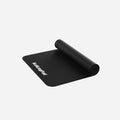 £400–£699Treadmill Floor MatFloor MatWorth £55
-
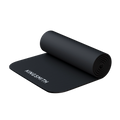 Rowers £400+Rowing Machine MatRowing MatWorth £55

VERSATILE
More workouts

ADJUSTABLE
More angles

SOLID
Built to last

ORGANIZED
Built-in storage
MODERN STRENGTH TRAINING
Adjustable workout benches combining versatile workouts with clean, space-saving design. More ways to train each of the muscle groups in your body and then fold the entire system out of the way.

BX2 WEIGHT BENCH
Flagship adjustable weight bench engineered for pro home workouts

B2 PILATES BENCH
A refined, Pilates adjacent style training to lengthen and tone muscle

EXPLORE OTHER PRODUCTS


Just Walk Series
Flat fold walking pads that can help you walk at ease and store under bed / sofa.

Collapsible tabs
1. Why do these benches use resistance bands instead of weight plates?
1. Why do these benches use resistance bands instead of weight plates?
Because built-in resistance makes strength training at home simpler, without needing a collection of separate weights. A conventional adjustable bench can be affordable, but you'll usually need to buy dumbbells or other weights separately, which adds to the cost and takes up more space. Our benches build the resistance in.
The B1 (£499) includes two resistance bungees (10 kg and 20 kg) plus 8 kg and 16 kg bands, which combine into 20 kg, 40 kg and 60 kg levels up to a 100 kg maximum, and includes a pair of 3 kg dumbbells stored on the frame. The B2 (£599) uses a knob-adjusted band system giving up to 40 kg across two levels, plus a magnetic strength board.
The trade-off is that band resistance feels different from free weights — the resistance generally increases as the bands stretch, so the effort changes throughout the movement. Both can support muscle growth and general strength training at home, although free weights offer a different resistance profile and may be better suited to certain training goals, including powerlifting. If you want more resistance options, the BX2 (from £699) uses an adjustable pneumatic resistance system and is also available in configurations with dumbbells.
2. Are folding weight benches safe? I don't want one collapsing mid-set.
2. Are folding weight benches safe? I don't want one collapsing mid-set.
Yes, a well-built folding weight bench can be safe when it's properly set up and used within its limits. Look for three things. First, check the maximum weight capacity for the specific model: the B1 and B2 support up to 150 kg, while the BX2 supports up to 180 kg. Always follow the weight limits and loading instructions for your bench. Second, how the fold is locked: make sure the bench is fully unfolded and all adjustment mechanisms are securely engaged before exercising. The B1 has three fixed backrest positions (flat, 45 degrees, upright) and four arm positions; the B2 has six backrest and five arm positions. Third, frame material and finish — the B1 combines a reinforced wood-based structure with PP, while the B2 and BX2 use ABS and metal frames.
Practical safety points that apply to any bench: set it on a firm, level surface rather than deep carpet; check that all adjustable parts are securely locked before each workout; and with band resistance, never release the handle under tension — return it slowly and under control to prevent the band from snapping back. Stop using the bench if you notice any loose, damaged or unstable components.
3. How much floor space do I need, and can it be stored away between sessions?
3. How much floor space do I need, and can it be stored away between sessions?
The space you need depends on the bench and the exercises you plan to do. Check the unfolded dimensions and leave enough clearance around the bench for resistance exercises and dumbbell movements. Between sessions, all three benches fold and have transport wheels, making them easier to move and store. That is the point of the format: you can enjoy a home strength workout without keeping a full-size gym setup in your living room.
The practical layout advice is to leave enough room around the bench for your arms and resistance accessories to move freely, and if you are on a suspended floor, put a mat under it to help protect the flooring and reduce noise. Avoid dropping dumbbells, especially if you have neighbours downstairs.
For storage, measure the available width, depth and height rather than assuming: a folded bench may fit inside a cupboard or behind a sofa if there is enough space, but none of these three models will fit beneath a sofa with just 150 mm of clearance. If space is genuinely at a premium and you also want cardio, pairing a folding bench with a flat-folding walking pad gives you options for both strength training and walking without keeping two large pieces of equipment permanently set up.
4. Is a Pilates reformer bench worth it compared with a studio membership?
4. Is a Pilates reformer bench worth it compared with a studio membership?
Run the numbers on your actual attendance, not your intended attendance. UK reformer classes can be expensive, often costing more than regular group fitness classes, as studios need to cover specialist equipment, small class sizes and qualified instructors. The B2 Pilates Workout Bench (£599) costs roughly the same as 30 studio classes at £20 each. If you normally attend twice a week, that's around 15 weeks of classes, although a home bench isn't a direct replacement for a studio reformer.
What you get: six backrest and five arm positions, knob-adjusted band resistance up to 40 kg across two levels, a magnetic strength board, and a frame that supports up to 150 kg, plus folding storage and transport wheels. What you do not get, and should be clear about: a full-length sliding carriage, the same range of exercises as a traditional reformer, or an instructor correcting your form.
A home bench is a practical option for stretching, core exercises and full-body resistance training between studio classes, and for people who prefer working out at home rather than travelling to a studio. If you are entirely new to reformer work, consider taking a few instructor-led classes to learn the basics, then use the B2 for exercises suited to its design as part of your home routine.
5. B1, B2 or BX2 — which one should I get?
5. B1, B2 or BX2 — which one should I get?
They are aimed at three different training styles. The B1 Tone Up (£499) is the all-round strength bench: three backrest positions, four arm positions, bungees and bands combining to 100 kg maximum, and a pair of 3 kg dumbbells included with on-frame storage. Choose it if you want a mix of pressing, rowing, curls and other strength exercises in a simple, versatile setup.
The B2 Pilates (£599) is the mobility and control bench: six backrest and five arm positions for more exercise angles, band resistance to 40 kg across two levels, plus a magnetic strength board — choose it if your training focuses on Pilates, stretching and core work alongside general strength exercises.
The BX2 Workout Bench (from £699) is the more advanced strength-training option, with four levels of adjustable pneumatic resistance up to 80 kg. It's available as a Base Kit or a Deluxe Kit with adjustable dumbbells and additional accessories. Choose it if you want a wider range of resistance exercises and more training options in one bench.
Two decision shortcuts. If more than one person will share the bench and you want plenty of exercise-angle options, the B2's six backrest and five arm positions offer greater flexibility. If your priority is general strength training with included resistance accessories, start with the B1. For more advanced resistance training, consider the BX2. All three fold and roll away, with maximum weight capacities of 150 kg for the B1 and B2, and 180 kg for the BX2.
6. I am a complete beginner. Will I actually know what to do with a bench at home?
6. I am a complete beginner. Will I actually know what to do with a bench at home?
Yes, and you don't need to plan a complicated workout to get started. Start with a simple six-movement routine rather than improvising: a press (chest), a row (back), a shoulder press, a curl, a glute bridge or another lower-body exercise, and a core movement such as a crunch. Try one or two sets of 10 to 12 repetitions per exercise, two or three times a week, adjusting the routine to your fitness level. A session might take around 30 minutes, including rest. Start with light resistance and focus on controlled movements before gradually increasing repetitions, sets or resistance.
Practical points specific to these benches: use the adjustable backrest and training arms to find suitable positions for each exercise — the B1, for example, offers flat, 45-degree and upright backrest settings; write the settings down while you're learning the routine so you can set up more easily next time. If you have a B1, the free KS Fit app also offers over 100 guided workouts to help you get started. And if you also own a walking pad, you can use it for an easy warm-up before your bench session or a relaxed walk afterwards, depending on what feels best for you.