


WALKINGPAD TREADMILLS
Collection:
Just Walk Series
The easiest way to get 10k steps during the day.
For walking-only users who want a simple under-desk setup for workdays, small homes and daily steps.
Black Friday Early Access · Now open
10% off everything + a free gift worth up to £79
Why wait for Black Friday? Buy now, and if the price drops on Black Friday or Cyber Monday, we refund the difference.
Price drops on Black Friday? We refund the difference.
-
 £700+Treadmill Care BoxCare BoxWorth £79
-
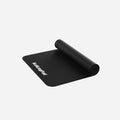 £400–£699Treadmill Floor MatFloor MatWorth £55
-
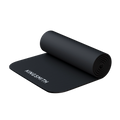 Rowers £400+Rowing Machine MatRowing MatWorth £55

FOLDABLE
Fits almost anywhere

CONCENTRATION
Hack your work day

COMPACT
Save space

SPEED
Walk
DAILY MOVEMENT MADE SIMPLE
Walking, as the most common form of exercise, is widely loved by people worldwide. A walking pad treadmill allows you to enjoy the pleasure of walking at home or the office.
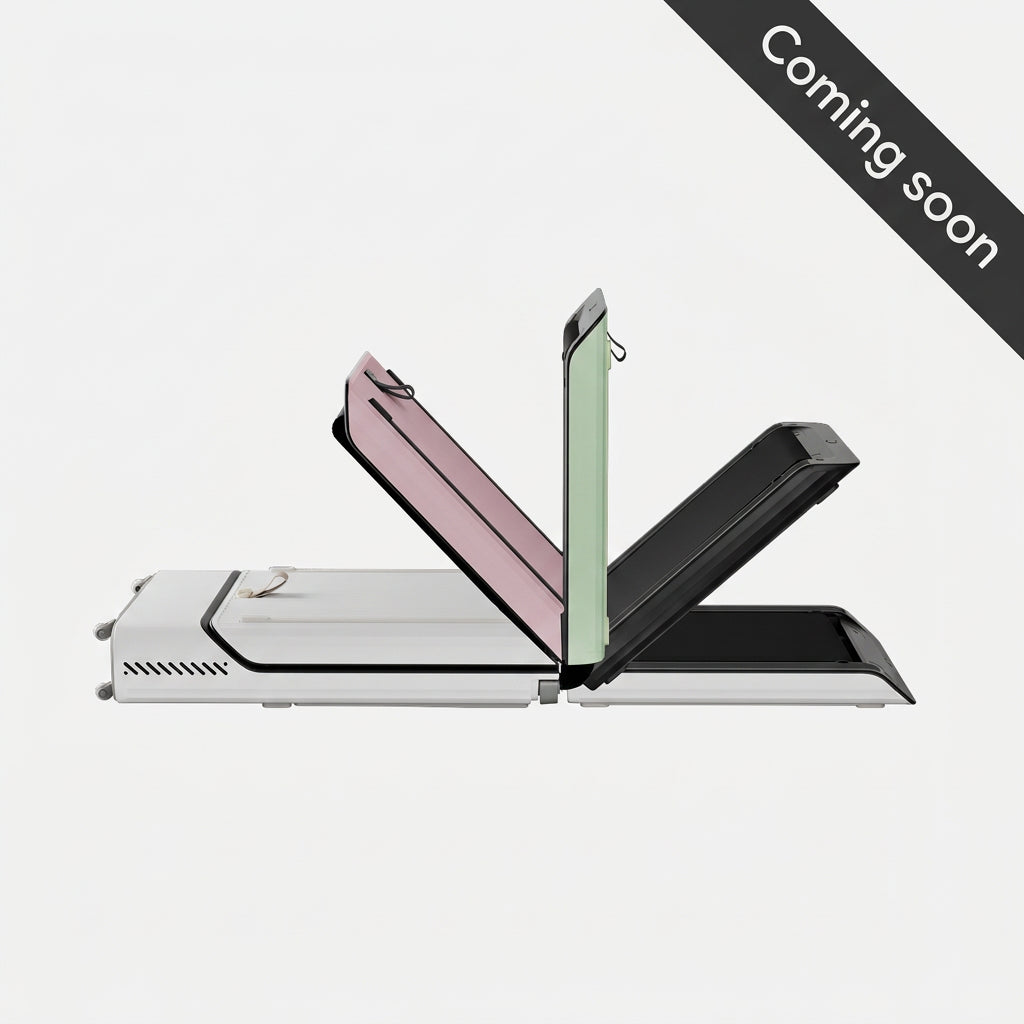
WalkingPad Walkingcase
A walking pad that rolls like a suitcase — fitness made portable.

R3 WALKINGPAD
Our biggest and best office treadmill with plenty of room to move

A1 PRO WALKINGPAD
Best selling compact treadmill with a higher weight limit

Z3 WALKINGPAD
We added an improved screen making it easy to see your stats


AWARD-WINNING DESIGN
Our foldable treadmills and benches have earned global design awards for their innovative space-saving folding design, refined aesthetics, advanced manufacturing, and user-friendly functionality.

Red Dot Design Award for 2019, 2022, 2026

IF Design Award for 2019, 2022, 2026

Good Design Award for 2020
WHICH MODEL IS RIGHT FOR YOU?
EXPLORE OTHER PRODUCTS


Frequently Asked Questions
1. Is walking at 6 km/h or less actually enough exercise to matter?
1. Is walking at 6 km/h or less actually enough exercise to matter?
Yes, and the reason is that both duration and intensity matter. Brisk walking can fall within the moderate-intensity band that public health guidance is built around — the UK recommendation is 150 minutes of moderate activity a week, which is 30 minutes on five days, provided the walking is brisk enough to reach moderate intensity. An under-desk pad turns daily walking into something you accumulate rather than schedule.
At 4–5 km/h, walking burns calories, although the amount varies with body weight, pace and duration, and more importantly helps break up prolonged sitting, which is associated with health risks even among people who exercise regularly. The limitation is that walking at a fixed 4 km/h may become less challenging as your fitness improves, because you cannot easily increase the load.
Your options then are more time, a faster pace up to the 6 km/h ceiling on these models, or a machine with incline or higher speed. But for the person who currently sits for eight hours and walks 3,000 steps, gradually increasing daily steps can make a meaningful difference, and it may be easier to sustain than a running programme that competes with a working day. Start at 20 minutes twice a day rather than an hour in one go.
2. Is a walking pad without a handrail safe, especially for older users?
2. Is a walking pad without a handrail safe, especially for older users?
For walking speeds, the absence of a handrail is a space-saving design choice rather than an omission. A walking pad without a handrail can be suitable for people who have good balance and can walk comfortably without support, but it is not necessarily safer than a model with a handrail. Speed control is also important: FootSense™ on the C2, A1 Pro, P1, C1 and R3 allows the walking speed to respond to your position on the belt in automatic mode, so you slow down by stepping back rather than by finding a button, and every model here includes a remote.
Deck height is relatively low, making the walking surface easier to access, although care is still needed when stepping on and off. Where a handrail genuinely matters: balance impairment, dizziness, recovery from injury or surgery, or anyone who would not comfortably walk unaided outdoors. For these individuals, a walking pad without a handrail may not be appropriate, and medical advice may be needed before use.
For those who need additional support and can safely use a treadmill, choose the Z3 Hybrid+ or R3 Hybrid+ with handrails. Whatever the model, start at 1–2 km/h, keep the remote in reach, and place the machine so there is clear floor behind you rather than a wall or furniture.
3. Is walking on a pad easier on the joints than walking outdoors or running?
3. Is walking on a pad easier on the joints than walking outdoors or running?
Compared with running, generally yes, but not necessarily compared with walking outdoors. First, surface: some models in this range use shock-absorbing construction, which may feel more comfortable underfoot than pavement. For anyone whose knees complain after a walk on concrete, a cushioned surface may feel more comfortable, although individual experiences vary. Second, control: you can hold a precise, unvarying pace, which matters if you are managing your walking intensity and need to avoid unexpected changes in pace or terrain.
The caveat is that indoor walking is repetitive in a way outdoor walking is not — no camber, no kerbs, no direction changes — so you repeat similar movements throughout the session. In practice that is fine for most people and is a reason to vary speed rather than walk at one setting for two hours. Practical points: wear supportive trainers rather than going barefoot or in socks, because the deck is firm; if your knees are the reason you are asking, walking is usually a lower-impact option than running, but an existing joint condition is a question for a clinician, not a product page.
4. Which Just Walk model fits under my sofa or bed?
4. Which Just Walk model fits under my sofa or bed?
Measure the clearance under the furniture first, then match it — this is the specification that decides whether the machine gets used or leans against a wall. Folded heights across the range: A1 Pro 12.9 cm, P1 12.9 cm, C2 13.6 cm, Z1 13.8 cm, C1 14 cm, R3 19.2 cm, Z3 19.5 cm. Sofa and bed clearance varies by furniture design, so the A1 Pro, P1, C2, Z1 and C1 may fit under sofas with sufficient clearance, while the R3 and Z3 require more space and may be better suited to beds with higher clearance or beside a wardrobe.
Then check the two dimensions people forget: folded length (81–85.5 cm across the range) must clear the depth you are sliding it into, and folded width (52.8–67.5 cm) must clear the gap between sofa legs. Weight decides whether you will actually do it daily: Z1 23 kg, C1 22 kg, C2 25 kg, A1 Pro 28.5 kg, P1 28 kg, Z3 30.5 kg, R3 30.1 kg. If you will store it away after every single session, the C1 and Z1 are the ones to look at; if it lives permanently under a standing desk, weight matters less and you can buy on capacity instead.
5. What weight can these take, and what happens if I am near the limit?
5. What weight can these take, and what happens if I am near the limit?
Capacities in this range are C1 220 lb (100 kg), C2 220 lb (100 kg), P1 220 lb (100 kg), Z1 243 lb (110 kg), Z3 242 lb (110 kg), R3 265 lb (120 kg) and A1 Pro 300 lb (136 kg) — the highest in the walking-only range. What the rating means matters more than the number. It is not necessarily a point at which the machine fails; it is the maximum weight for normal use. Using a walking pad near its maximum capacity may place greater demands on the motor and other components, although this does not necessarily mean the machine will overheat or wear out prematurely. That is why it can be helpful to choose a model with some extra weight capacity: a 95 kg person is within the C2's 100 kg rating but may prefer the additional capacity of the A1 Pro's 136 kg.
Two related points. The maximum weight capacity applies to normal use within the recommended operating conditions. If you are near the limit, follow the product's operating instructions and avoid exceeding its stated capacity. And if two adults of very different weights share a machine, buy for the heavier one — exceeding the weight limit may increase wear or cause damage, so check the warranty terms for any applicable exclusions.
6. C1, Z1, C2, P1, A1 Pro, Z3 or R3 — which is right for me?
6. C1, Z1, C2, P1, A1 Pro, Z3 or R3 — which is right for me?
Sort by budget first, then by the one feature that differs. Under £320: C1 (£309, 22 kg, 220 lb (100 kg), lightest, and Z1 (£319, 23 kg, 243 lb (110 kg), ultra-thin design). At £369: C2 (white or black, 220 lb (100 kg), FootSense™) and P1 (220 lb (100 kg), 1,200 mm walking belt, ultra-slim frame, FootSense™ and remote) — pick C2 if colour matters, P1 for the slimmest frame.
At £429 the A1 Pro is the higher-capacity option: 300 lb (136 kg) capacity, 12.9 cm folded — the default choice for heavier individuals or two-adult households. At £499–£509 the Z3 and R3 add a visual display and the R3 offers light-guided progress feedback, a 265 lb (120 kg) capacity on the R3, and a remote plus FootSense™; they fold to 19.2–19.5 cm, making them easy to store away after use and helping free up floor space. If you want one answer: the Z1 for value, the A1 Pro for capacity, the R3 for daily desk use.